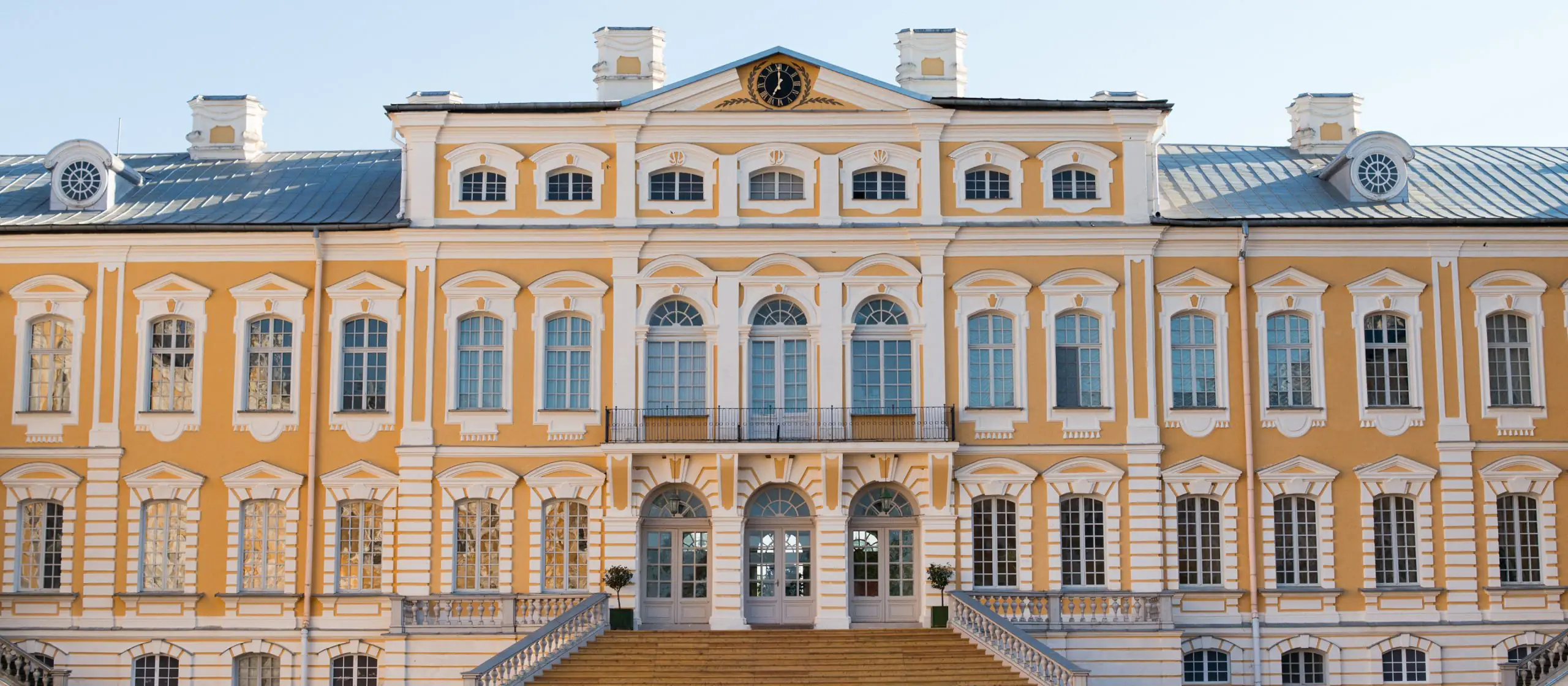
The Renaissance (XVI century) returned architecture to the ideals of classical harmony: clear proportions, calm facades, a sense of measure. Then came Baroque (XVII-XVIII centuries), as if someone had pressed the gas pedal: forms became more dynamic, decoration richer, and buildings more emotional. In the cities of Latvia, Lithuania, and Estonia, these trends were absorbed and reinterpreted in their own way — taking into account local materials and climate. To avoid getting confused, remember a few visual markers. You’ll notice them immediately on your stroll.
Lifehack (What to Look For)
Perfect Symmetry (Renaissance):
Look at the façade as if it were a “face.” If the left and right sides are almost mirror images, and the central axis is immediately clear — you are most likely in the Renaissance zone.
Horizontal “Belts”:
Instead of Gothic verticality, you get clear floors or tiers, highlighted by cornices. The building looks as if it were “measured with a ruler.”
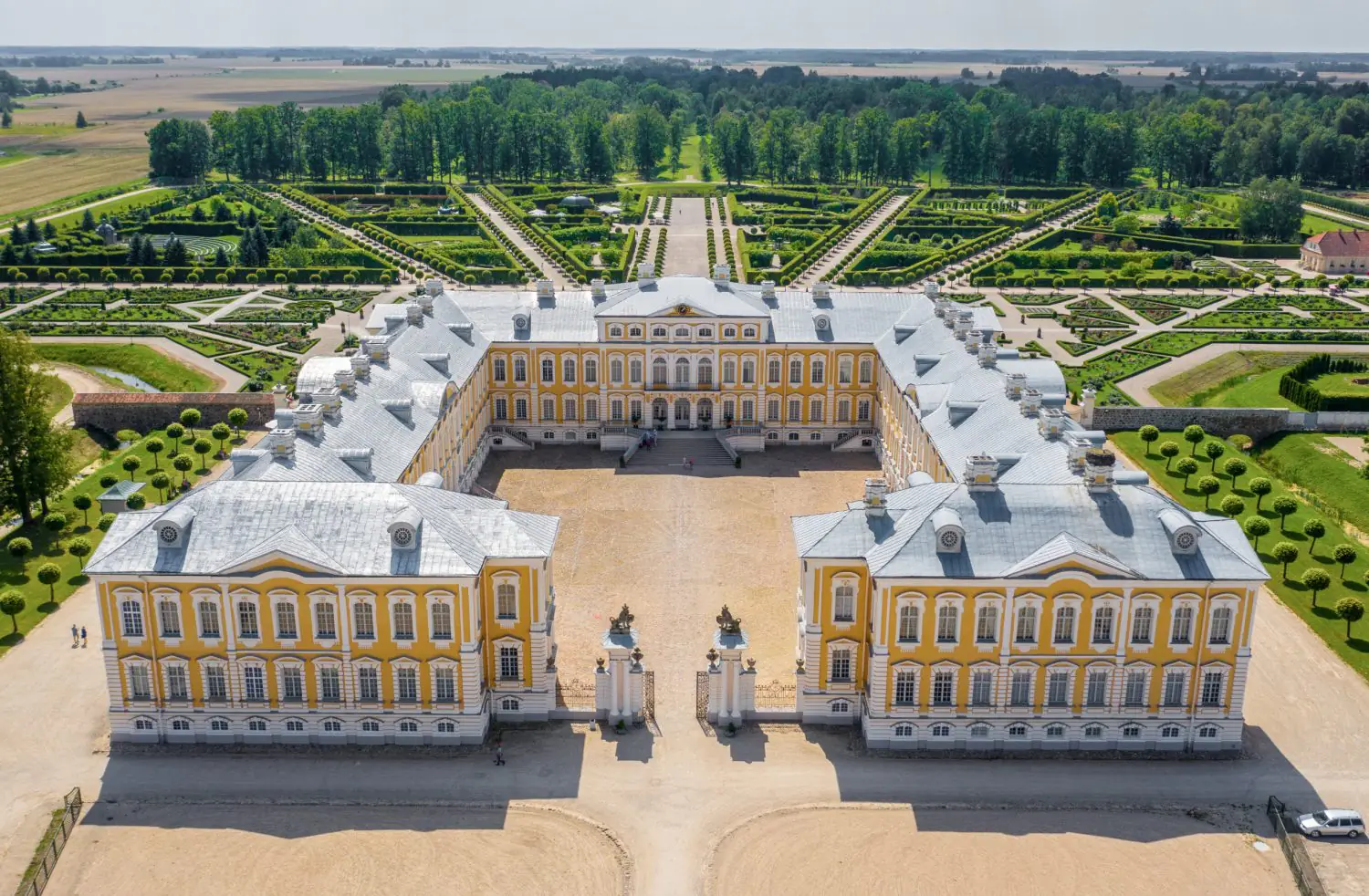
Classical Columns and Pilasters:
Look for columns or pilasters (flat, column-like projections), as well as recognizable capitals:
- Dorian — strict and simple
- Ionian— with “scrolls”
- Corinthian — with lush leaves
Focus on the Portal:
The entrance becomes the main gesture of the façade: columns, carvings, coats of arms, sculptures — the portal often “announces” the building’s status.
Theatricality and Movement (Baroque):
If the lines ripple, cornices curve, and the façade seems “alive” — that’s Baroque energy.
Light and Shadow, and “Broken” Pediments (Baroque):
Deep niches, projections, and complex sculptural forms create strong play of light and shadow. Over windows and portals, pediments often appear “opened” or broken in the middle — a striking Baroque trick.
Renaissance and Baroque: References to Antiquity
Both styles draw on the legacy of antiquity — they just do it differently. Renaissance takes logic and order from the ancients, while Baroque takes scale and impact. The common clues are simple: classical elements (columns/pilasters) and a well-structured façade composition, where everything follows rhythm and proportion.
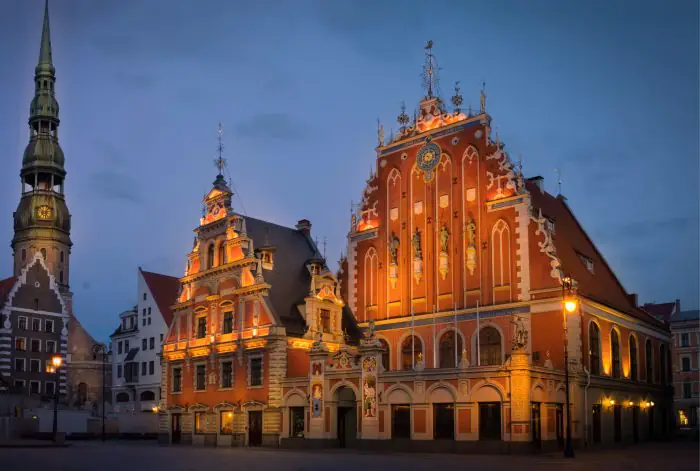
Renaissance: Calm Harmony
- Symmetry and Balance: Windows, doors, and decoration are aligned predictably — the façade looks “confident and calm.”
- Restrained Decoration: Garlands, rosettes, cartouches, coats of arms, medallions — ornaments exist, but they don’t overpower the architecture.
- Geometric Clarity: Simple shapes, clean lines, a sense of order.
- Northern Nuances: Sometimes you see paired or triple windows — a hallmark of the northern interpretation of the Renaissance.
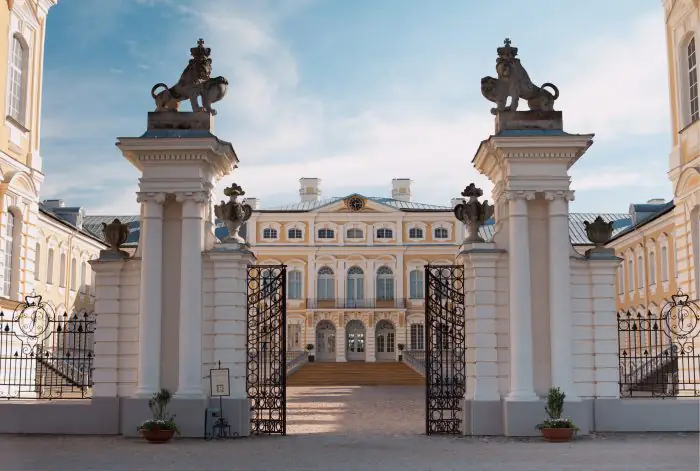
Baroque: Movement and Emotion
- Waves and Sculptural Forms: Convex and concave surfaces, curved cornices — façades “breathe” and play with the eye.
- Luxurious Decoration: Stucco, vegetal motifs, sculptures, putti — everything creates a sense of celebration and power.
- Play of Light and Shadow: Depth and relief become the main “dramatic effect” of the façade.
- The Portal as a Stage: Entrance ensembles often turn into a full composition with coats of arms and sculptural highlights.
A Legacy of Grace and Drama
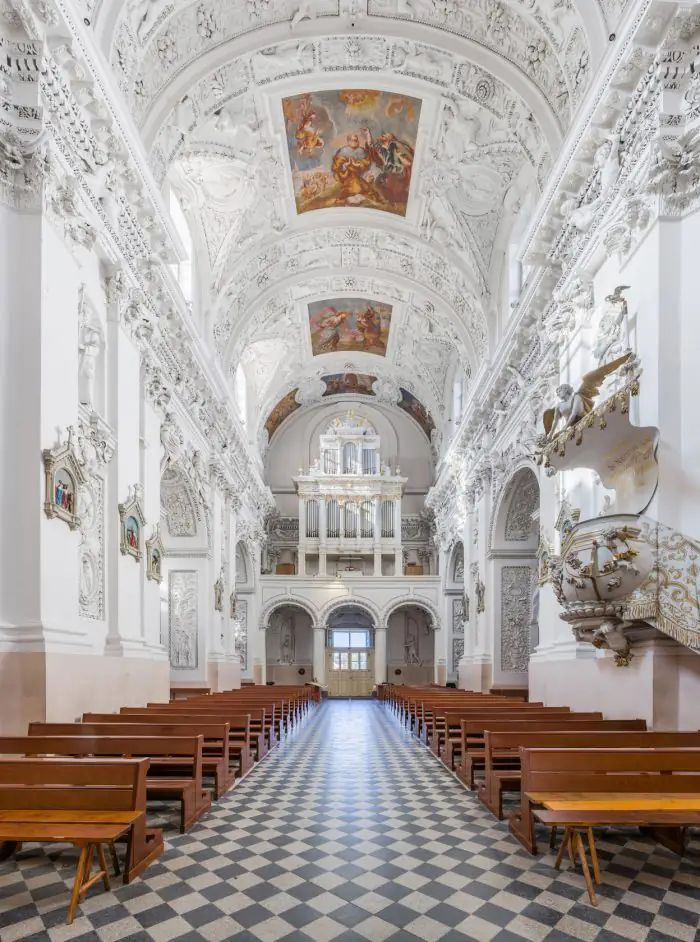
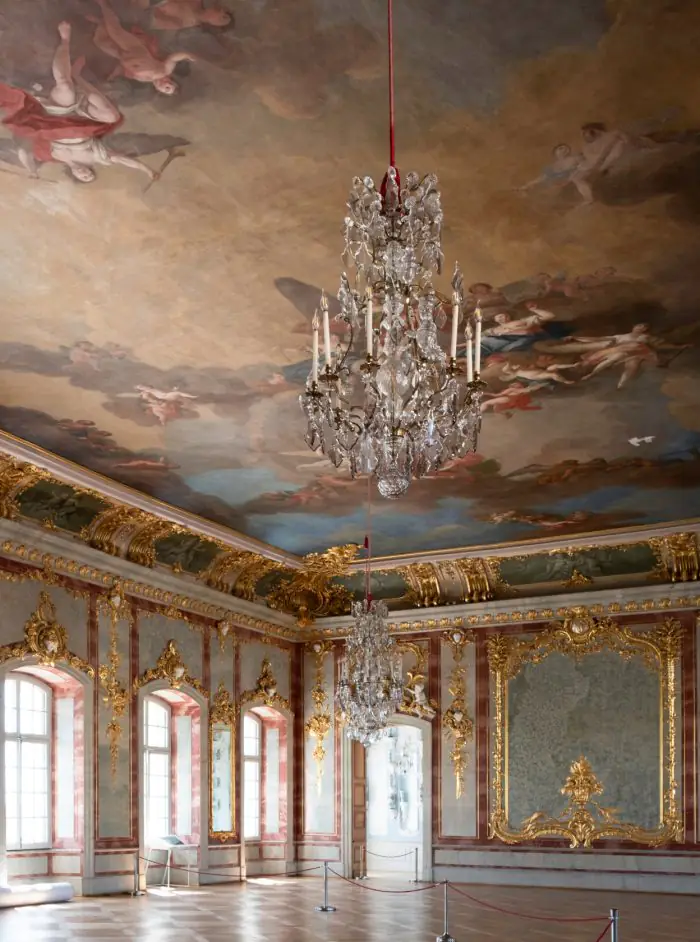
The eras of Renaissance and Baroque changed the mood of Baltic cities: from medieval strictness — to clear harmony, and then to luxurious theatricality. If the Renaissance teaches you to “read” a façade as an orderly scheme, Baroque invites you to see a building as a performance, where emotions, movement, and light take center stage.
The architectural journey continues. After Baroque splendor comes an era that again demands discipline and purity of form. In the next article, we will explore Classicism and Empire Style — and learn to recognize them by their monumental simplicity and strict grandeur.