Music will be there,
To pick us up when needed,
A true friend for life.
Jayne Louise Davies
Sudden lights
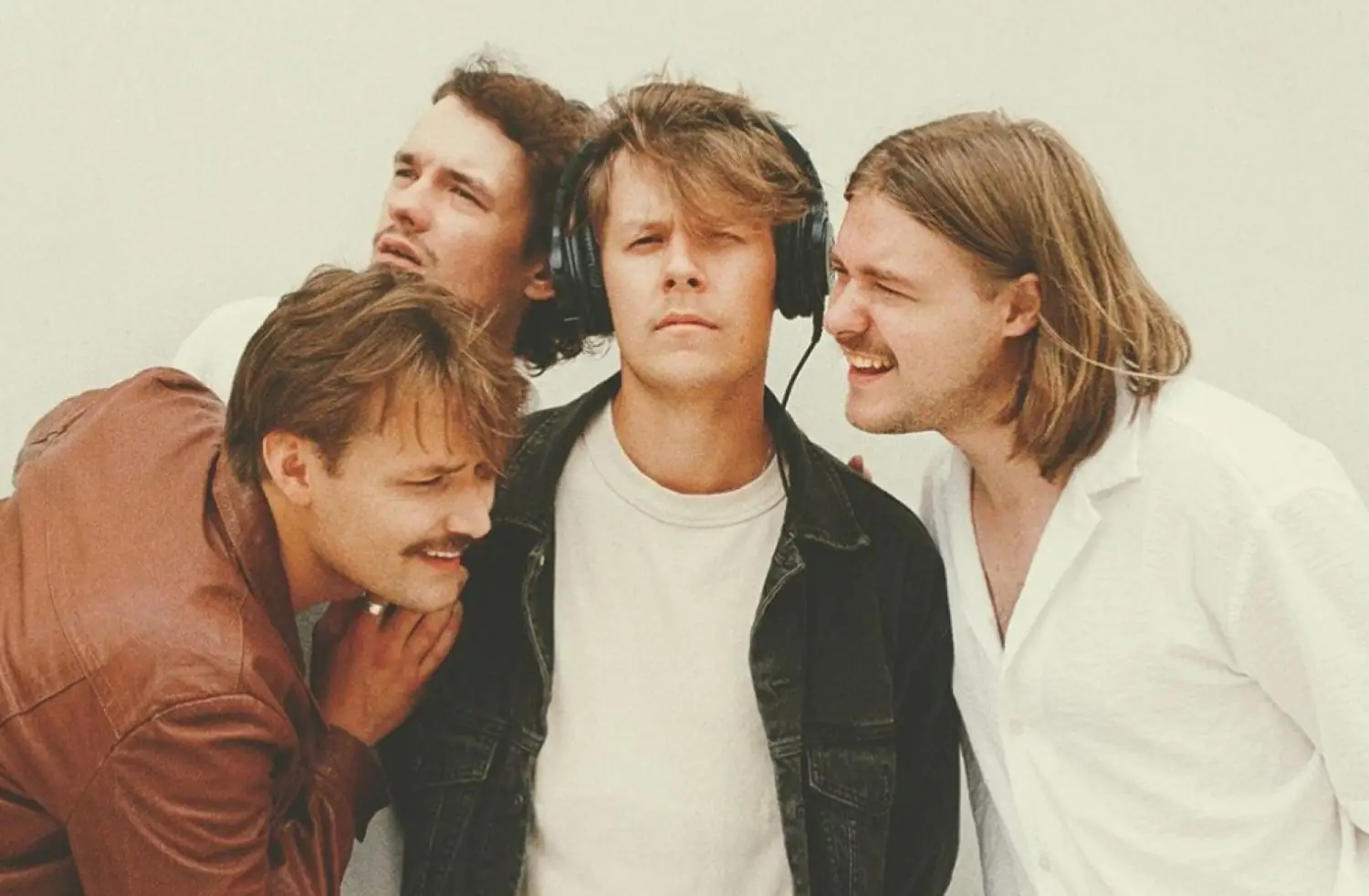
Genre: indie-rock
An excerpt from the song “Laternas”
Kā pareizāk
Aiz stūra slēpties vai pienākt klāt?
Es nemāku citādāk
Es gribu, lai tu mani pierunā
Bet ja tev par tumšu kļūst
Mēs būsim laternas vistumšākajā naktī
Šī ziema silta būs
Nebaidies pat tad, ja šis ir sapnis
What is better:
To hide around the corner or come closer?
I don’t know any other way
I want you to persuade me.
But if it gets too dark for you
We’ll be lanterns on the darkest of night
This winter will be warm
Don’t be afraid, even if this is just a dream.
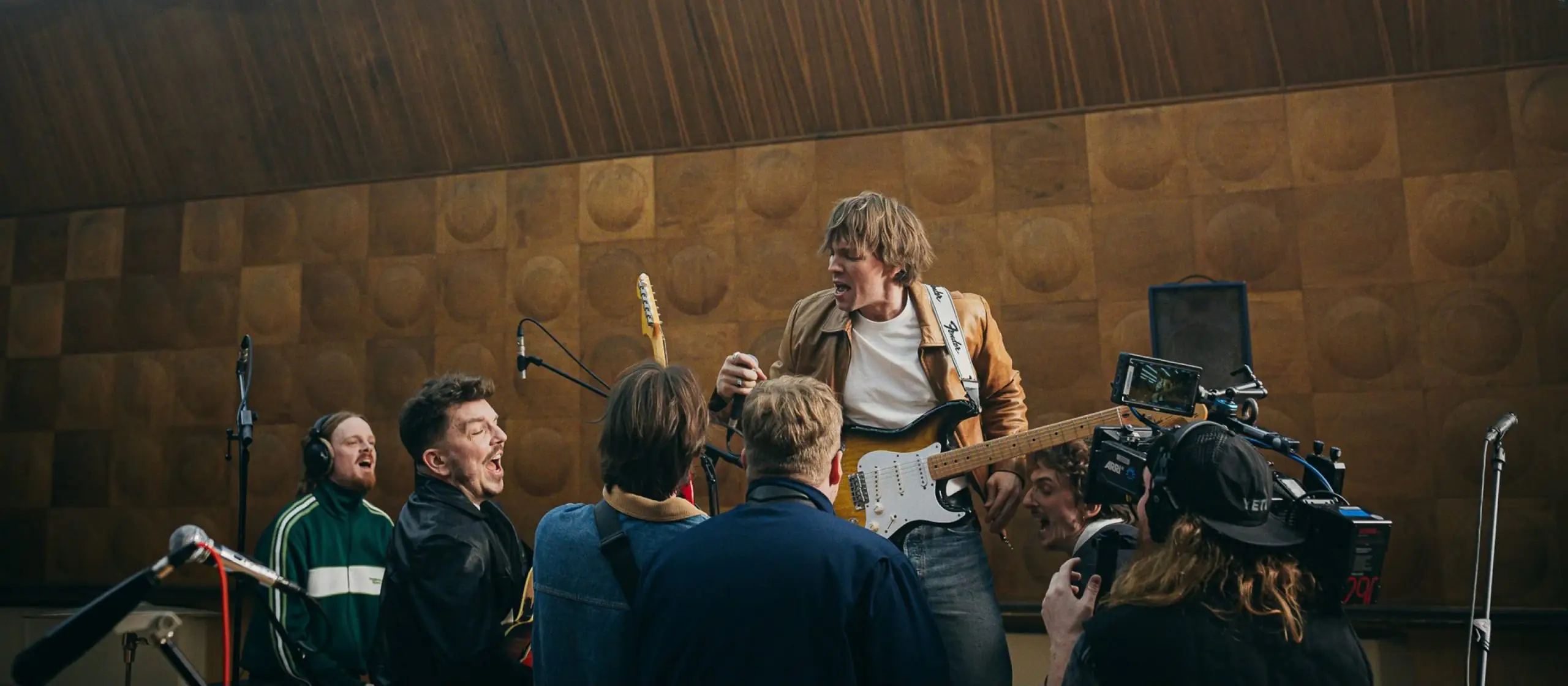
Eurovision 2023. Four talented musicians—the Sudden Lights band—represent Latvia with the song “Aijā”. “Memorable melodies and melancholic notes,” this is what was written on their contest profile. With just a few points short, the guys didn’t make it to the final, but that’s ok: Europe’s biggest music competition undoubtedly gave them something even more valuable—a huge number of new hearts in Latvia and beyond, beating faster and happier to their beautiful music.
Andrejs Reinis Zitmanis, Mārtiņš Matīss Zemītis, Kārlis Matīss Zitmanis and Kārlis Vārtiņš met at the Pāvuls Jurjāns Riga Music School. In spring of 2012, the school’s director unexpectedly asked the young musicians to perform at a graduation concert. Did he know back then that this performance would give the country a new musical sensation—and ignite new sudden lights?
“One day we decided to ask our teacher to organize a lesson where we could play the songs we liked instead of playing what was written on the sheet music. We started playing Brainstorm and Coldplay, discovering a love for music in a different form. We realized that we can play what we want, and this continued until we understood that we could also write our own music.”
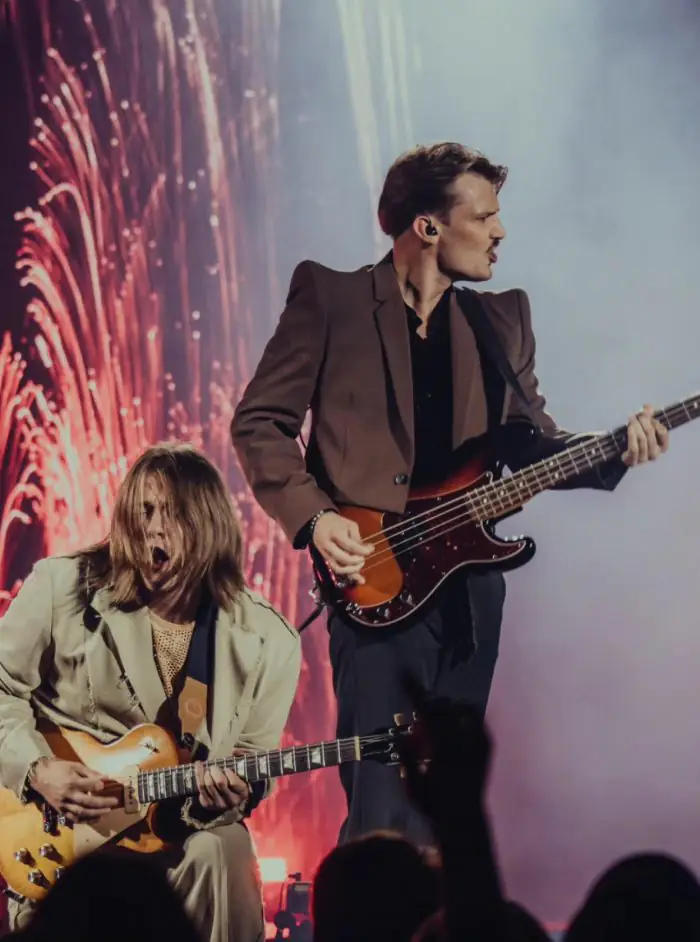
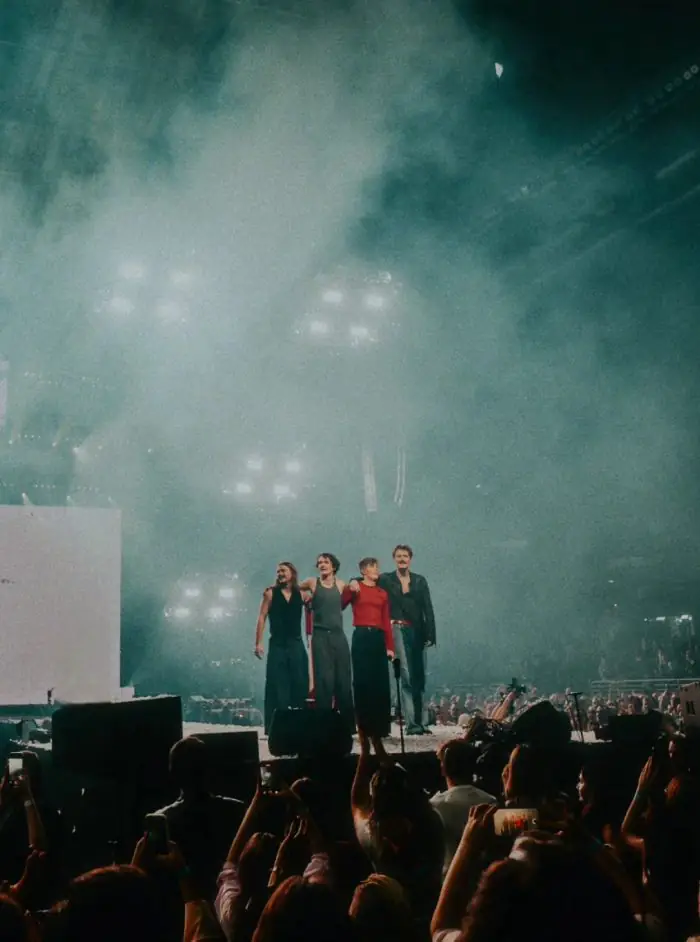
Now the band creates music that truly resonates. Some are moved by the melodies, others by the sincerity of the lyrics, and some—by both. By carrying out a quick analysis of the comments under their songs on YouTube, it very quickly becomes clear that the most common one is: “Don’t understand anything, but really like it.” Some even say they are learning Latvian to understand the meaning of the words (thumbs up). Sudden Lights is one of those rare cases when the right music, combined with the right words and the right meanings, creates magic. This year, this magic has been especially visible: the band received the Gamma award in three categories (“Best Band”, “Best Live Performance”, and “Best Pop Artist”), as well as the Golden Microphone award for the “Band of the Year.”
The sound poets
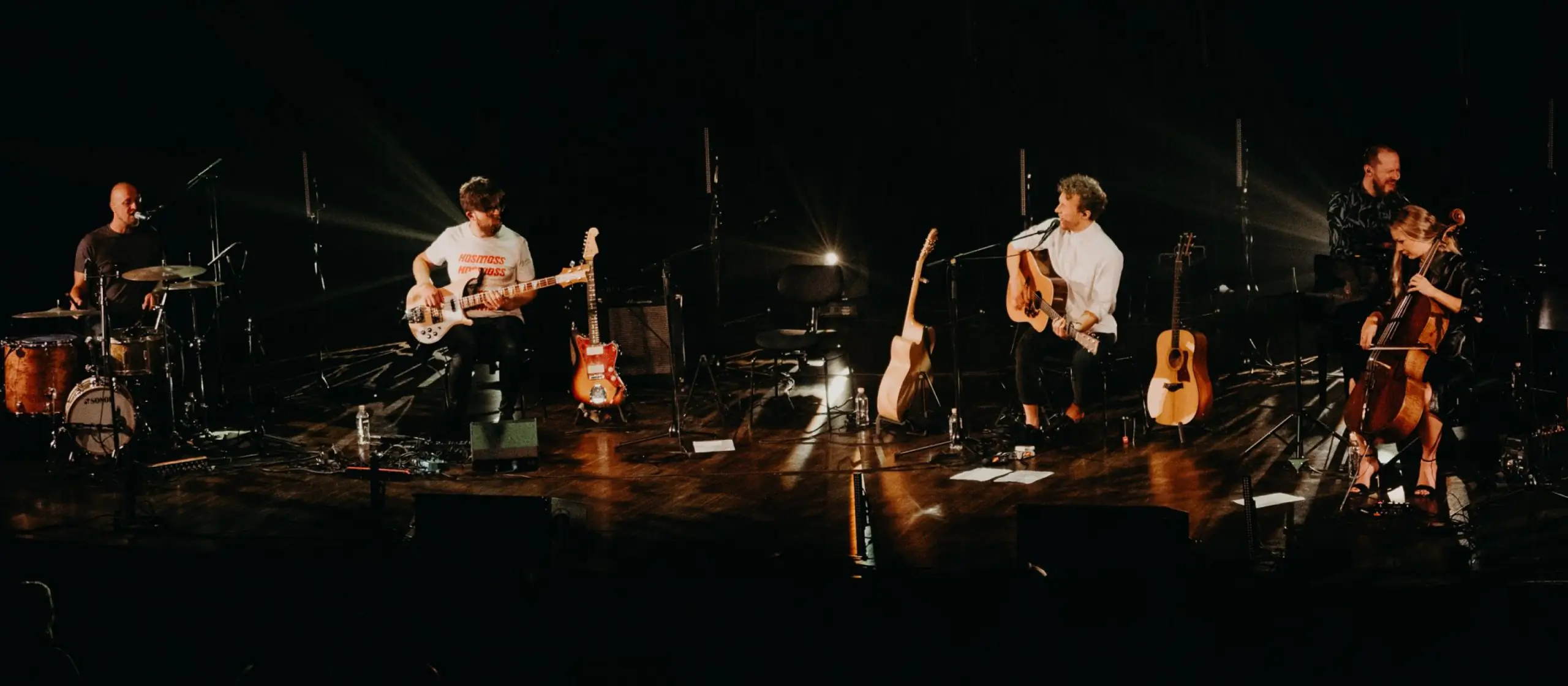
Genre: indie-rock, pop-rock
An excerpt from the song “Kalniem pāri”
Simtiem vēl, tūkstošiem reižu paklupsim
Un simtiem punu pieres vidū būs
Viss ar laiku sadzīst, visi sniegi kūst
Pavasaris līdz ar lediem salauzis ir arī mūs
Izskalojot krastus, tik stipras upes plūst
Kalniem pāri citi kalni būs
Ar vieglu soli pāri tiem, ar vienu soli
And we will stumble hundreds, thousands more times
And hundreds of wrinkles will form on our foreheads
Everything heals with time, all snows melt
Spring, along with the ice, has broken us
Such strong rivers flow, washing away the banks
Beyond the mountains, there will be other mountains
With a light step over them, with a single step.
– Hey, do you still play guitar?
– Hey, sure.
It can be said that the story of The Sound Poets began with this phone call between Jānis Aišpurs and Normunds Lukšs. In 2011, the musicians decided to organize a small Christmas concert and invited their friends—cellist Undīne Balode, drummer Pēteris Lunde, and bassist Gints Bīmanis. The concert took place—and so did a Christmas miracle for Latvian music.
From the very beginning, the musicians (though they still don’t fully admit it) set out to spark a mini-revolution in the country’s music industry, one that, to our mind, is still going strong.
In one interview, the band’s frontman said: “The Latvian music industry is doing fine. Everyone does what they like. But if you take a more critical look, it becomes clear that the industry has its problems: there is a lot of low-quality music.”
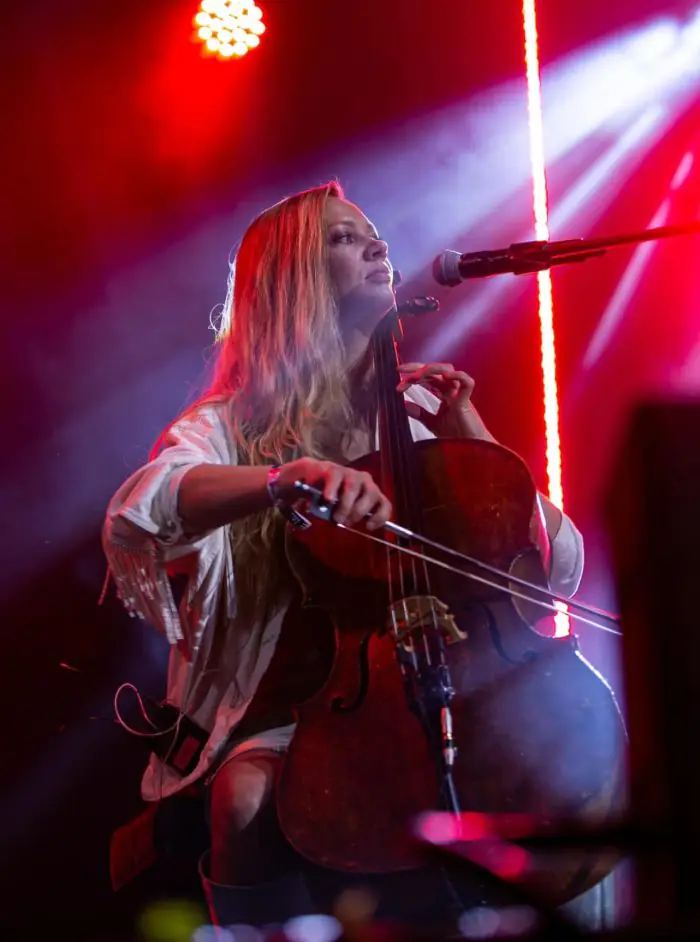
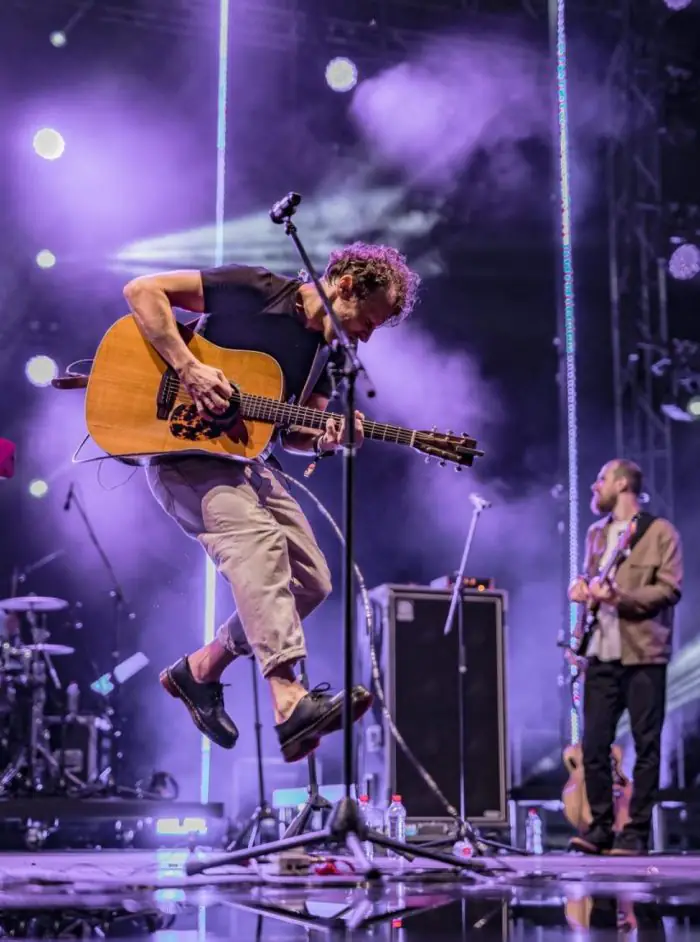
Perhaps that is exactly why the band treats its music with such a strong sense of responsibility. Responsibility is, indeed, one of the core principles The Sound Poets are built on. Jānis Aišpurs once noted: “When I started writing lyrics in Latvian, I realized that you have to be responsible for everything you create, for every word in your song.”
The band’s name speaks for itself—The Sound Poets, the “poets of sound”. Their music is poetry expressed through sound. It is an honest conversation about the world we live in, the timeless values, and the inner strength that lives in all of us—even if sometimes we don’t quite believe in it.
Elizabete Gaile
Genre: indie-pop
An excerpt from the song “Zinu, ka pāries”
Viņam visa par daudz,
Līdzsvaru nenojaust,
Jau pirmdiena smaga,
Un viņa vēl klausulē raud
Viss, kas pāri nāk un sāp
Viss, kas mieru nedod man
Parādās, bet zinu, pāries
It’s all too much for him,
He can’t find his balance,
Monday is already hard,
And she’s crying on the phone
Everything that comes to me and hurts
Everything that won’t leave me in peace
Appears, but I know – it will pass.
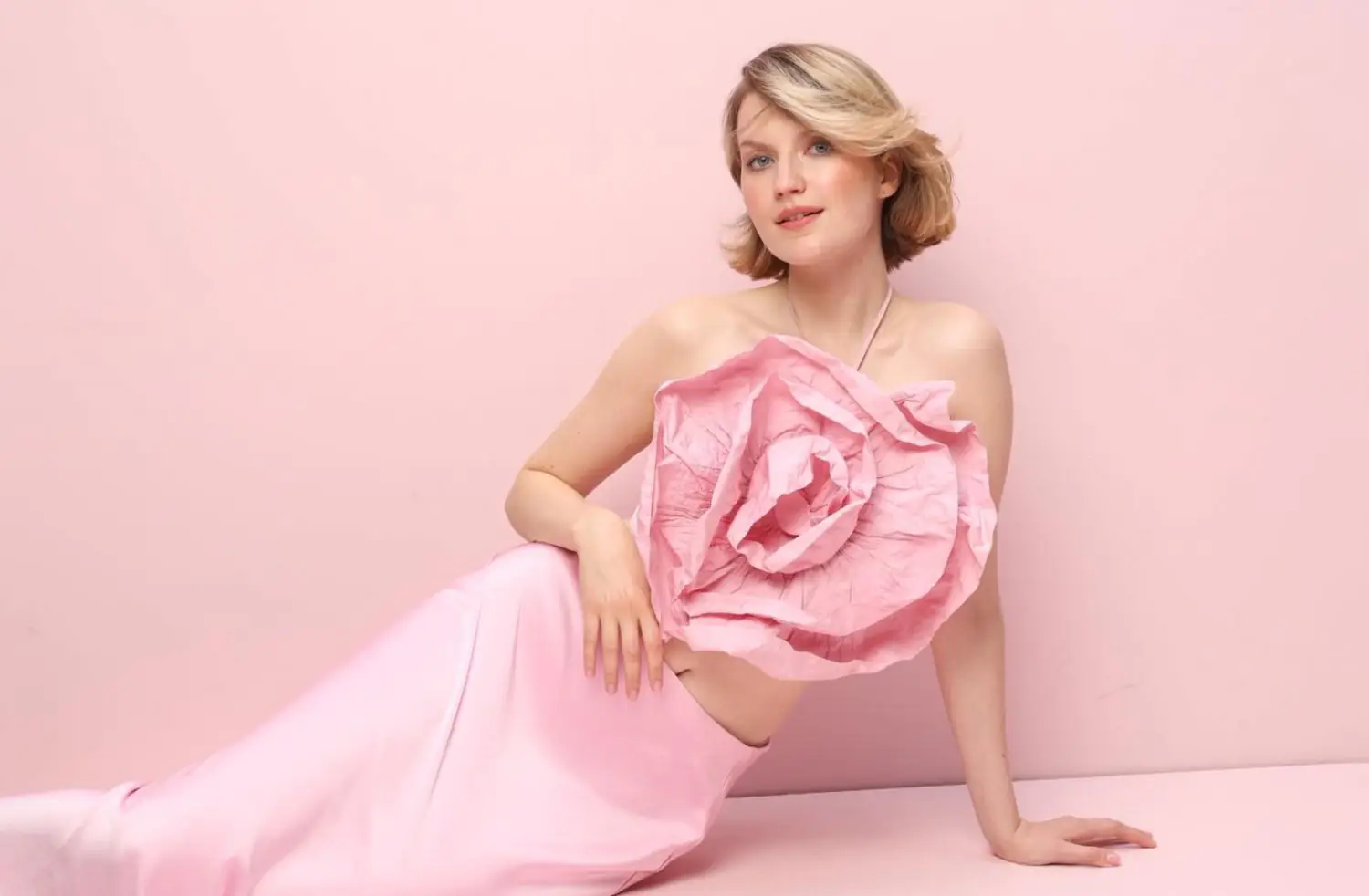
When Elizabete was 13, her vocal teacher told her, “If you keep working hard, you will be singing well by the time you are 18.” The prophecy came true: she was just over 18 when she released her first song, “The Same One”. Eight years and several dozen singles later, in November 2025, the singer presented her debut full-length album, and described it with these words: “I want this album to embrace every listener, to make them laugh, cry, fall in love…to experience strong feelings.” And, to be honest, each of her singles has exactly the same effect.
Elizabete’s passion for composition emerged while she was still attending the Jazeps Medins Riga Secondary Music School, with the introduction of the “composition” course. By that point, she had already mastered her instrument (Elizabete has been playing piano since she was eight) and gradually began writing her own music.
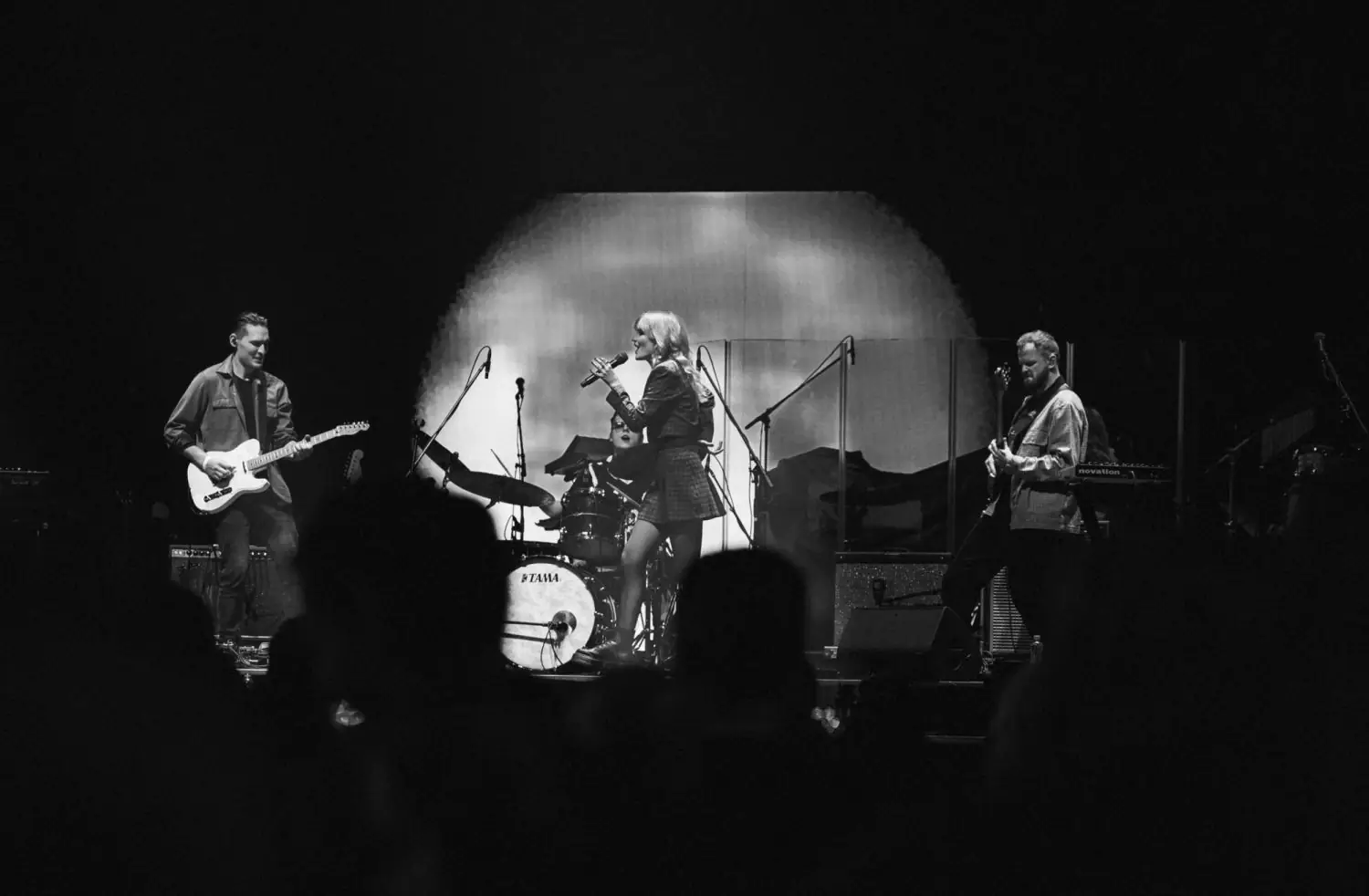
Her works are sensual, atmospheric ballads in which personal emotional experiences are transformed into subtle and expressive stories. “Each of us experiences different emotions every day—be it pain, anxiety, or just moments when it seems that everything is going wrong and there is no light ahead. But it’s important to remember: everything that comes and causes pain eventually passes. This song is like a mantra that gives strength in difficult moments,” this is how Elizabete described one of her most famous singles, “Parādās, bet pāries” (“It appears, but it will pass”).
Currently, the Elizabete Gaile project includes, in addition to the singer herself, guitarist Rūdolfs Ozols, bassist Jānis Polis, and drummer Artūrs Čekanovs.
At the end of last year, they released their first album, a collection of ten singles titled “Bez atvadām uz Miera ielas”. It beautifully continues the theme of the Miera street (first introduced with the “Miera iela” single that topped the Latvian charts in 2023)—but now from a different perspective. We recommend listening to the album in the right order: similarly to Taylor Swift’s work, it reveals different stages of the artist’s experience—perhaps one of them will resonate with you right now.
Carnival Youth
Genre: indie-pop
An excerpt from the song “Sometimes”
Sometimes in the morning it’s so hard to choose
Between drinking coffee or tying my shoes
Sometimes in life you have to choose
Between waking up or hitting the snooze
My momma says life’s full of choices
And no matter what you do there’s nothing you can lose
But somehow I always know what to do and what to choose
Cause there’s nothing to lose.

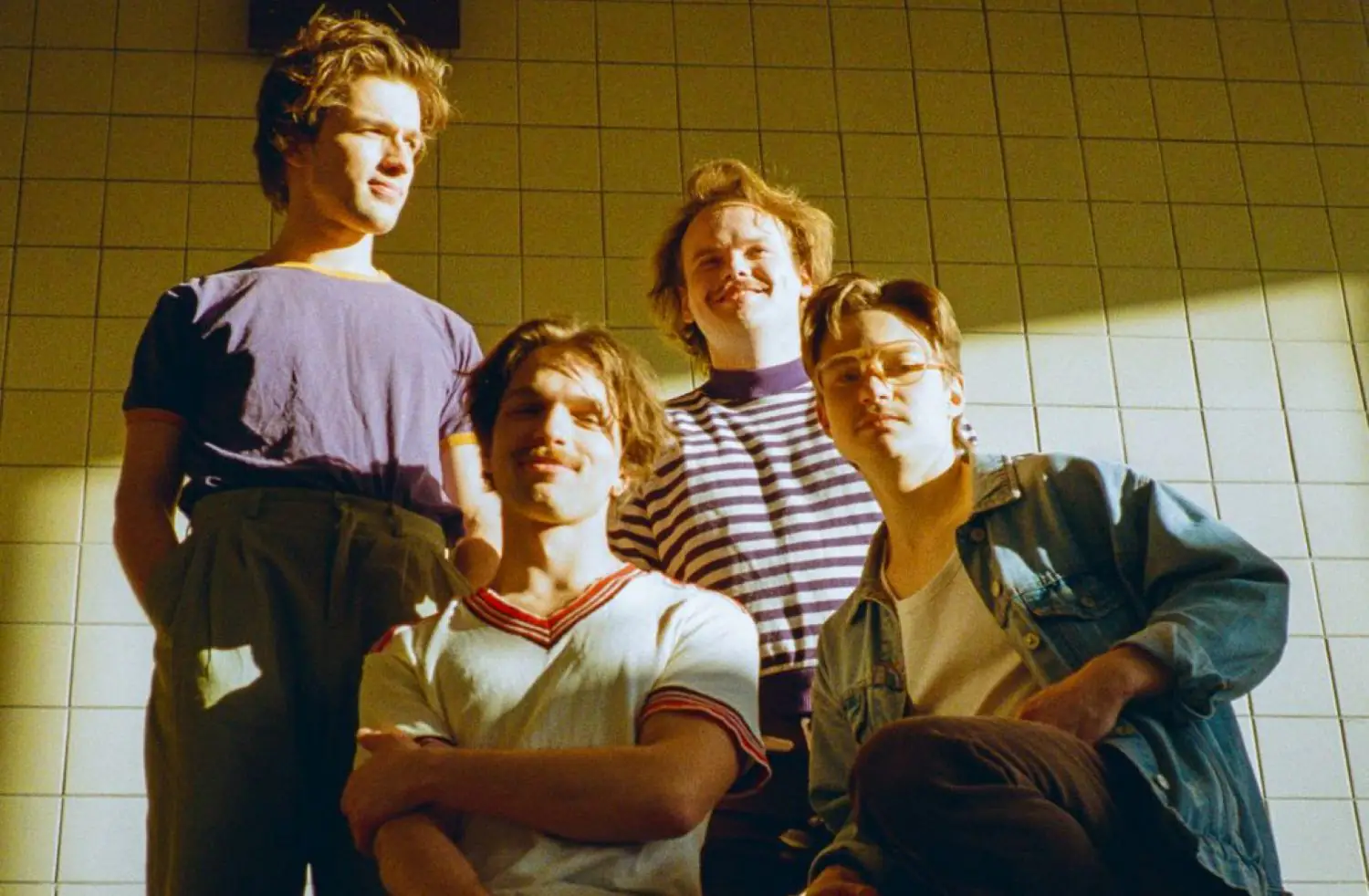
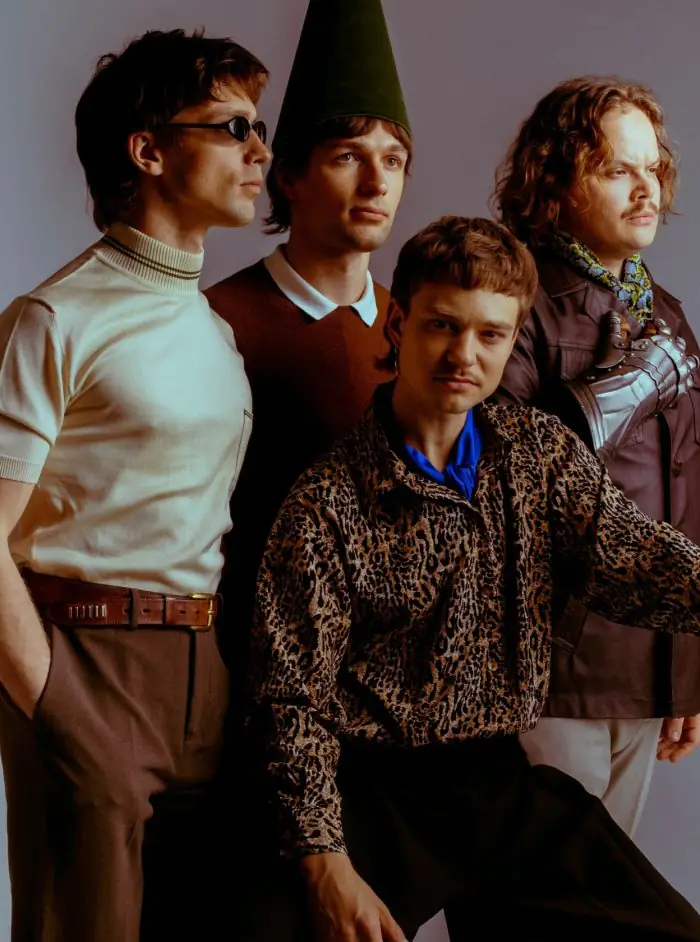
Imagine yourself in the heart of a carnival — a real, almost cinematic one, with masks, grandiose costumes, and thunderous fireworks, drowned out only by the indie rock blaring from the stage. All this splendor is orchestrated by four young musicians—Carnival Youth. They are the ones standing on that stage. That is how you could describe the effect one of Latvia’s most vibrant bands’ music produces.
“A carnival is something colorful, multifaceted, unifying, something that erases hierarchies. Just like our music. We want to experiment, shoot in all directions, and see what comes of it.”
“I remember leaving music school. It was the happiest day of my life,” the band’s drummer, Emīls Kaupers, once wittily remarked. His twin brother, the band’s guitarist Edgars Kaupers, left with him. It seemed like for both the music was over.
The guys switched to sport: they chose snowboarding, introduced themselves with the snowboard culture, started watching films about snowboarders—and just like that discovered indie music or the “musical freedom,” as they would later put it. After a short break, music returned to their live—and the Show Went On.
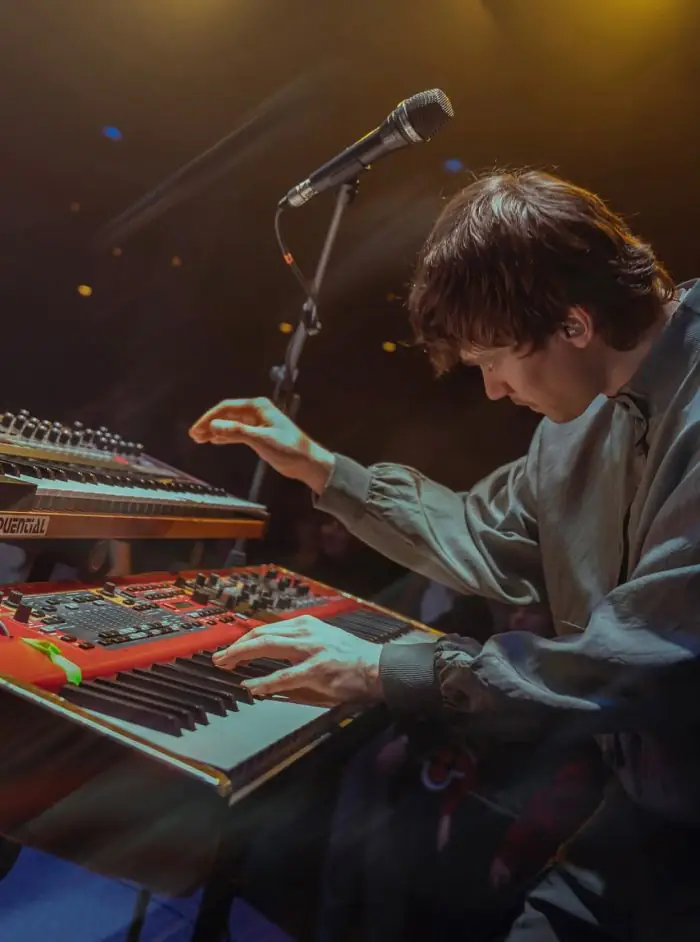
And so the Show Went On: their musical experience, joined by keyboardist Roberts Vanags, and a free rehearsal space became the start of something beautiful—their very own carnival. In 2018, the trio became a quartet: Kristiāns Kosītis took up the role of bass guitarist.
Grizzly Bear, Arcade Fire, alt-J, Radiohead, The Beatles, Thom Yorke, Devendra Banhart, Bon Iver (we also hear hints of Milky Chance)—the sound of Carnival Youth emerged from this mood board. First two albums were almost entirely in English, then an increasing number of singles in Latvian emerged.
“Songs in Latvian work on a different level for Latvian audiences. It’s a completely different kind of intimacy”
Once, the band’s members said in unison that working on songs for them is “a very long and difficult-to-define process”’, but everything always starts from the music. Some musicians take inspiration from lyrics; Carnival Youth are starting from music, from the feelings it evokes. They literally get together, throw out musical ideas in free improvisation and just “catch the vibe” from which the words—emotional, but always bright—crystallise.
“Happiness is to find those very people,” Emīls Kaupers once said. So good that the guys found each other—and are now (we have no doubt) making their listeners happier, too.
Kautkaili
Genre: nostalgic pop, indie-pop
An excerpt from the song “Piestāv tev”
Tu pat nenojaut, cik ir tevī daudz
Jo tev piestāv viss, kas ir noticis
Tu pat nenojaut, cik ir tevis daudz
Tikai notici
Piestāv tev, piestāv tev par sevi būt
Atceries to, to nevar notēlot
Piestāv tev, piestāv tev par sevi būt
Ar to ir gana, to nevar notēlot
You don’t even realize how much there is within you
Because everything that has happened—suits you
You don’t even realize how much there is within you
Just believe in it.
It suits you, it suits you to be yourself
Remember that—it can’t be faked
It suits you, it suits you to be yourself
That’s enough—it can’t be faked
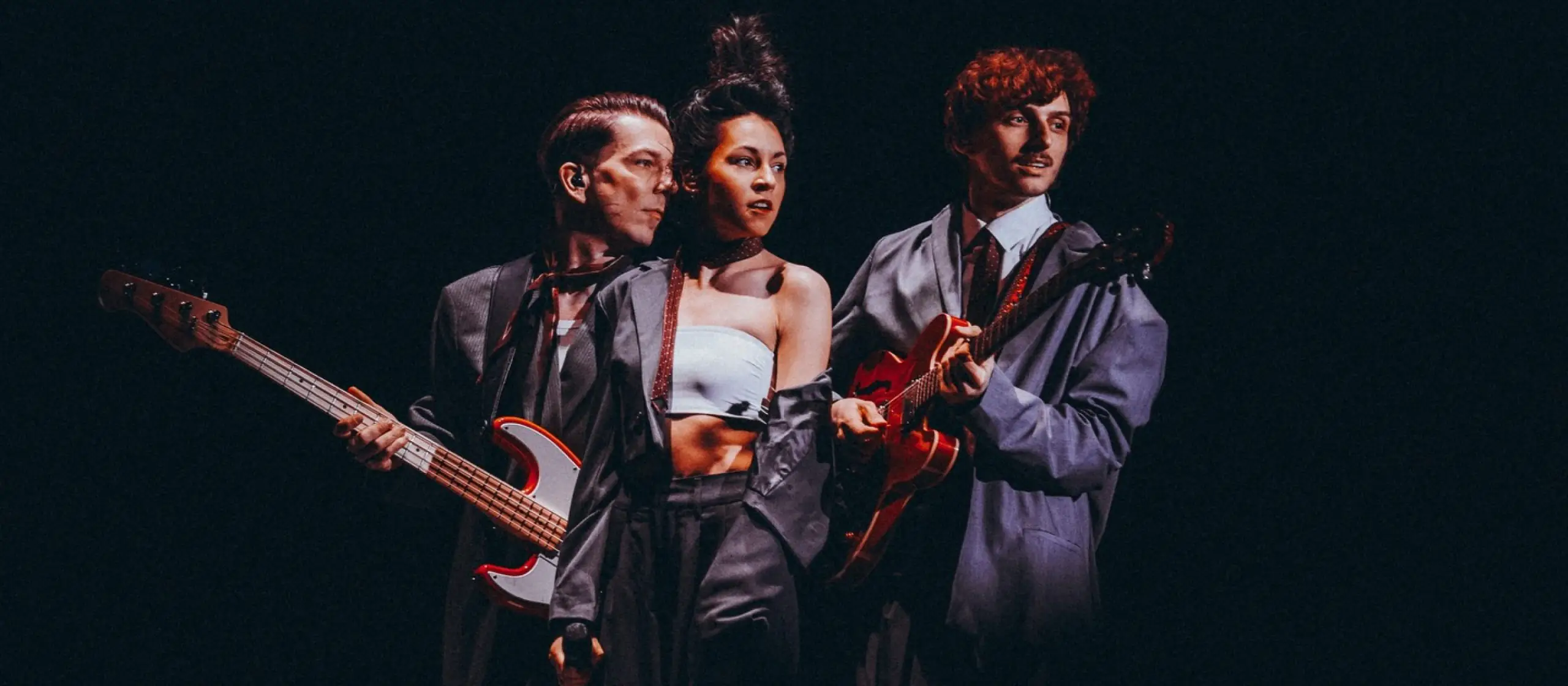
Kautkaili is yet another discovery in Latvian music of recent years. And, once again—with a self-explanatory name. Kautkaili means “Even Naked.” Baring one’s soul is indeed something that Kristīne Pāže, the band’s founder and leader, seems to have absolutely no fear of doing. Being honest and open in music is a principle she promised herself to follow from the very beginning—and continues to follow to this day, commenting it this way: “I think that’s the essence of our band as such, and it’s my way of self-expression. Either I do it [write music] this way, or don’t do it at all.”
Kristīne Pāže and Didzis Bardo met on the music television show “OKartes skatuve.” For both of them, participating in the show was proven to be fateful—in two ways. There, a great love blossomed, and the band was born from it. Both Kristīne and Didzis already had musical experience: he was known to Latvian audiences as a member of the Gain Fast band, while Kristīne sang in different vocal ensembles—as a hobby, nothing more. But then Didzis surprised Kristīne with her her first guitar. She started discovering the instrument, has been practising a lot and, later, started to write her own music. Now, Kristīne attributes her velvety voice—which many call one of the most beautiful female voices in Latvian music—to hours of practice and work with the instrument.

2018 can be considered the year Kautkaili officially became a band. It started with small venues and the question of “will this all work out?”. Then, in 2023, came their debut album “Personas kods”, which won the “Golden Microphone” award in the “Music Recording of the Year” category. And in 2025, after the third member—Krists Krūskops—joined the group — a major at the Palladium. Such rapid growth is a rare thing in music—but Kautkaili succeeded. Perhaps it’s due to the lead singer’s special voice, or the “naked” lyrics, in which listeners recognize themselves so often.
Currently, the musicians are working on a farm in the Klintaine parish, where Kristīne and Didzis moved a few years ago. They do not categorize their music into a specific genre, leaving the listener the freedom of interpretation.
Chris Noah (Krists Indrišonoks)
Genre: indie-pop, indie-rock
An excerpt from the song “Nomodā”
Nav viegli smaidīt
Šis bijis sarežģīts gads
Elpojot varoņu pelnus
Pirmoreiz sajutos vecs
Vai jūties laimīgs?
Ir vieglāk paraustīt plecus
Tā vietā, lai tērētu zilbes kādam, kas nedzird, ko saku
Bet šovakar
Šovakar
Kopā gaidīsim rītu
It’s not easy to smile
This has been a difficult year
Breathing in the ashes of heroes
For the first time, I felt myself older.
Do you feel happy?
It’s easier to shrug my shoulders.
Instead of wasting my words on someone who can’t hear what I’m saying
Tonight
Tonight
Let’s wait for the morning together
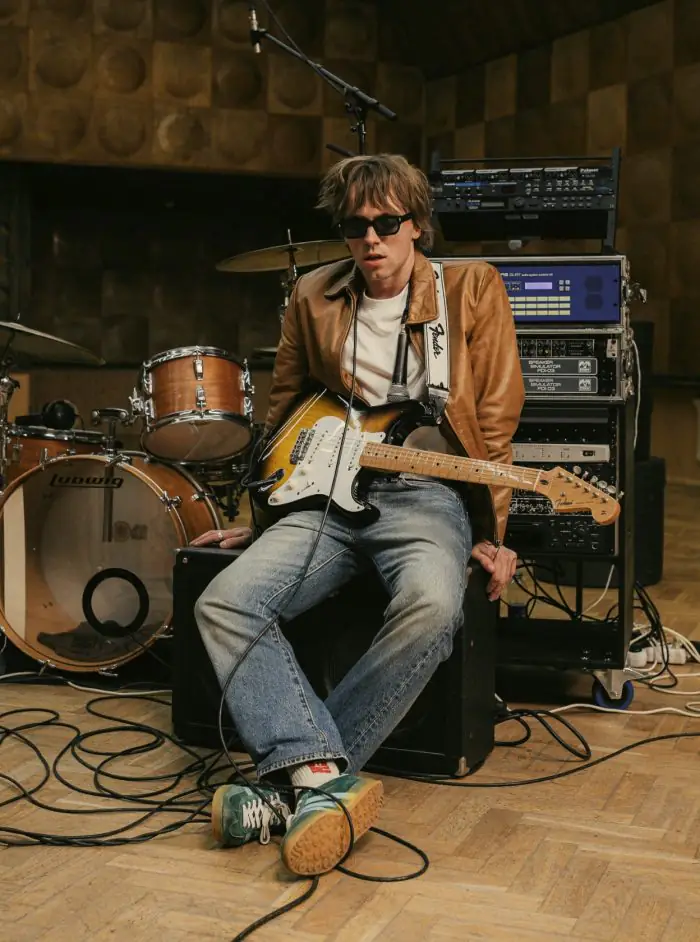
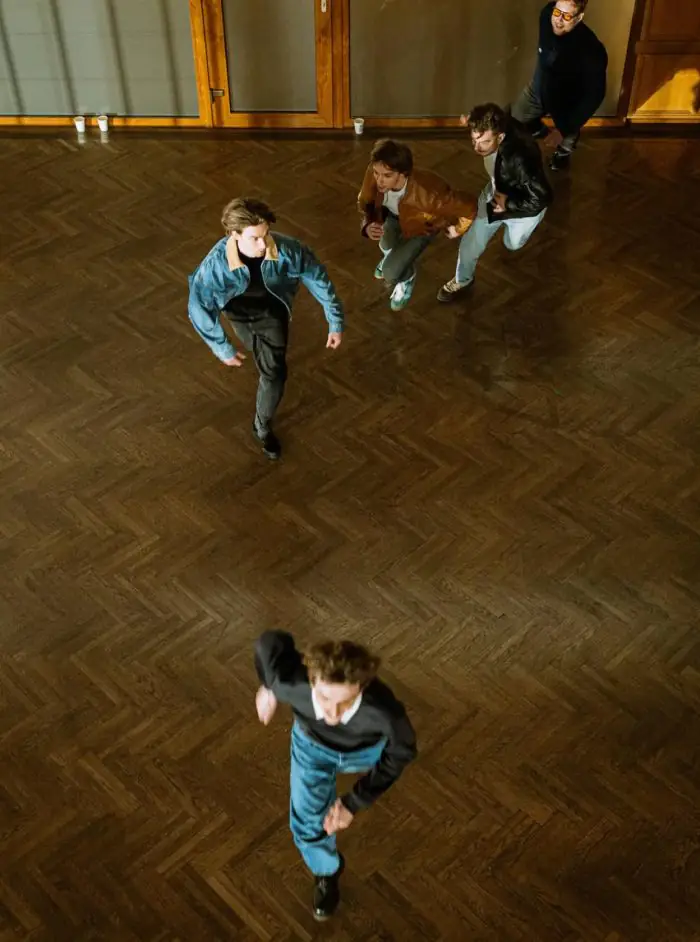
“The most romantic thing is to be humane.” This is what one of the most romantic contemporary Latvian performers, Krists Indrišonoks—known by his stage name Chris Noah—is convinced of. His music is infused with that very kind of special romanticism.
For the first 17 years of his life, Krists was sure he would never connect his life with music. Even though it was always around him: he grew up in a musical family (his father is a professional guitarist and songwriter, and mother—a music teacher) and, as often happens with the children of musicians, attended music school. When he graduated, he handed his diploma to his parents with approximately these words: “Thank you. This is for you. And I will never do music again.”
Easy to understand: at that time, his main passion was sport. From the very childhood, he dreamed of becoming a professional athlete and seriously trained in basketball and hockey. But over time, it became clear that a sports career wouldn’t work out—and almost at the same moment, one important internal shift happened.
Krists discovered rock and indie rock, fell in love with guitar playing, started experimenting with sound and replicating the ones he especially liked. This interest quickly grew into a desire to create his own music—and led him to a studio, where he recorded his very first, “Had It All”, song. From the very first release, he was noticed: the track was played on the radio.
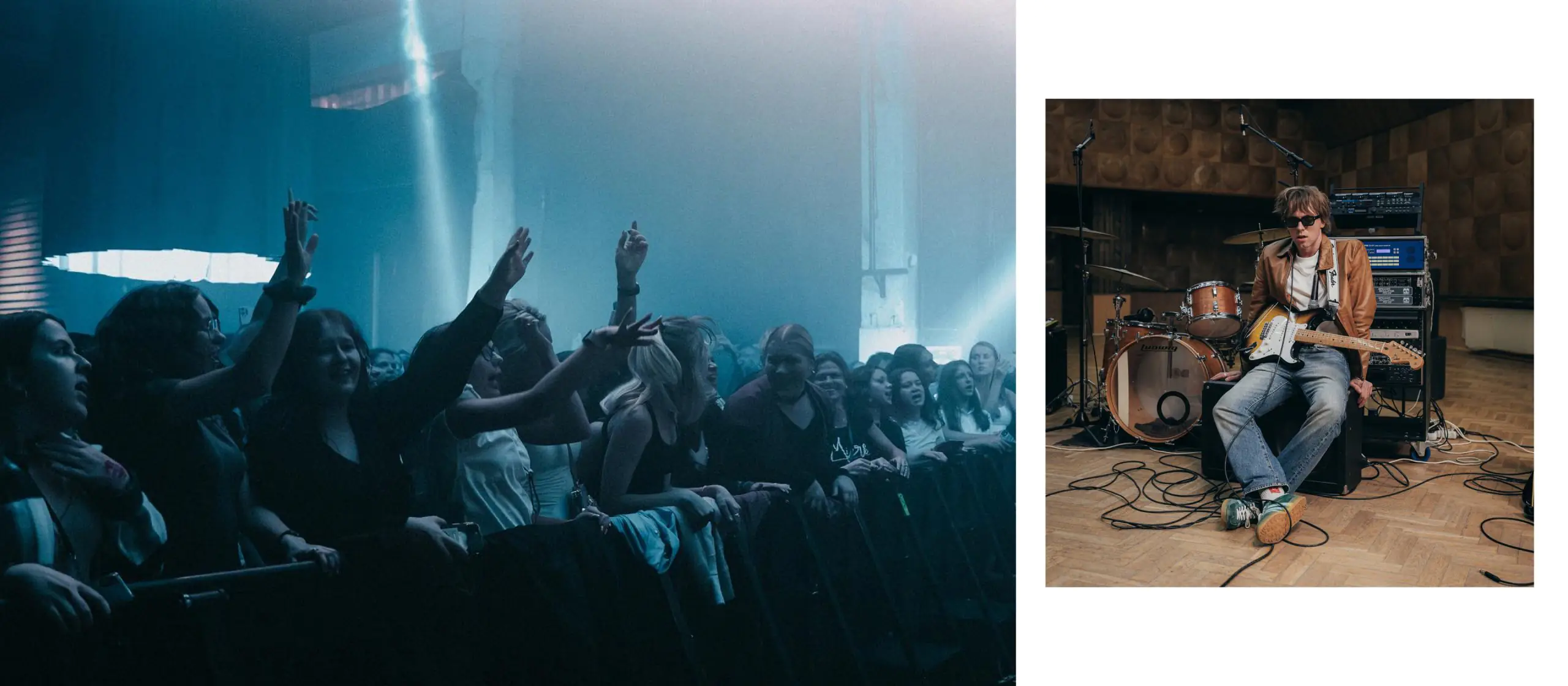
It could have been dismissed as luck, but the second single confirmed the interest—from both listeners and the music industry. That’s when Krist first thought: “It seems this really is my talent.” And for more than ten years since, he has continued to prove it.
His music is a precise and personal reinterpretation of everything he absorbed in his youth: from U2 and The Kooks to Bon Iver and John Mayer. To this he adds his own lyrics—bright, honest, primarily about love. Krist writes not only for himself but also for other artists, including international ones. For example, in 2023 he wrote the lyrics for the song with which Monika Linkytė represented Lithuania at Eurovision (11th place in the final).
“You need to romanticize your ideas, ambitions, and experiences. In the rush of everyday life, we often forget this.”
At the same time, Krist speaks openly: music is work. Big and not always predictable. Once, he compared the songwriting process to fishing: you set your nets—sometimes they’re empty, sometimes they catch something random, and sometimes—the very best fish.
His work has been recognized with numerous awards, and in 2025 it received especially loud acclaim—he won the “Golden Microphone” in five nominations at once.
Vēstnieks
Genre: indie-pop, experimental music
An excerpt from the song “Sapņu Ķērājs”
Tavs iekšējais kosmoss jau sen bija visu izstāstījis un ierakstījis
Pirms Tu ieradies šeit
Un tikai pašam tas jāatver un jāatrod
Sapņu ķērājs ir tikai metafora
Tu pats esi savs sapņu ķērajs
Tu visu vari atrast
Tu visu vari
Notici sev
Jo tas ir sapņu
Sapņu kērājs
Kas tur pa piena ceļu jāj
No sliktiem sapņiem
Kas iznāk ārā
Tas visus pasargā.
Your inner compass had already told and recorded everything long ago
Before you arrived here
And only you can open it and find it
The dreamcatcher is just a metaphor —
You are your own dreamcatcher.
You can find everything
You can do anything
Believe in yourself
Because it is the dream
The dreamcatcher
That rides along the Milky Way
From bad dreams
That come out
It protects everyone.
“I don’t think that dark is stylish. I think it’s harder to create light music—especially in a way that doesn’t make it banal.”
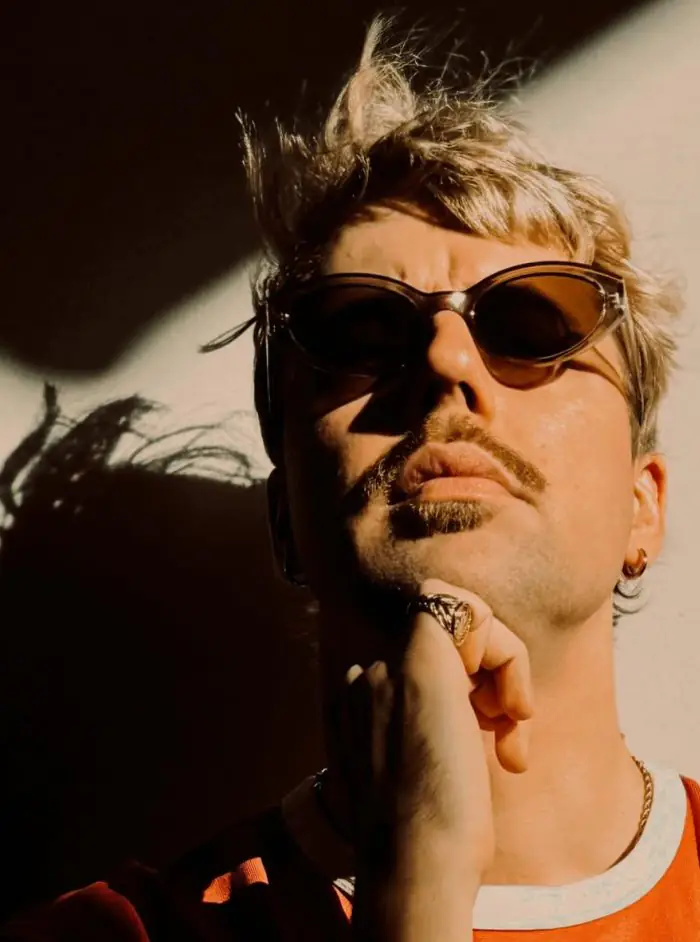
Vēstnieks is a new name in Latvian music, but the musician behind this pseudonym has long been known to the Latvian audience. Rūdolfs Macats—the son of renowned pianist Raimonds Macats—has been surrounded by music since early childhood. Back then, he was more fascinated by drums, but the family recommended him to choose a more classical path—and he began playing piano.
After school, Rūdolfs studied jazz piano at the Amsterdam Conservatory for four and a half years, and then became the first person in Latvia to earn the “Nordic Master: The Composing Musician” degree. He then actively worked and collaborated with both Latvian and international jazz musicians.
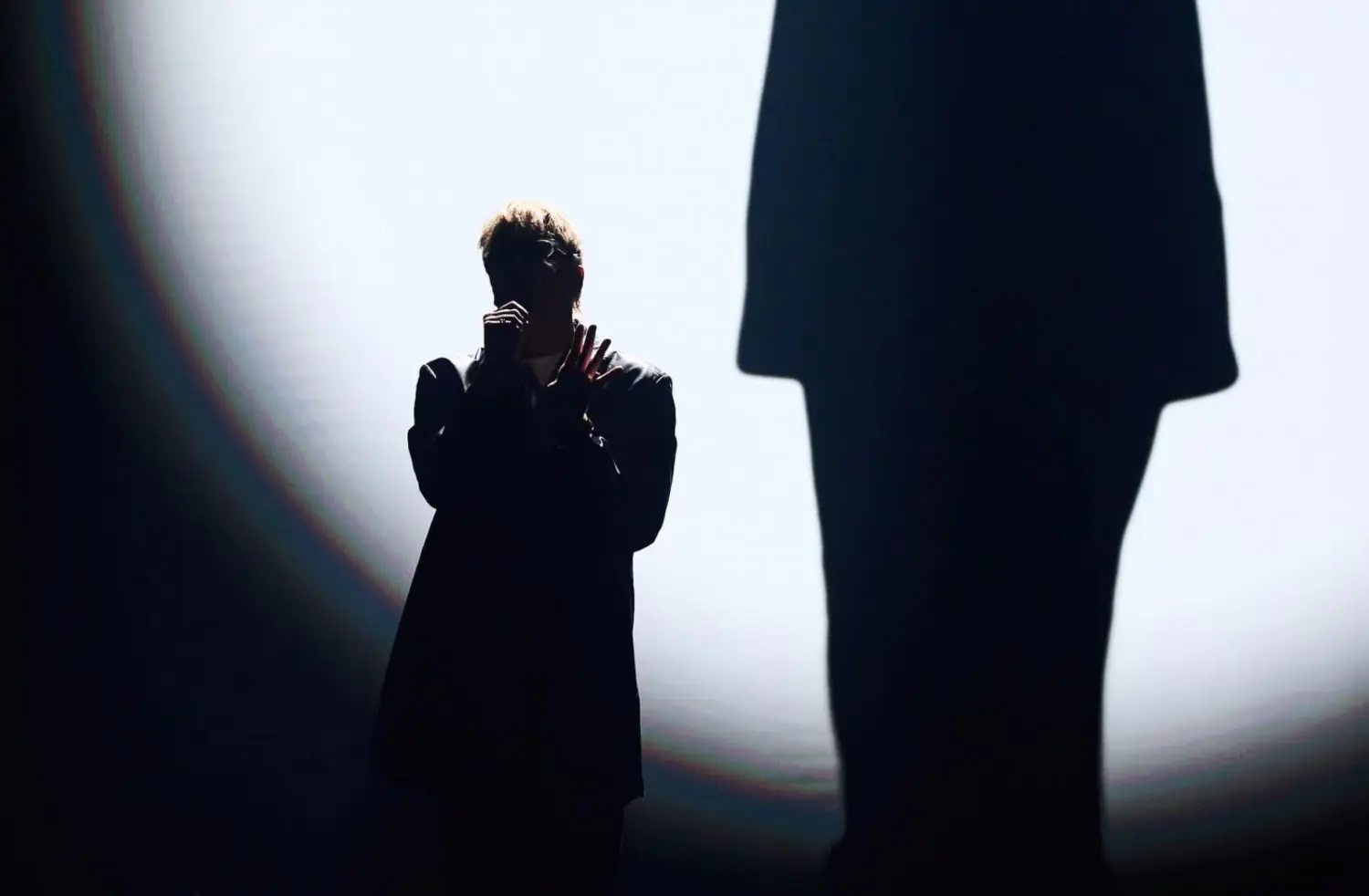
During the pandemic, he began writing more. As he later recalled, during that period he developed a strong desire to create music “that gives a feeling of happiness.” His playlist at the time included Whitney Houston, Michael Jackson, Stevie Wonder, Prince, and other brilliant artists from the 1980s and early 1990s, whose music he was listening to on repeat. “It was music I could endure. Nothing else interested me at the time.”
It was from this bright, melodic, almost radiant music that the Vēstnieks project emerged. Its sound is a subtle blend of academic, electronic music, jazz, and light. And this is not a metaphor: striving for light is a promise the musician made—for himself and those who are listening to him.
“This is what I feel now and how I see the world. I try to cultivate the best qualities in myself and hope that my music will help someone.”