Riga’s Venice
A very romantic — and slightly mysterious — story took place in Riga, in the courtyard of a building at Strēlnieku iela 19. Since 2002, a giant reproduction (13 by 11 metres) of a painting by the well-known Latvian artist Ludolfs Liberts has been displayed on the building’s end wall. Over the years it has faded significantly, but the image is still clearly recognisable.
Journalists tried to identify the person who commissioned the piece, but the employees of the company that installed the enormous poster said they could not disclose personal information. They did, however, confirm that the client obtained all the necessary approvals and that the reproduction is displayed legally.
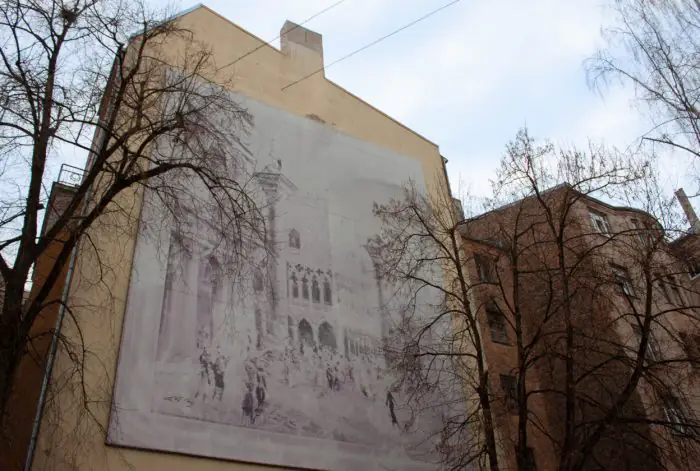
Among local residents, there is a legend that the mural was a gift to a beloved woman from an admirer whose name remains unknown. Supposedly, she loves Venice — and this way, she can enjoy its views every day, with her windows believed to be directly opposite the reproduction.
Bricked Alive in the Wall
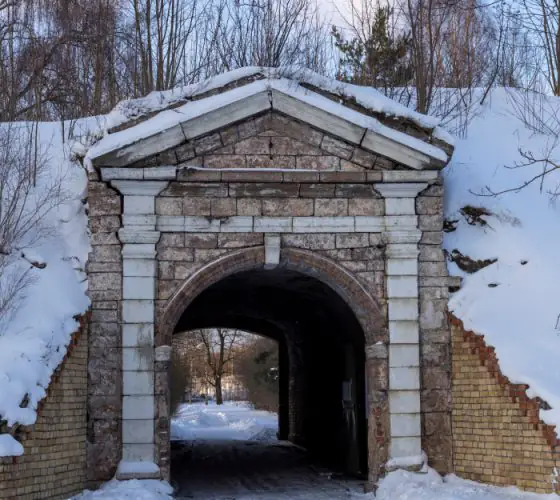
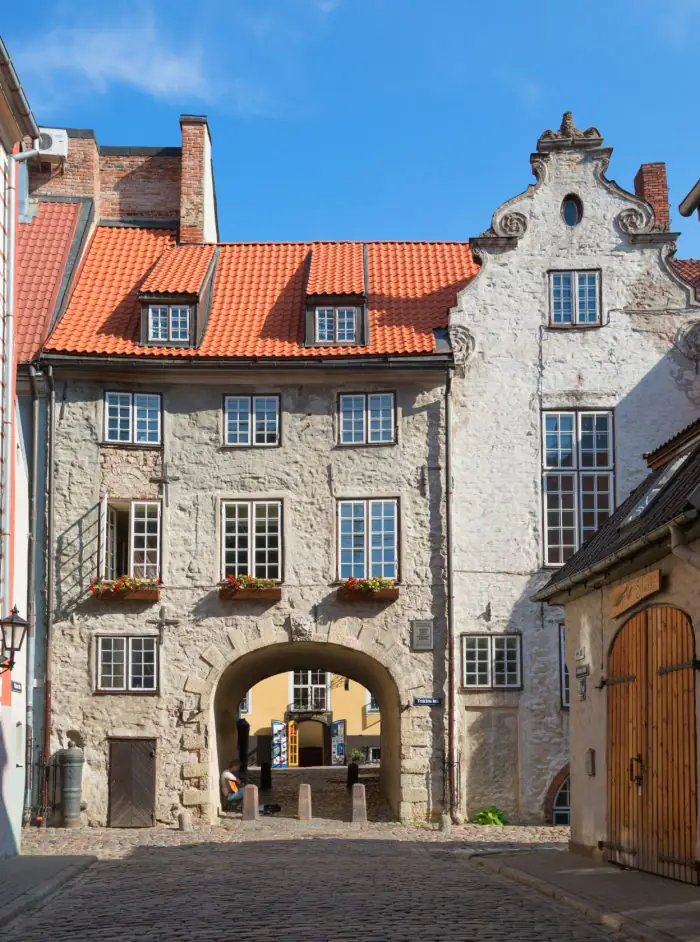
Legend has it that this chilling story took place at the turn of the 17th and 18th centuries, when Riga was under Swedish rule. In 1698, the Swedish Gate was built — a structure that became one of the symbols of foreign rule and has survived to this day. It was near this gate that a Latvian girl used to meet a Swedish soldier.
Their romance, however, was fiercely condemned by the local population, as the Swedes were seen as occupiers. For loving him, the girl was supposedly bricked alive into the gate.
Since 2015, a ghost-like sculpture has stood nearby, created as a tribute to the legend.
Romantic Motifs in the Decoration of Riga’s Façades
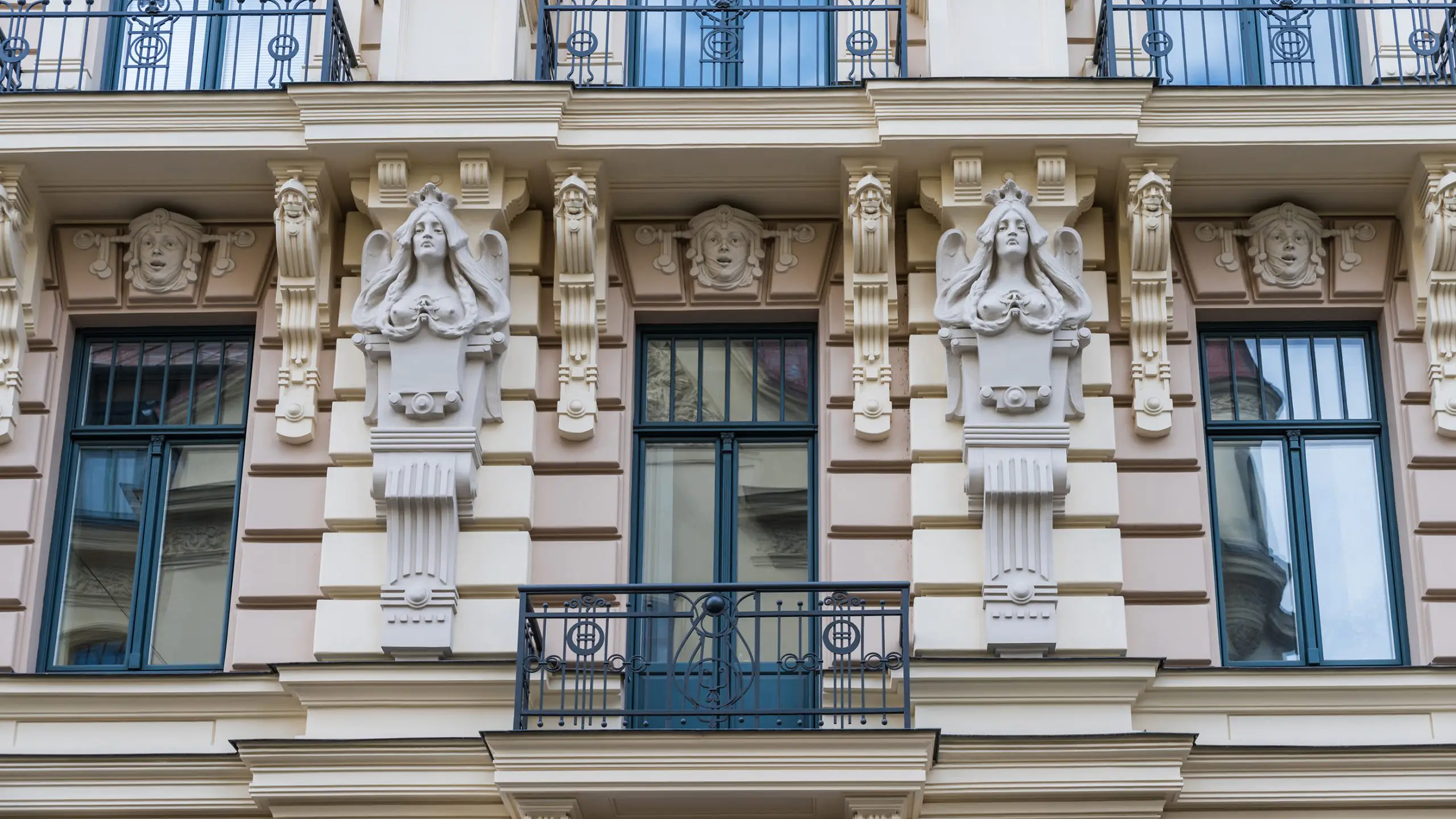
At the turn of the 19th and 20th centuries, many Jugendstil buildings used floral motifs and female figures as a visual language of love, beauty, and emotional connection.
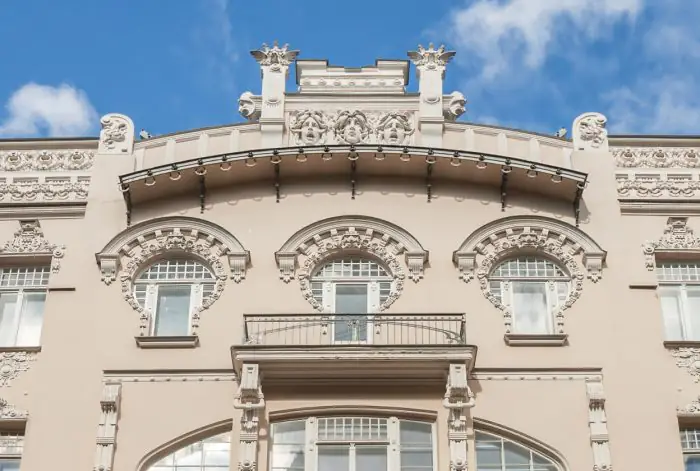
Alberta iela 4 — a building designed by Mikhail Eisenstein — is decorated with female faces, peacocks, and swirling ornamentation, and is often interpreted as a celebration of love within the family.
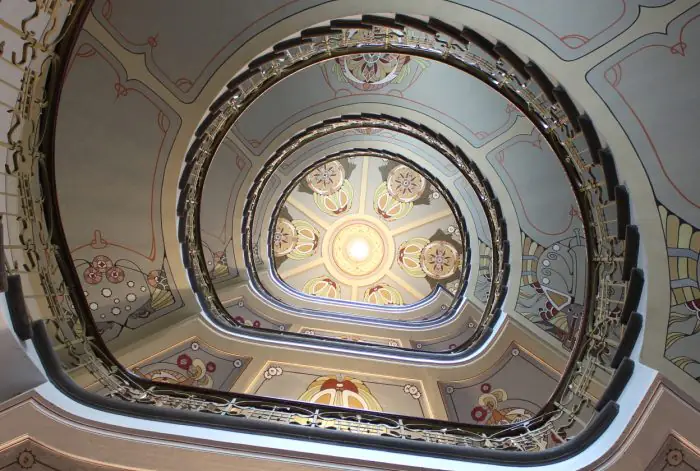
Alberta iela 12 — an apartment building by architect Konstantīns Pēkšēns. Today it houses the Riga Art Nouveau Museum on the ground floor, where decorative roses, chestnut-leaf stencils, and floral stucco are closely linked to romantic imagery and Latvian folk poetry.
Milda
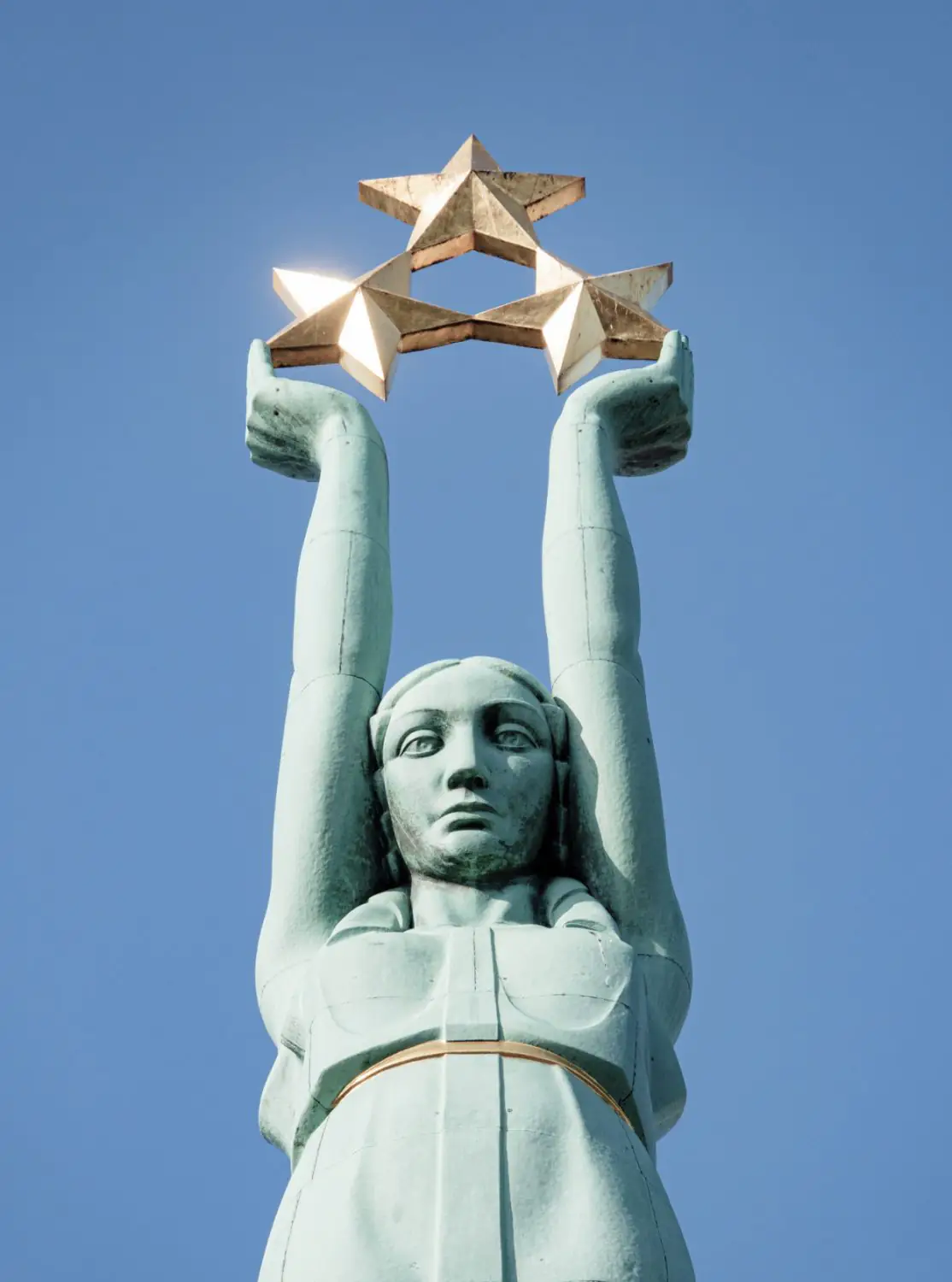
Riga’s Freedom Monument is popularly known as “Milda” — a name that has become a symbol of feminine strength and love for the country. In this sense, the monument represents not only Latvia’s independence, but also devotion to the nation itself. Its creator, sculptor Kārlis Zāle, conceived the figure as a collective female image, yet there is a theory that it may have been inspired by a real person — Milda Vintere, the wife of his friend. She knew Zāle personally, and some believe her appearance may have influenced the sculptor when creating the monument.
A Castle for His Wife
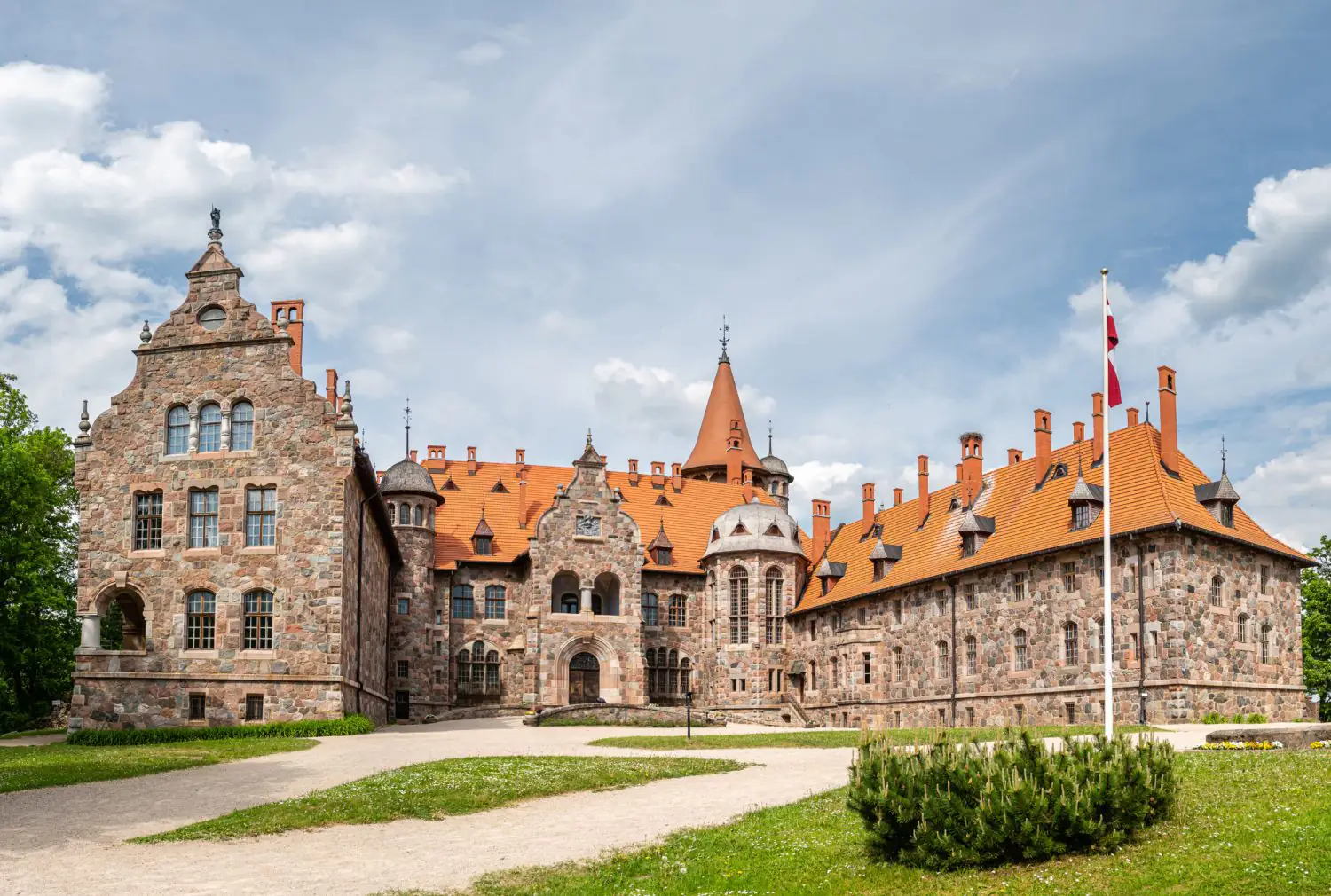
One of Latvia’s most beautiful manor houses is the Cesvaine Estate, built in the late 19th century in the style of a medieval castle. According to legend, Baron Adolf von Wolff wanted the architecture of the manor to echo Italian buildings — because his wife was originally from Italy, and he hoped to delight her with a home that felt familiar. It is also said that after the baroness died, her spirit refused to leave the castle and still wanders through its corridors and hidden corners — so much did she love Cesvaine.
The Cable Car in Sigulda
The high banks of the Gauja can be inspiring — but they can also become a very real obstacle to love. That is exactly what happened to a young man named Aivars, who fell in love with a worker at the local Krimulda sanatorium — the beautiful Genoveva. Every evening, he would walk her from one bank of the Gauja to the other.
At some point, Aivars saw the cover of issue No. 19 of the magazine Ogonyok from 1956, featuring a cable car in the Georgian town of Chiatura. A thought struck him: why not build something similar in Sigulda, to make the journey to and from Krimulda easier? He became obsessed with the idea and was ready to face the challenges ahead.
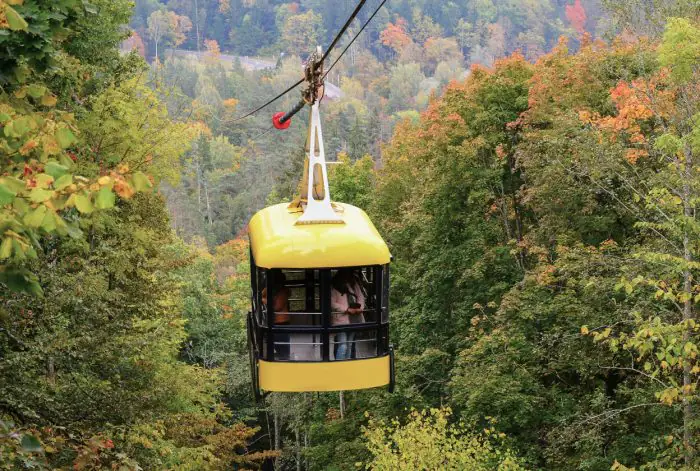
One day, Aivars promised his beloved that, someday, they would “fly” over the Gauja like birds. And he kept his word — although many years passed before it became reality. The Sigulda cable car officially opened on 3 January 1969.
Today, anyone can take a ride on this cable car. It is one of the best places in Latvia to admire autumn landscapes. And if your heart is still free, perhaps you might even find love here — just as Aivars and Genoveva once did.
The Rose of Turaida
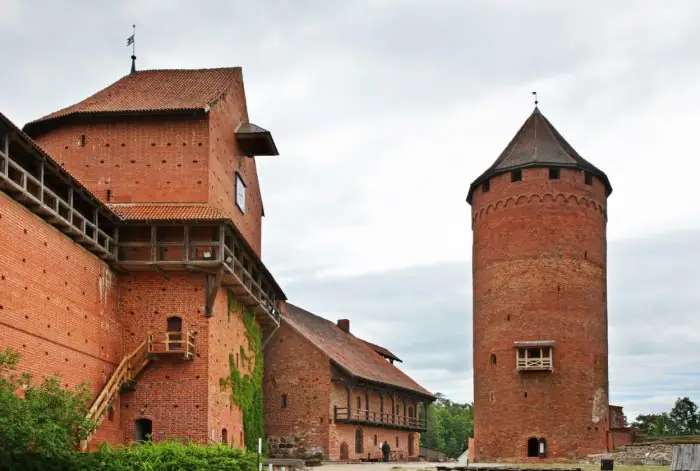
The legend of Maija, remembered in history as the Rose of Turaida, is the very quintessence of Latvian romanticism. The tragic events unfolded by the walls of the ancient castle near Sigulda, where the young woman chose death over dishonour, remaining faithful to the gardener Viktors. Today, Church Hill is a historic place filled with both romance and tragedy. The old linden tree, the memorial cross, and the scarlet flowers on Maija’s grave are seen by visitors as a living embodiment of devotion, turning this spot into a sacred destination on the map of lovers.
Linda in Tallinn
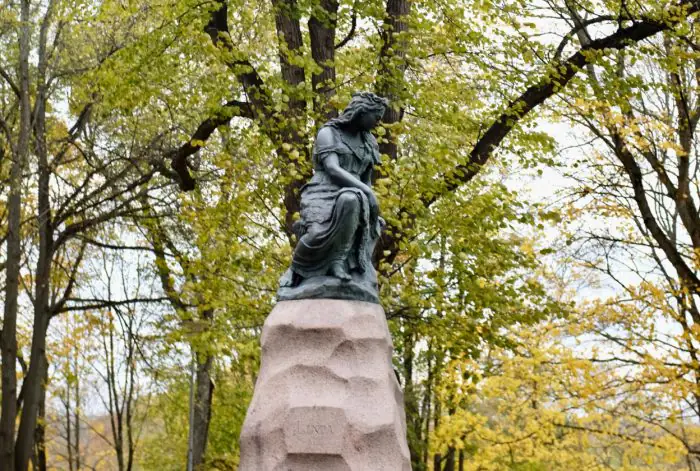
Toompea in Tallinn has many quiet corners where you can escape the tourist crowds. One of them is Hirve Park, with a small rise topped by the 1920 sculpture “Linda.” According to legend, this beautiful name belonged to the wife of Kalev, a mythical Estonian hero — and Toompea Hill is said to be his grave. It is believed that Linda carried the limestone boulders that form the hill in order to cover her husband’s body. From her tears, Lake Ülemiste was born — today Tallinn’s main reservoir, supplying water to most of the city’s apartments.
Kissing Students in Tartu
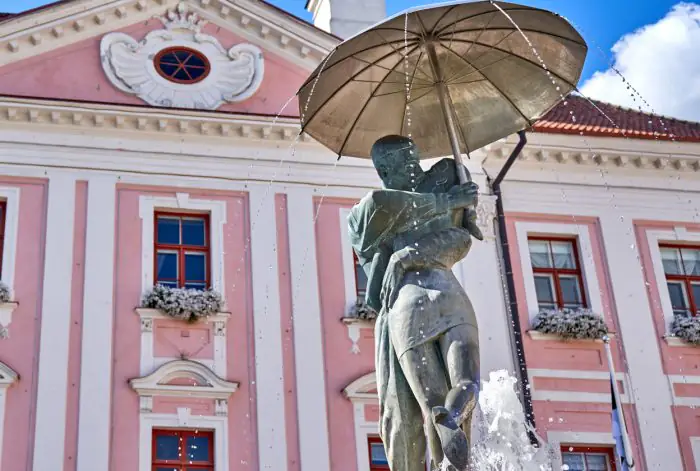
Since 1998, a fountain depicting two kissing students has stood in Town Hall Square in Tartu, Estonia’s main university city. The couple stands beneath an umbrella, with water trickling down from its edges. The sculpture does not portray any specific individuals — it is a collective image of romantic student life.
The fountain almost immediately became one of the city’s symbols. Before it, however, another fountain stood on the same spot from 1948 — simpler in form: a round basin with a pipe in the centre, covered with stones. On hot days, students of the University of Tartu loved to bathe in the old fountain.
Trakai: A Castle Born from a Dream
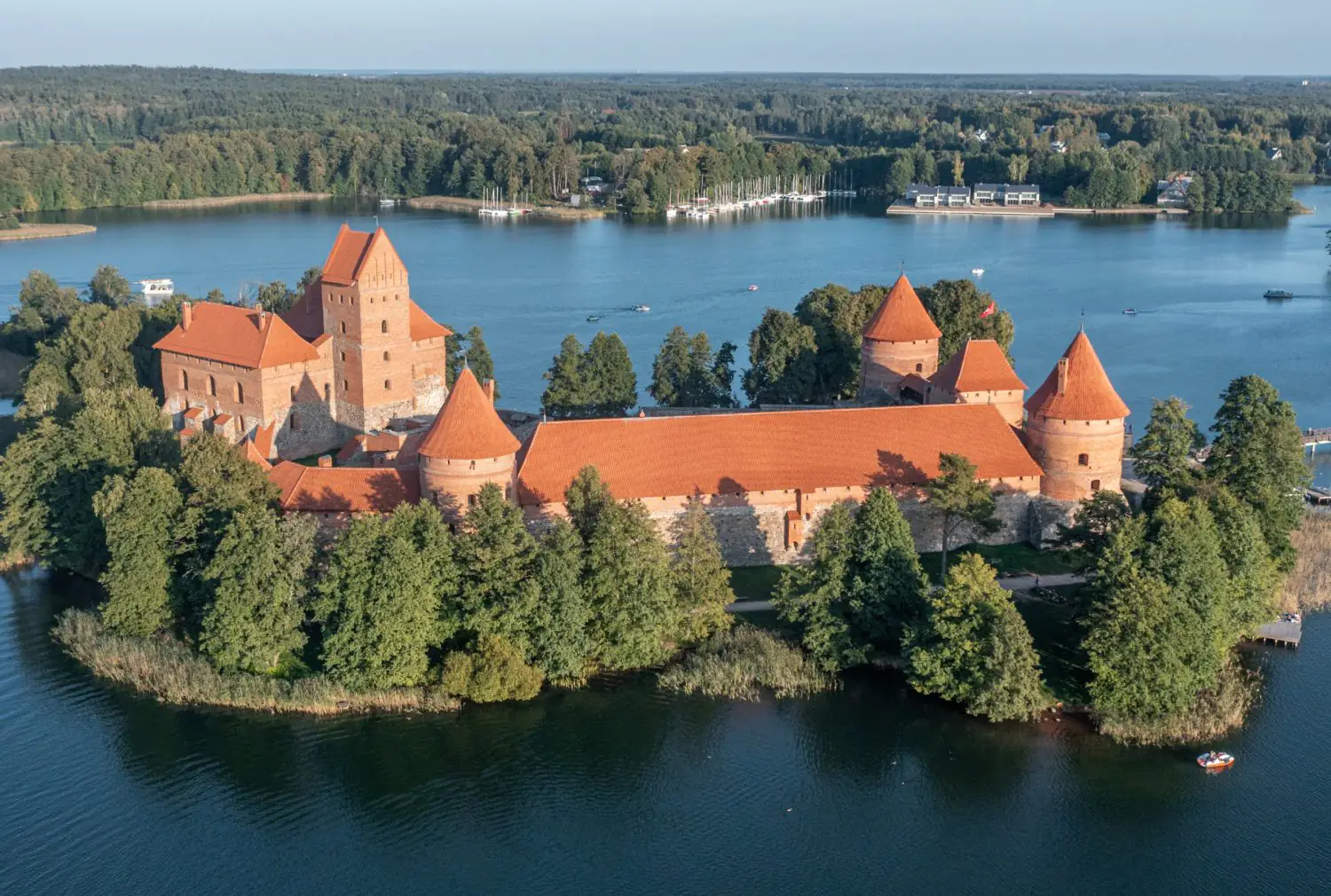
Rising above the mirror-like surface of the lakes, Trakai Castle has long been a symbol not only of Lithuania’s state power, but also of the triumph of human feeling. Folk legends link the founding and flourishing of this island fortress to the will of two loving hearts, determined to create a secluded paradise of their own.
In today’s tourist imagination, Trakai is seen as a unique symbiosis of landscape and fortification — where every bridge and every tower becomes a tangible expression of a couple’s desire to find a lasting union away from the noise of the world.