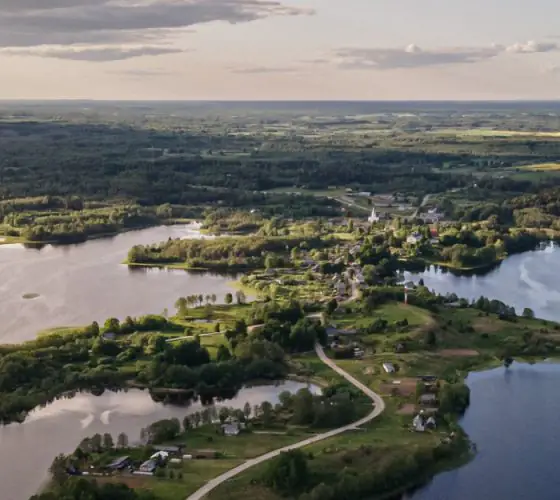
Contributing to regional development
At first glance, it may seem surprising that a state-of-the-art hospital was built not in Tallinn, but in a relatively small city with a population of 17,500. However, for the development of the country as a whole—not just the capital—the decision to construct the hospital in Viljandi appears strategically sound.
Tallinn, as a large city with well-developed international connections, continues to attract people from smaller towns across the country as well as from abroad, despite facing a number of serious public infrastructure challenges. Distributing material resources across Estonia’s regions helps create more attractive conditions for people to continue living in—or relocate to—cities such as Viljandi. The Tervikum hospital has created around 500 jobs, which is a significant step for a city of this size.
One might assume that building an advanced hospital would hardly stimulate substantial demographic change in a small regional center. However, it should be understood as part of a broader set of measures aimed at increasing Estonia’s overall attractiveness.
Project Concept
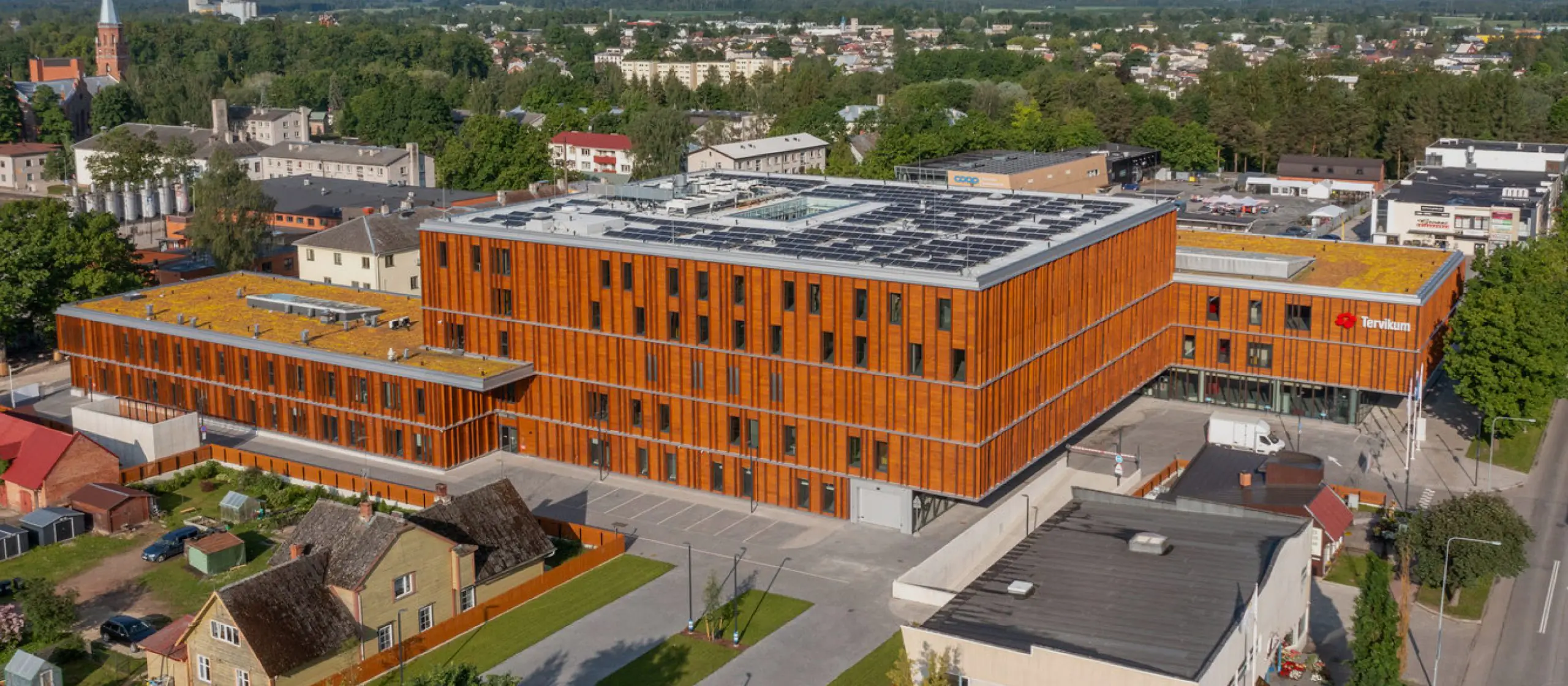
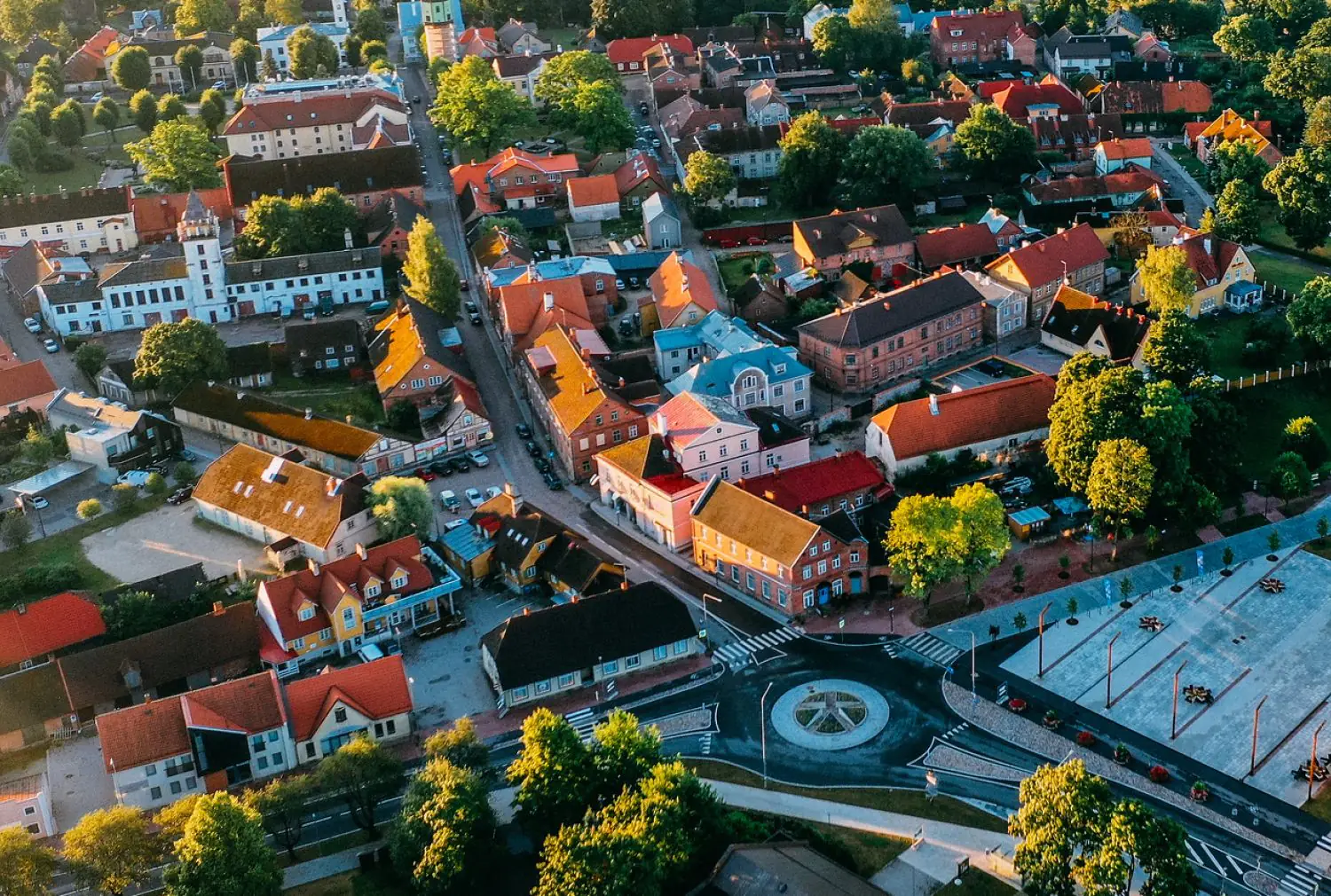
The new hospital in Viljandi is a joint project by three architectural firms: DAGOpen, PLANHO Consultores, and Bakpak Architects. The designers at PLANHO set out to create a hospital that does not visually resemble a hospital—or rather, the kinds of medical buildings constructed during the Soviet era. A major challenge was integrating such a large-scale project (25,826 m²) into a historic urban environment. To ensure the building corresponded to the scale of neighboring structures, its volume was divided into several sections of varying heights. The context taken into account included not only widely recognized architectural monuments built more than a century ago, but also later heritage: modernism from the Soviet occupation period, shopping centers, and other buildings from the past 35 years.
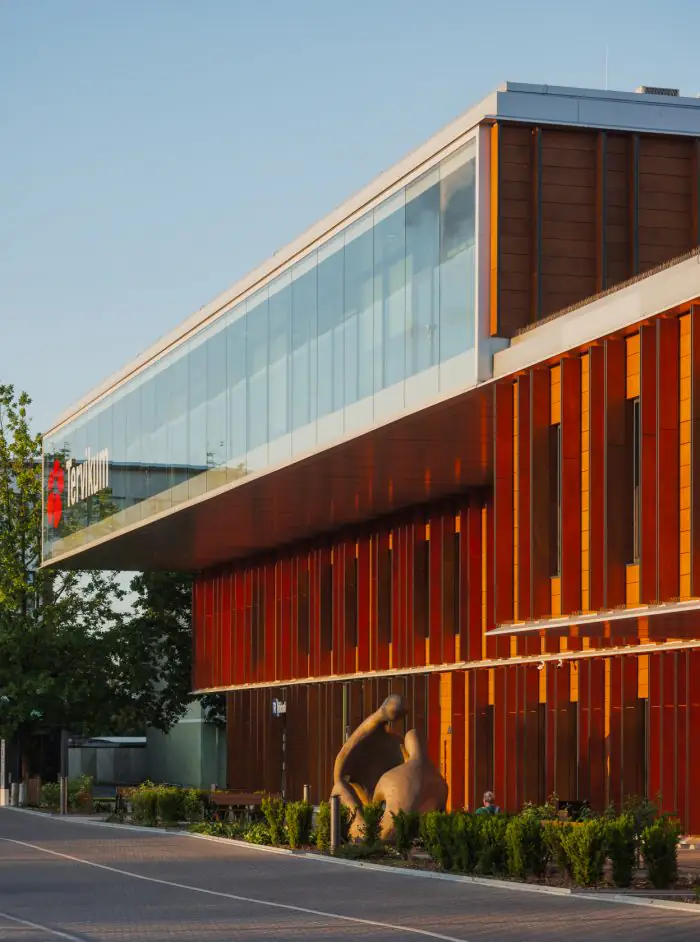
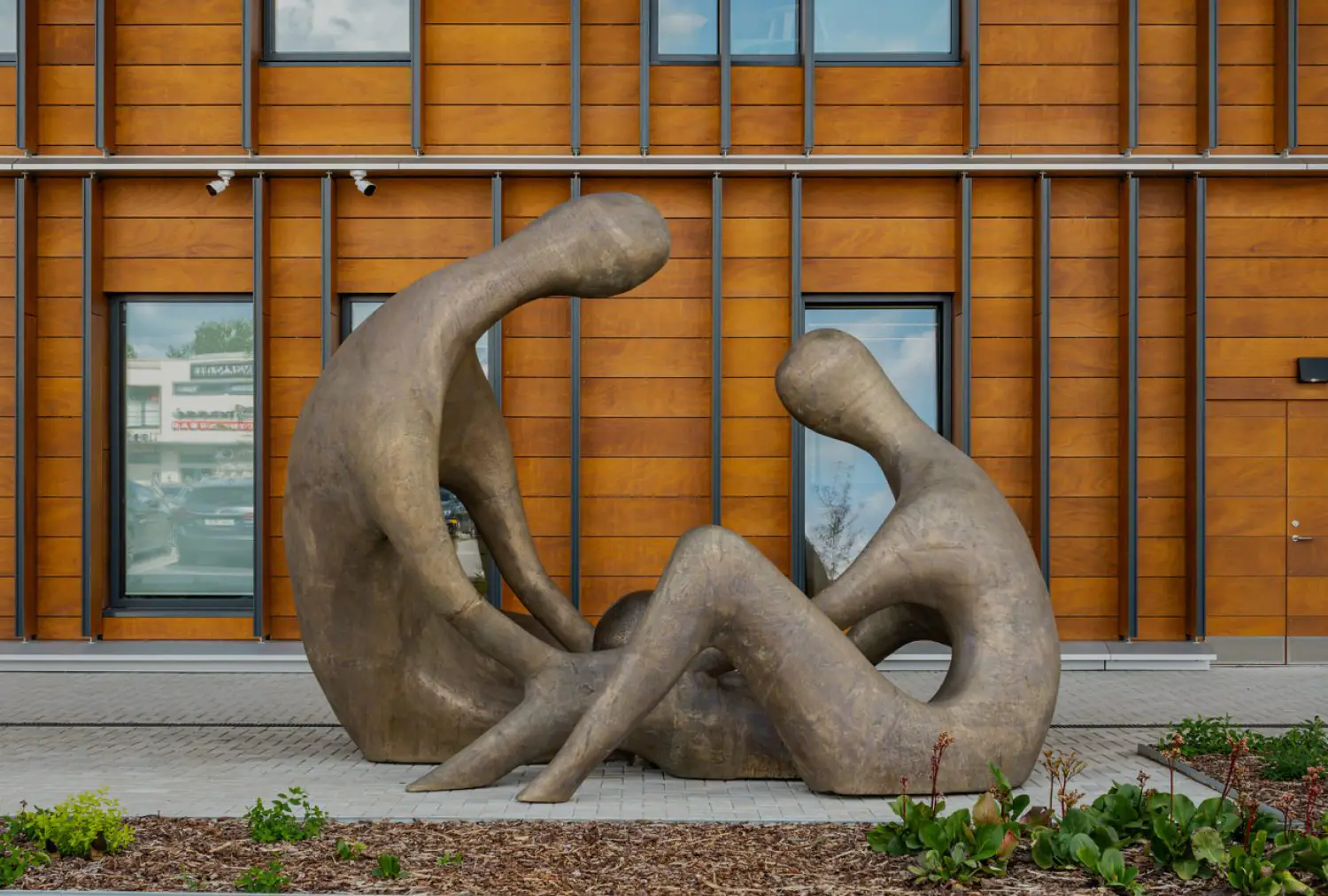
The exterior is clad with wooden slats that filter natural light, create a greater sense of comfort, and connect the project to Estonia’s traditions of wooden architecture. This organic shell modulates the hospital’s scale and culturally anchors it to its location. In terms of height, the building does not stand out among its neighbors.
Hospitals are often located away from the main urban fabric and separated from the street by fences. The architects of the new hospital in Viljandi sought to integrate it more fully into everyday city life, so that it would serve not only its core medical functions but also become a place for meetings and social interaction.
The hospital houses family physicians, various diagnostic laboratories, specialist and emergency care offices, as well as a rehabilitation center—all under one roof. Construction took place from 2021 to 2025, although discussions about the concept of the new medical center had been ongoing since the early 2000s.
Building Structure
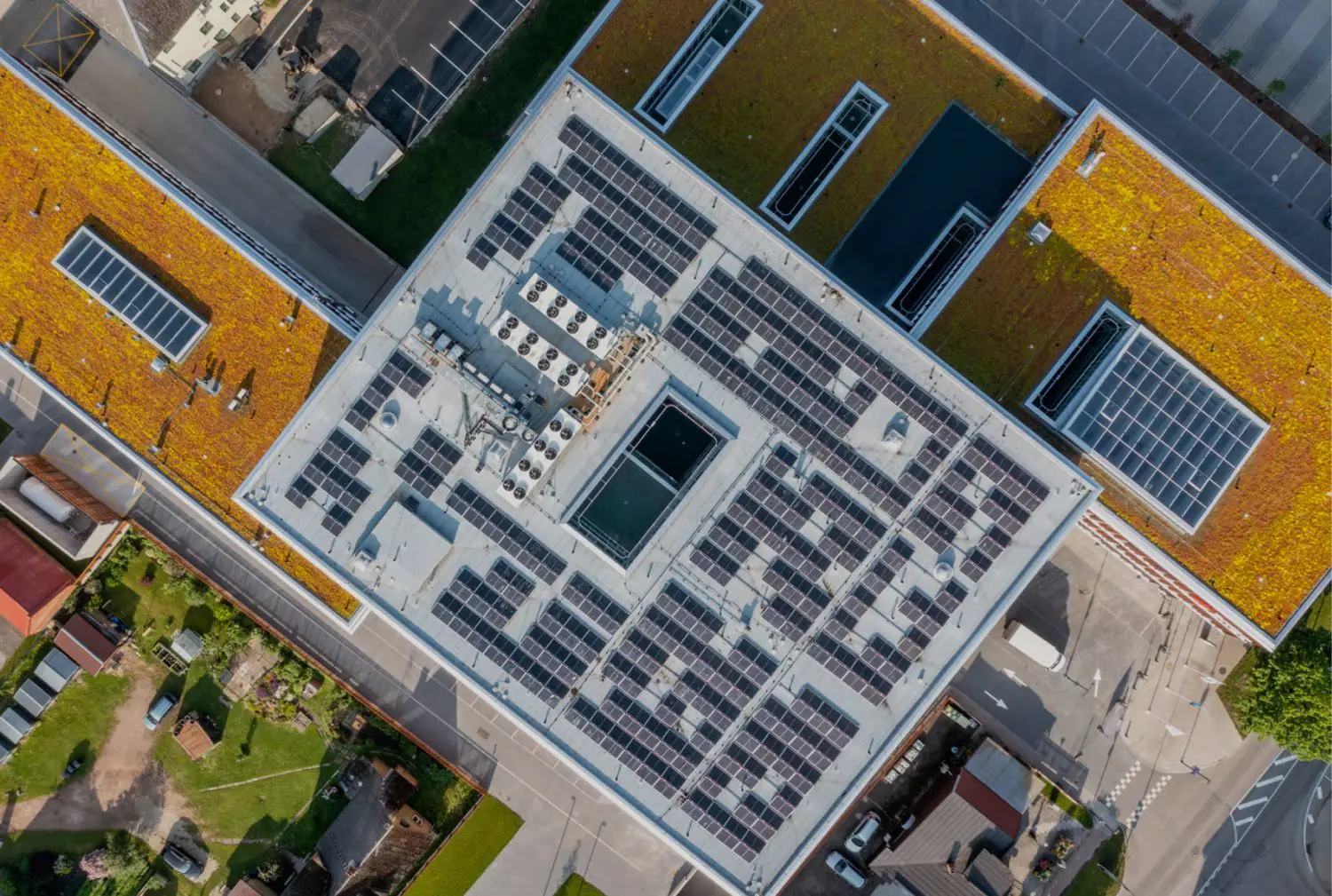
The hospital roof is partially landscaped and also used for the installation of solar panels, which help meet part of the medical center’s electricity needs.
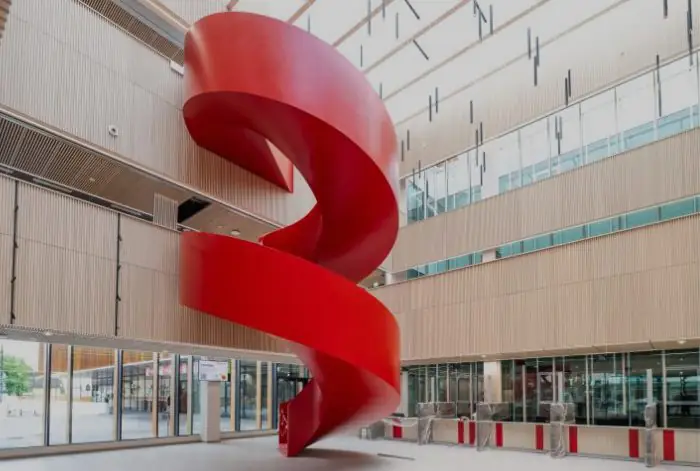
The interior volumes contrast with one another: depending on their function, different dimensions, colors, and finishing materials are used. The central atrium is filled with natural light. The main feature of this space is a bright red spiral staircase, which stands out against the calm palette of most other rooms.
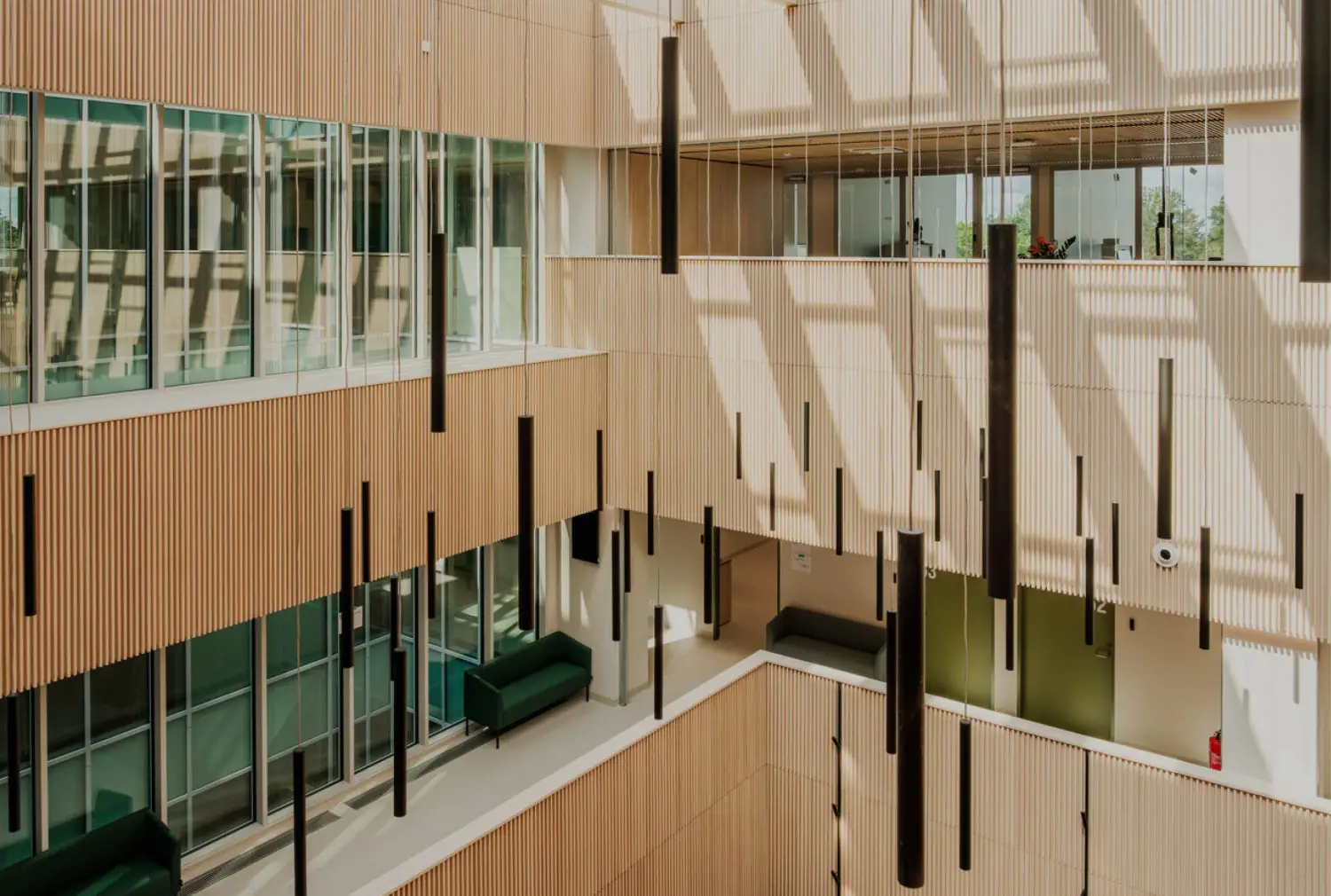
In several areas, the walls of the hospital’s ground floor are covered with panoramic glazing, creating a sense of permeability and openness to the urban environment. This design feature is particularly striking at night, when the building is illuminated with warm light.
Viljandi Tervikum is more than just a hospital—it is a public space that opens the path to health.