Against this backdrop, the state is launching a large-scale construction support program. This is not merely an attempt to revive the market at any cost. The objective is different: to preserve regional human capital, retain specialists, and ensure the stable operation of schools, hospitals, and enterprises. We have examined the projects currently being implemented in Liepāja, Valmiera, Jelgava, Daugavpils, and other cities, and looked into who is behind this construction—the private sector or the state.
The Shifting Character of Construction
Experts emphasize that it is impossible to speak of complete stagnation. Construction continues, but its nature is changing. Increasingly, housing is being built not to satisfy investment demand, but to address specific objectives: attracting specialists and stabilizing both the economy and regional demographics.
Housing is gradually ceasing to be purely an investment product and is becoming a tool of social and labor policy.
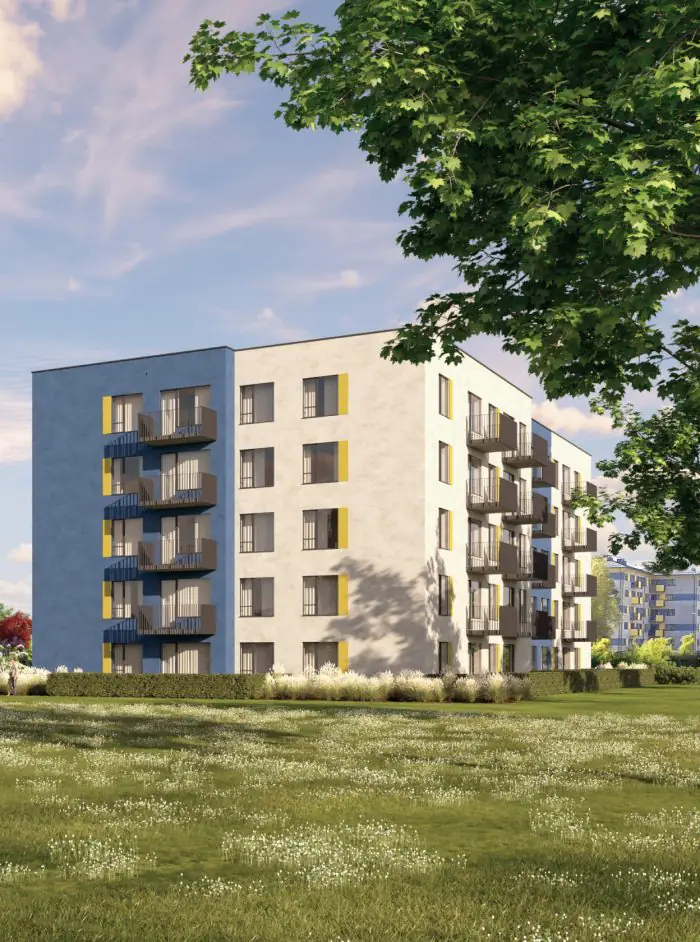
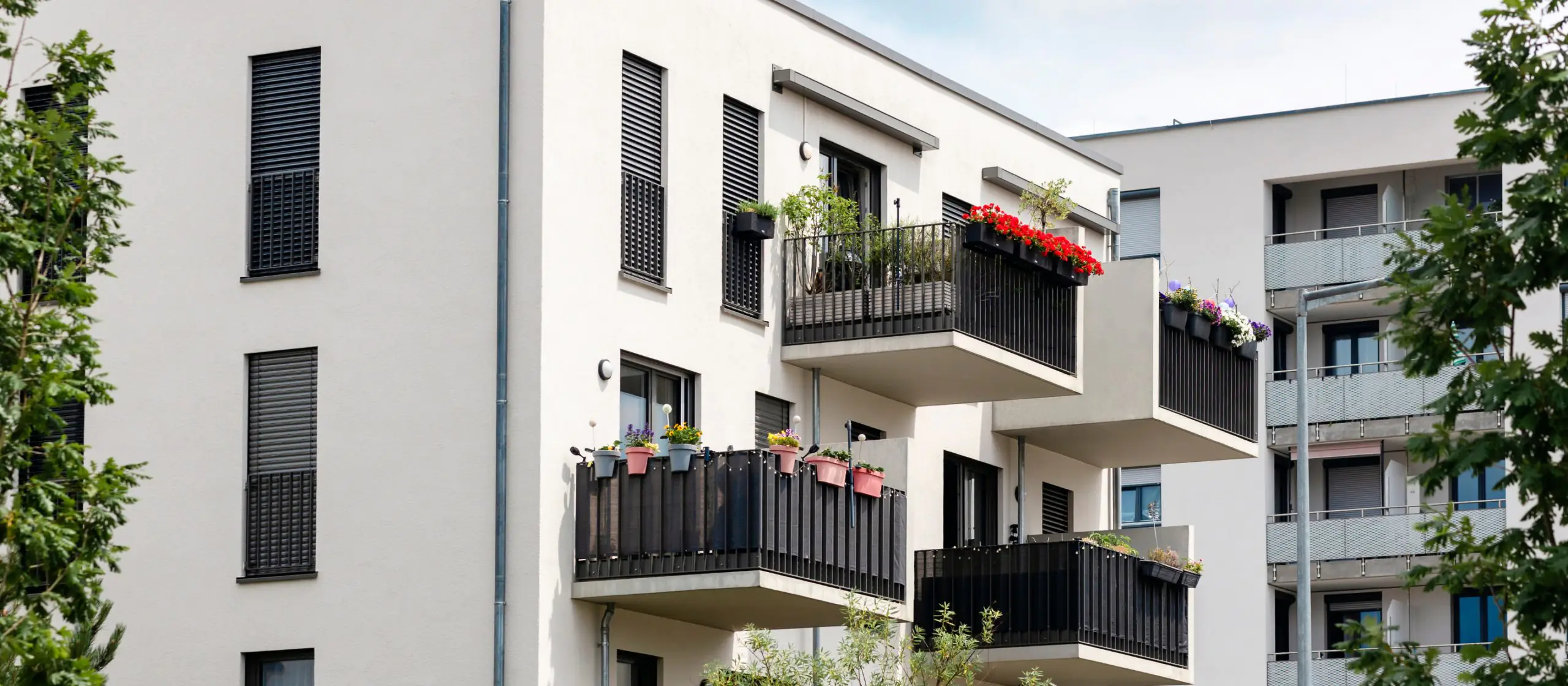
In many cases, this refers to affordable rental or municipal housing. These projects are implemented with the participation of local municipalities, supported by ALTUM, funded through European Union grants, or executed via Public-Private Partnerships (PPP).
The state, represented by ALTUM, explicitly identifies “low-rent” projects as a key pillar of regional support. As of 2024, construction has already begun on six affordable rental buildings with the institution’s backing—totaling more than 420 new apartments in the regions. The overall plan aims for at least 467 apartments.
Eligibility for this type of rental is reserved for households with incomes below a set threshold. The maximum rate is €6.39 per square meter, subject to annual indexation. For comparison, market rent in these regions typically fluctuates between €8 and €12 per m².
Liepāja: A Rare Hub of Private Activity
Liepāja remains one of the few regional centers where noteworthy private development activity persists. Projects here typically consist of small multi-apartment buildings with 10–20 units, standing 3–5 stories high. Apartment sizes range from 35 to 70 m², with a price bracket of approximately €1,200–1,600 per m². These developments fall into the economy and comfort classes, eschewing excessive infrastructure to focus on meeting local demand.
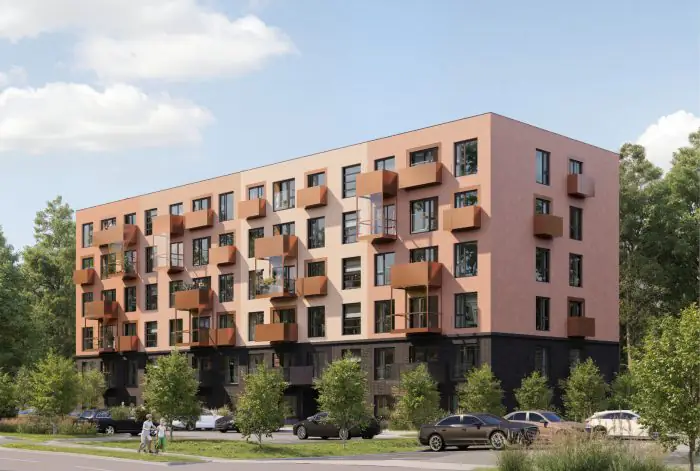
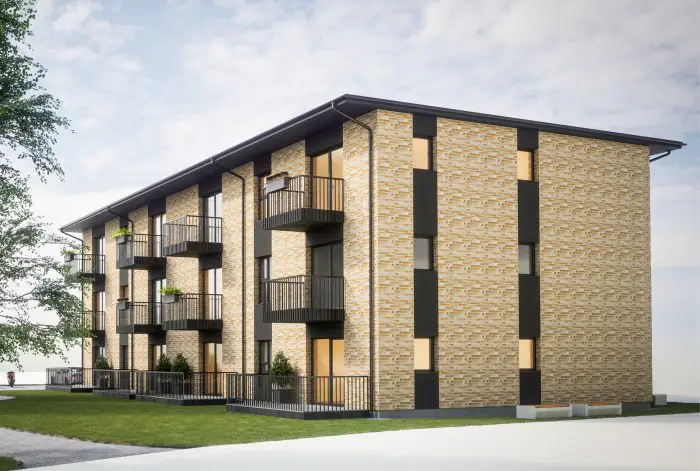
Key active players include Hagberg Development, which focuses on rental housing projects, and SIA BG Nams, currently building energy-efficient low-rise homes in the city center. Local developers are also active in the Dzintaru iela and Ezerkrasts districts, developing boutique projects that range from small 8–16 unit buildings to multi-section townhouses with private entrances.
A distinct niche is the reconstruction of historical buildings adapted for residential use, including projects involving the JA.Architects bureau in the Jaunā ostmala area.
Despite these private initiatives, the market remains fragmented and has yet to generate a massive construction wave—unlike the state-led affordable rental programs, which are becoming the primary systemic drivers of regional development.
Valmiera and Jelgava: Housing as a Career Strategy
In Valmiera, the local municipality plays a key role. Here, 4–5-story “low-rent” buildings are being constructed, featuring apartments with floor areas ranging from 30 to 65 m². These projects are implemented by the municipal company Valmieras Namsaimnieks with the support of ALTUM, and construction is carried out by MONUM.
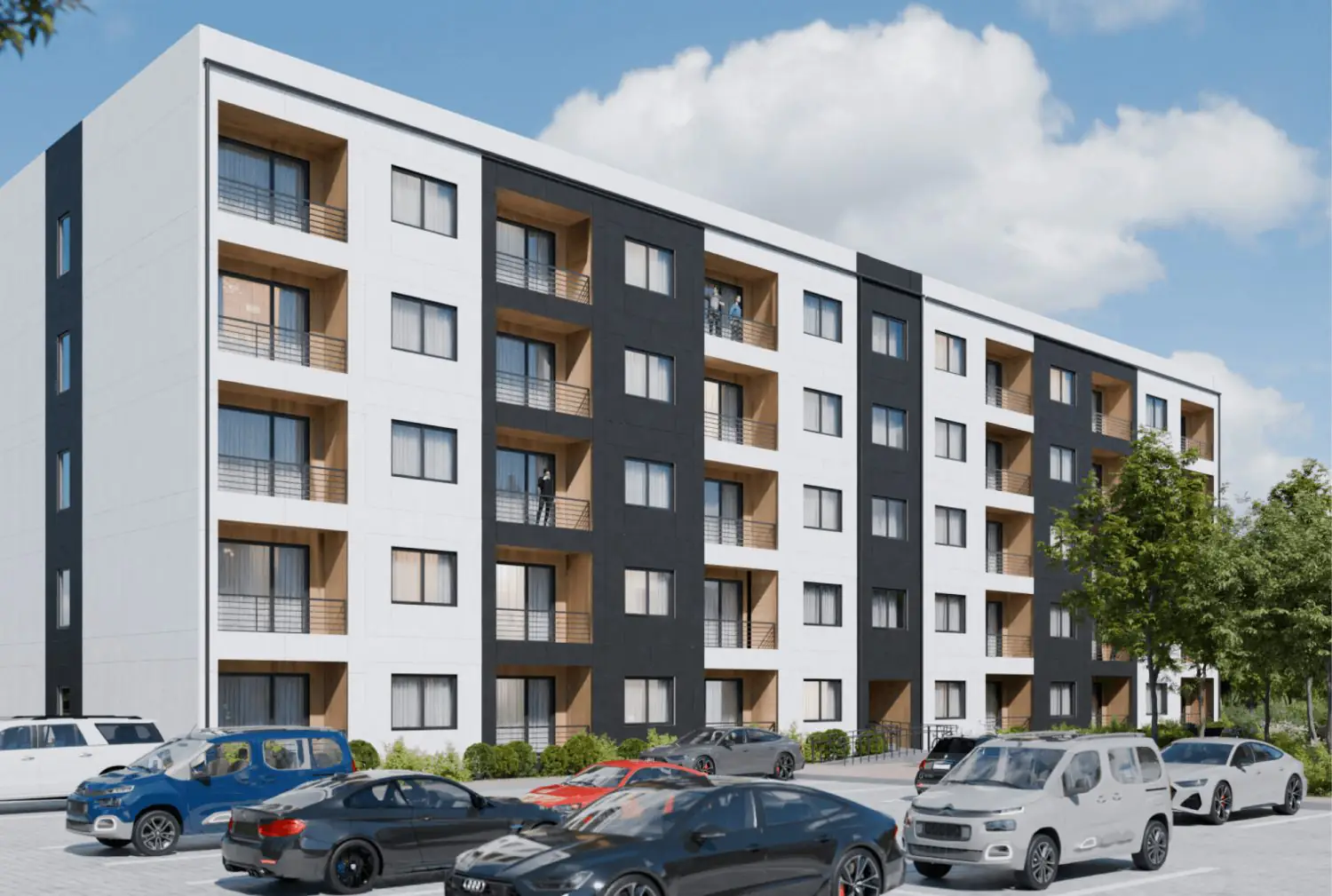
The city is transparent about its objective: attracting doctors, teachers, and engineers. Housing is increasingly becoming a strategic tool of local labor and recruitment policy.
Jelgava provides one of the most systematic examples of this approach. At 54 Ganību iela, the first building with 58 apartments has already opened; it is the first five-story timber-frame building in Latvia. A second identical building is currently under construction nearby. The project is being developed by SIA Jelgavas īres nami.
Occupancy is strictly targeted toward specialists, young families, and residents on the municipal rental register. Importantly, the sale of these units to private investors is not permitted.
Transitioning to a Systemic Model
The first lot of the PPP (Public-Private Partnership) program “Rental Housing for Specialists” provides for the construction of 1,290 energy-efficient apartments. Participating cities include Riga, Tukums, Jēkabpils, Cēsis, Gulbene, and Daugavpils. This represents the largest public-private partnership program in the housing sector in Latvia’s modern history.
The contract spans 25 years. The private partner operates under the DBFMO model—meaning they are responsible for the Design, Building, Financing, Maintenance, and Operation of the properties. Upon the expiration of the term, ownership of the assets is transferred to the respective municipalities.
Simultaneously, a second lot is being prepared for 11 additional cities. The total contract value is estimated at €384.46 million (excluding VAT).
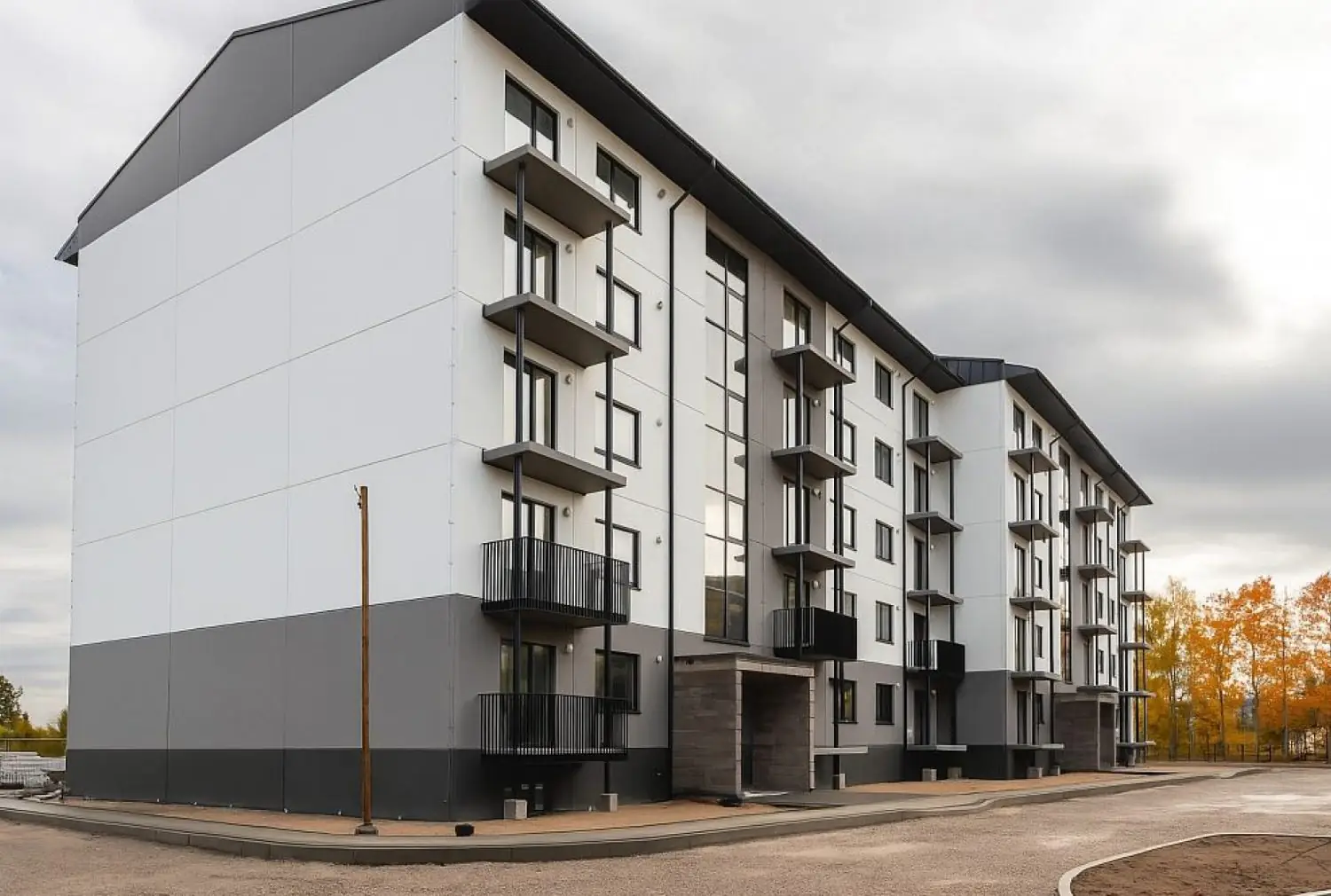
Today, the regional market is being shaped not by buyer demand, but by state strategy. While private capital remains cautious, municipalities and the state have taken the initiative.
Effectively, a new model for the regional housing market is emerging—one that is managed rather than market-driven. Housing is ceasing to be an investment asset and is becoming a fundamental element of regional economic resilience.