How Tourism Has Changed
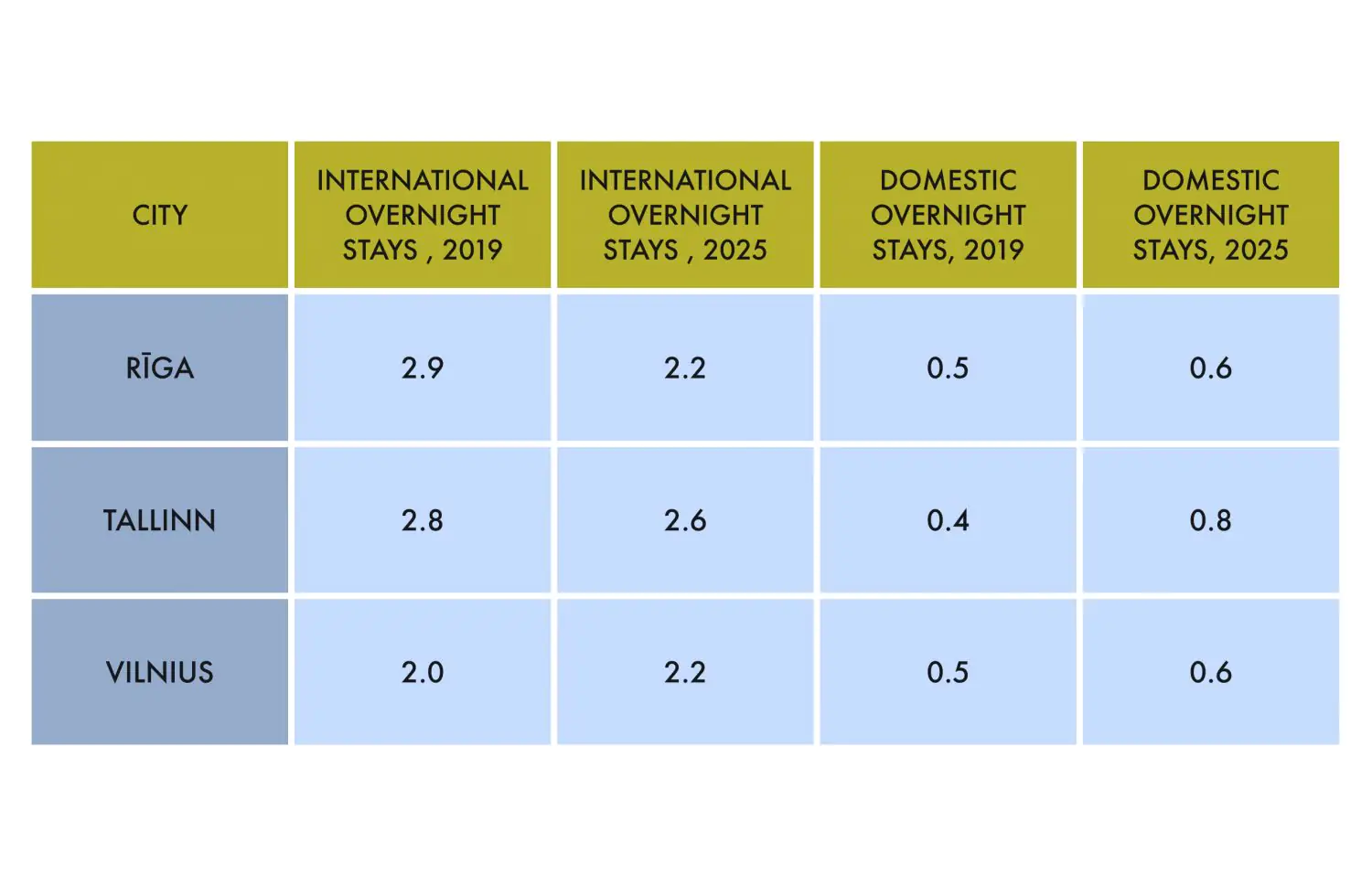
Before the pandemic, Rīga led the Baltic capitals in overnight stays by international visitors. By 2025, it was still below its 2019 level, and Tallinn had moved into first place. According to CPB’s Baltic Hospitality report, international visitors spent 2.2 million nights in Rīga in 2025, down from 2.9 million in 2019. Over the same period, overnight stays by Latvian residents in Rīga rose from 500 000 to 600 000.
In Tallinn, international visitors spent 2.6 million nights in 2025, compared with 2.8 million in 2019. Over the same period, overnight stays by Estonian residents in the capital doubled from 400 000 to 800 000.
Vilnius was the only one of the three capitals where CPB’s figures show an increase in overnight stays by international visitors, from 2 million to 2.2 million. Overnight stays by Lithuanian residents also rose, from 500 000 to 600 000. Lithuania changed its data source in 2025, making it difficult to gauge the exact scale of the increase.
In the first quarter of 2026, overnight stays in Rīga fell by 3.3% compared with the same period in 2025. According to CPB, they rose by 10.6% in Tallinn and 10.8% in Vilnius. In January, hotel occupancy was below 50% in all three capitals, at 36% in Rīga, 38% in Tallinn and 43% in Vilnius.
Lithuania was Latvia’s largest source of international tourist arrivals in 2025 (273 000), followed by Estonia (188 000) and Germany (165 000). Compared with 2019, arrivals from Lithuania recorded the largest increase, up by 62 900. Arrivals from the United States and Poland also rose, by 20 900 and 17 600 respectively.
Families Come for the Marathon
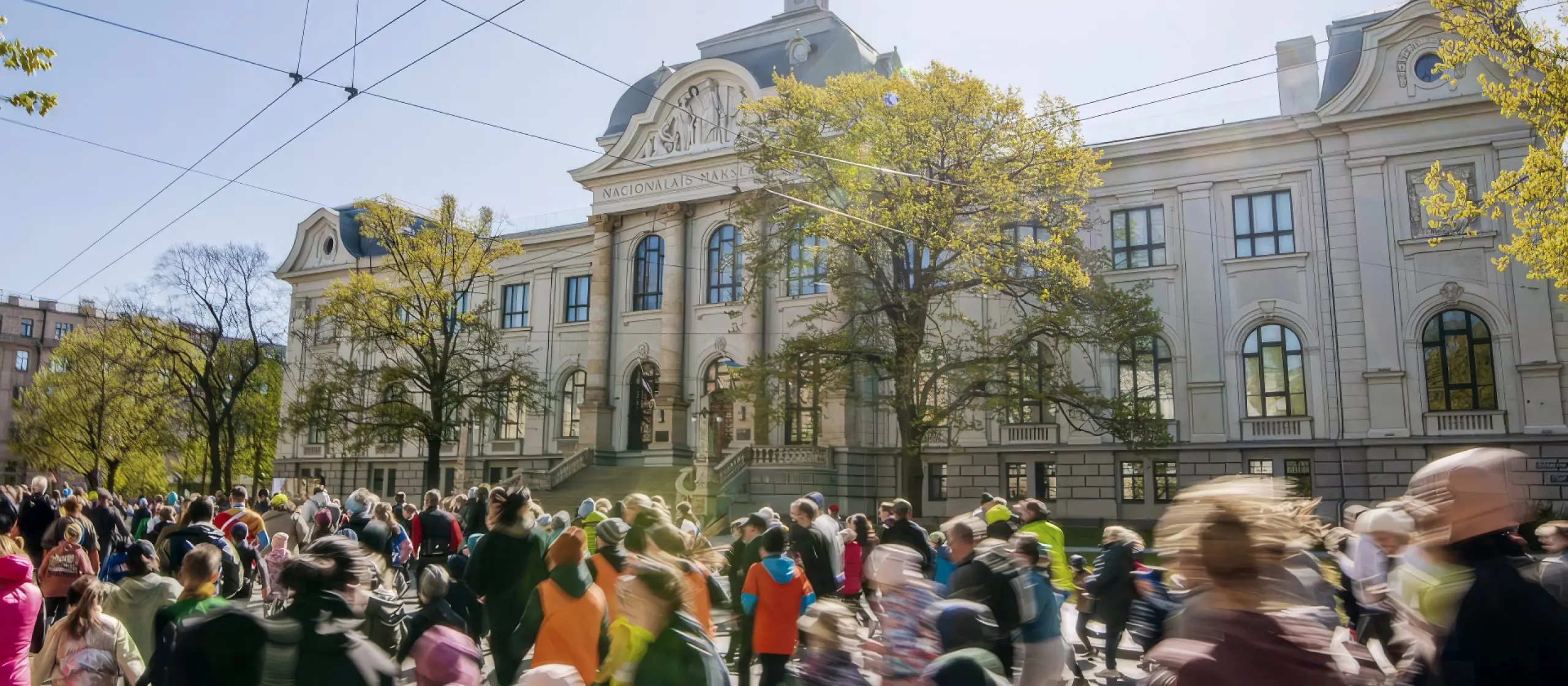
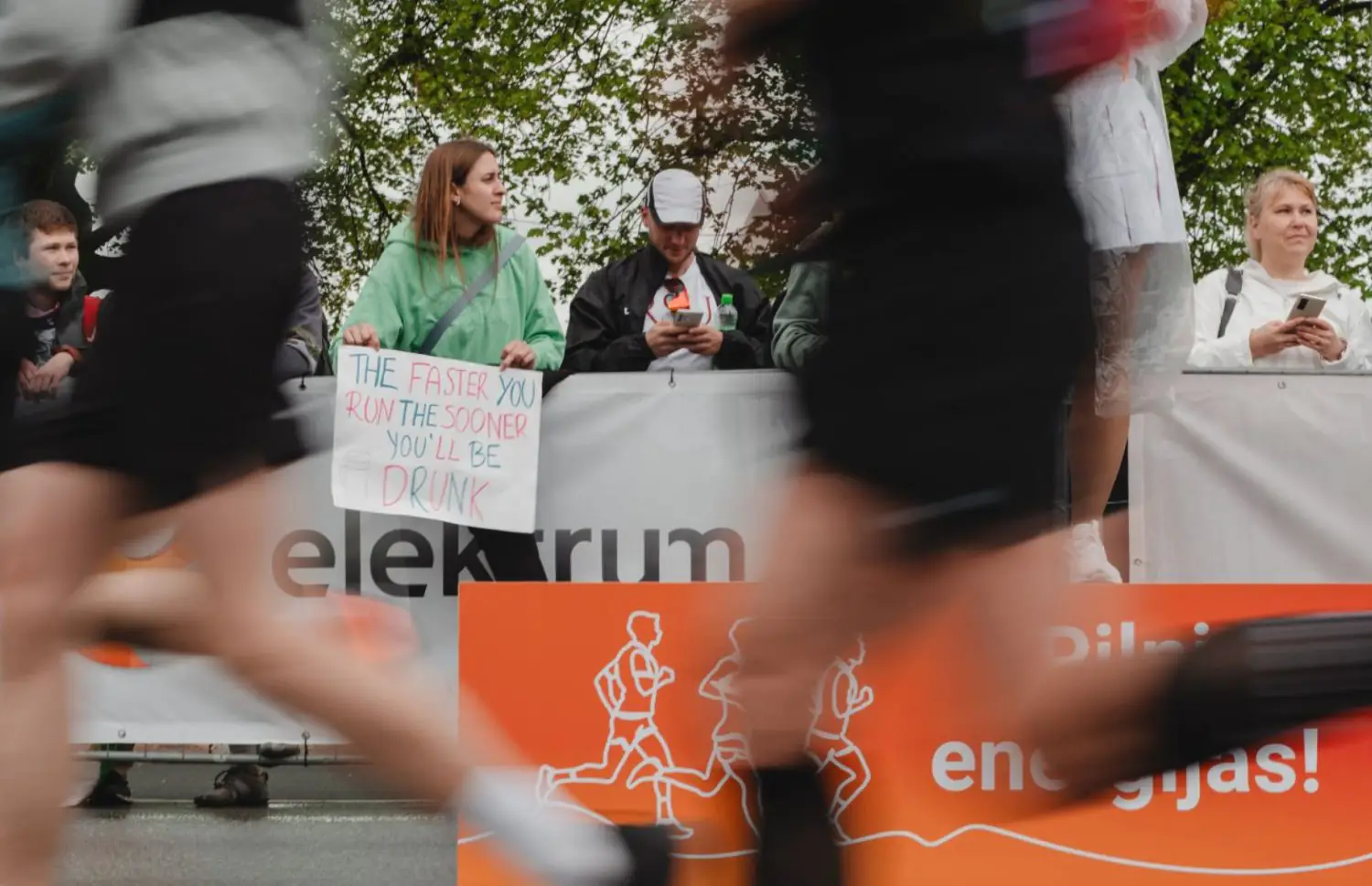
In 2026, 6 593 international runners and 6 447 people accompanying them came to Latvia for the Rimi Rīga Marathon. Together, they spent 44 632 nights in Latvia, an average of 3.42 nights per person. The organisers estimated the marathon’s direct economic impact on Rīga at €13.59 million and its combined impact on Latvia over 2024–2026 at €44.9 million.
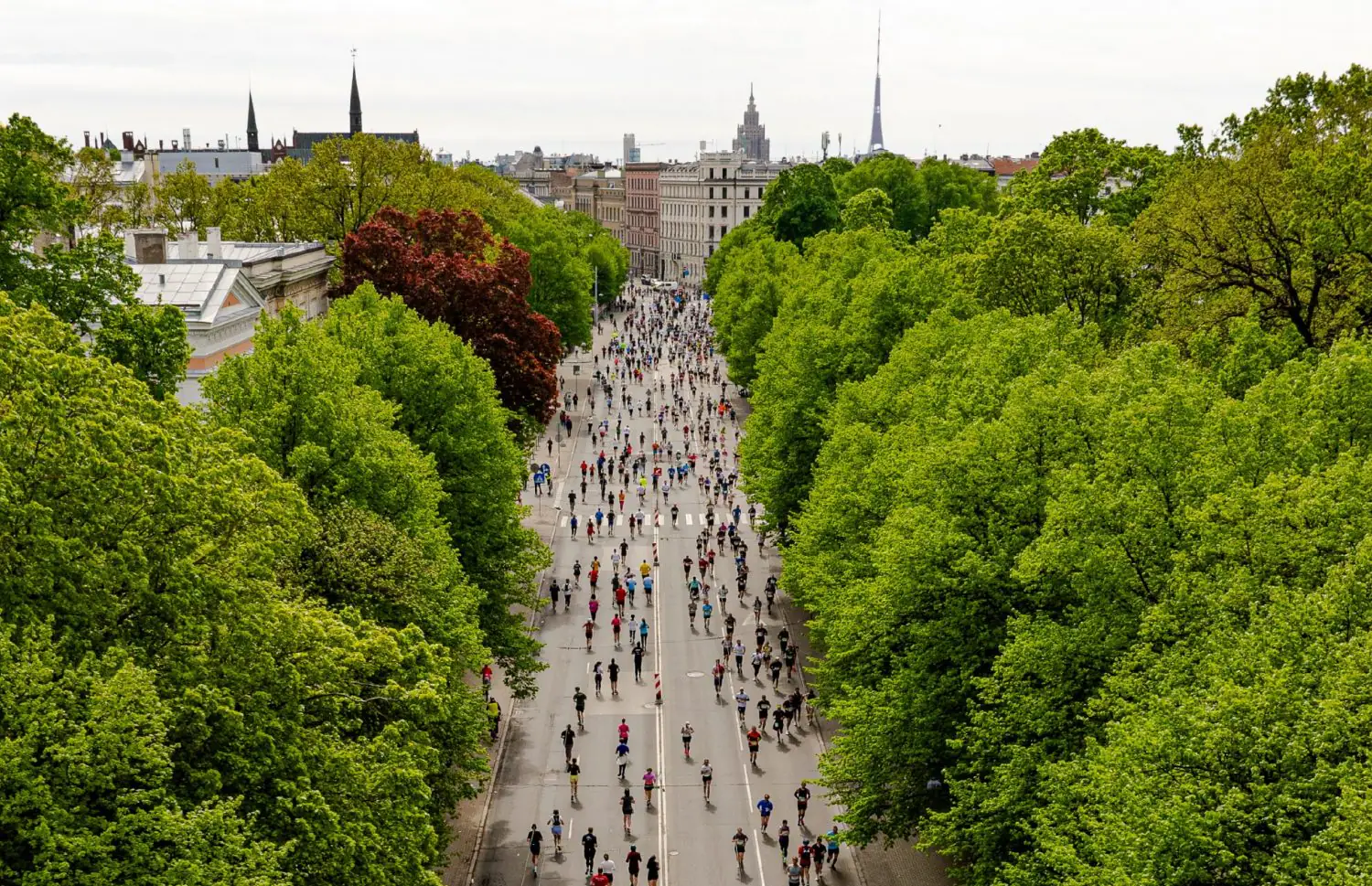
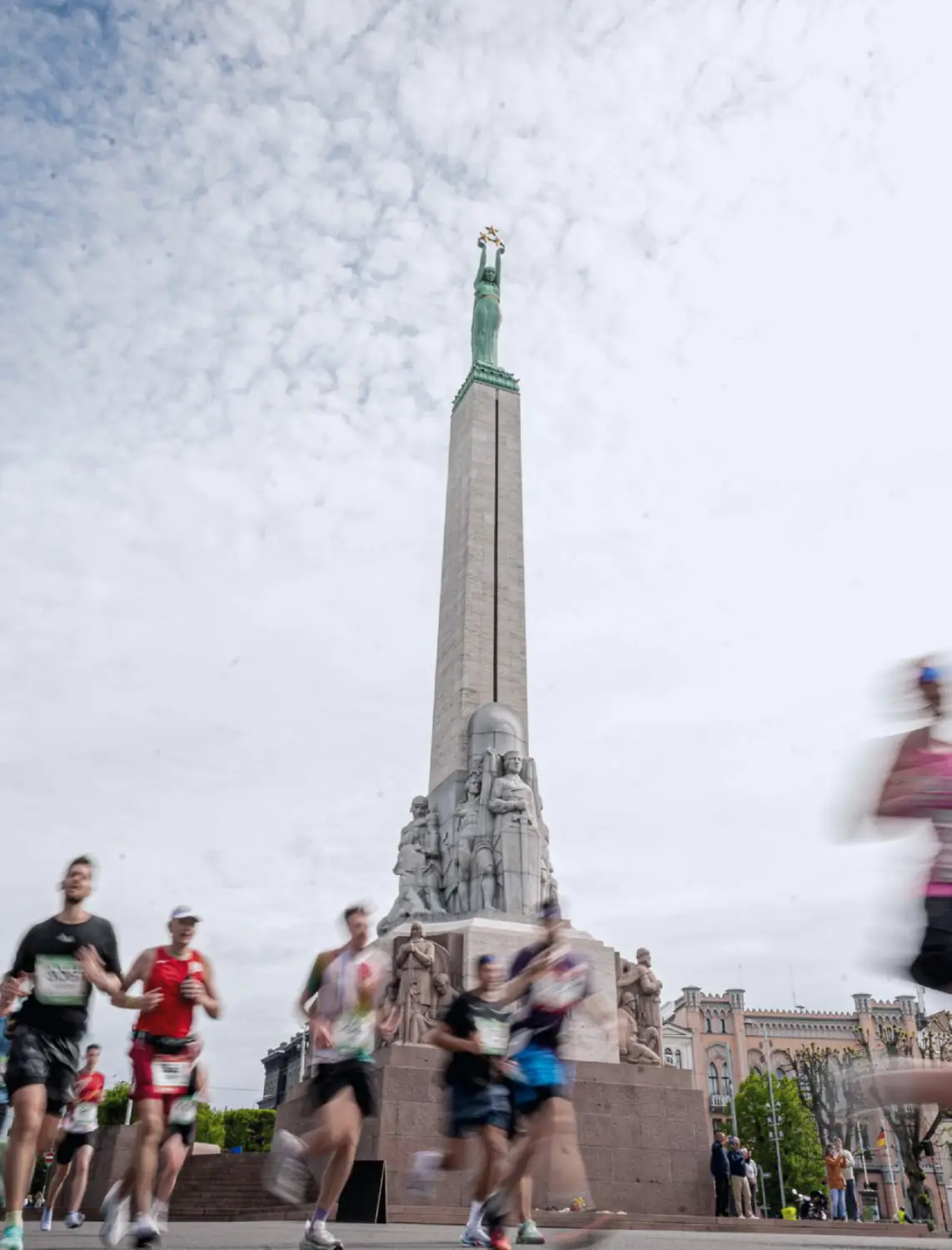
At the Baltic Living & Hospitality Symposium, organizing committee chair Aigars Nords explained how the race introduces runners to Rīga. The starting point was chosen so viewers of the international broadcast could see the bridges over the Daugava and the Old Town skyline. Singers and dancers greet runners at Brīvības piemineklis. Nords said participants often remember the route, the songs and the medals featuring Latvian art. From 2026 to 2029, finishers receive a medal featuring one letter of RĪGA each year. To collect all four, they have to come back.
The marathon draws visitors in May. Nords suggested looking for similar reasons to visit in March and November. He cited a champagne festival expected to draw guests from 25 countries and a Wynton Marsalis concert at Dailes teātris. When dates are announced in advance, hotels and restaurants can prepare for the extra guests.
During EuroBasket 2025, Keystone Collection’s Rīga hotels were able to raise room rates, said company representative Jānis Vilisons. Major events boost demand on specific dates. In the off-season, hotels also need to attract guests during quieter weeks when there are few big events on the calendar.
Who Can Rīga Attract on Weekdays and in Winter?
Conferences and corporate meetings can bring visitors on weekdays and in the off-season, says Rob Davidson, head of MICE Knowledge. He estimates that business travellers spend 2.7–3 times as much per day as holidaymakers. Some delegates bring family or friends, while others return later for a holiday.
Davidson suggests working with local companies, universities and research centers to attract conferences. Organisers are more likely to choose a city where they can find local speakers and arrange visits for delegates. Rīga hosted a meeting of the Baltic Flow Cytometry Society in March, dry eye specialists met in Tallinn in June, and Vilnius hosted a meeting of the Baltic Association of Surgeons in October. On a different scale, the EBRD Annual Meeting and Business Forum brought participants from more than 70 countries to Rīga in 2026.
Rīga will have to compete with Prague, Vienna, Budapest and Barcelona for major international congresses, says Andrzej Szumczyk of IHG. Before building a convention center, he suggests assessing how many events it could host each year.
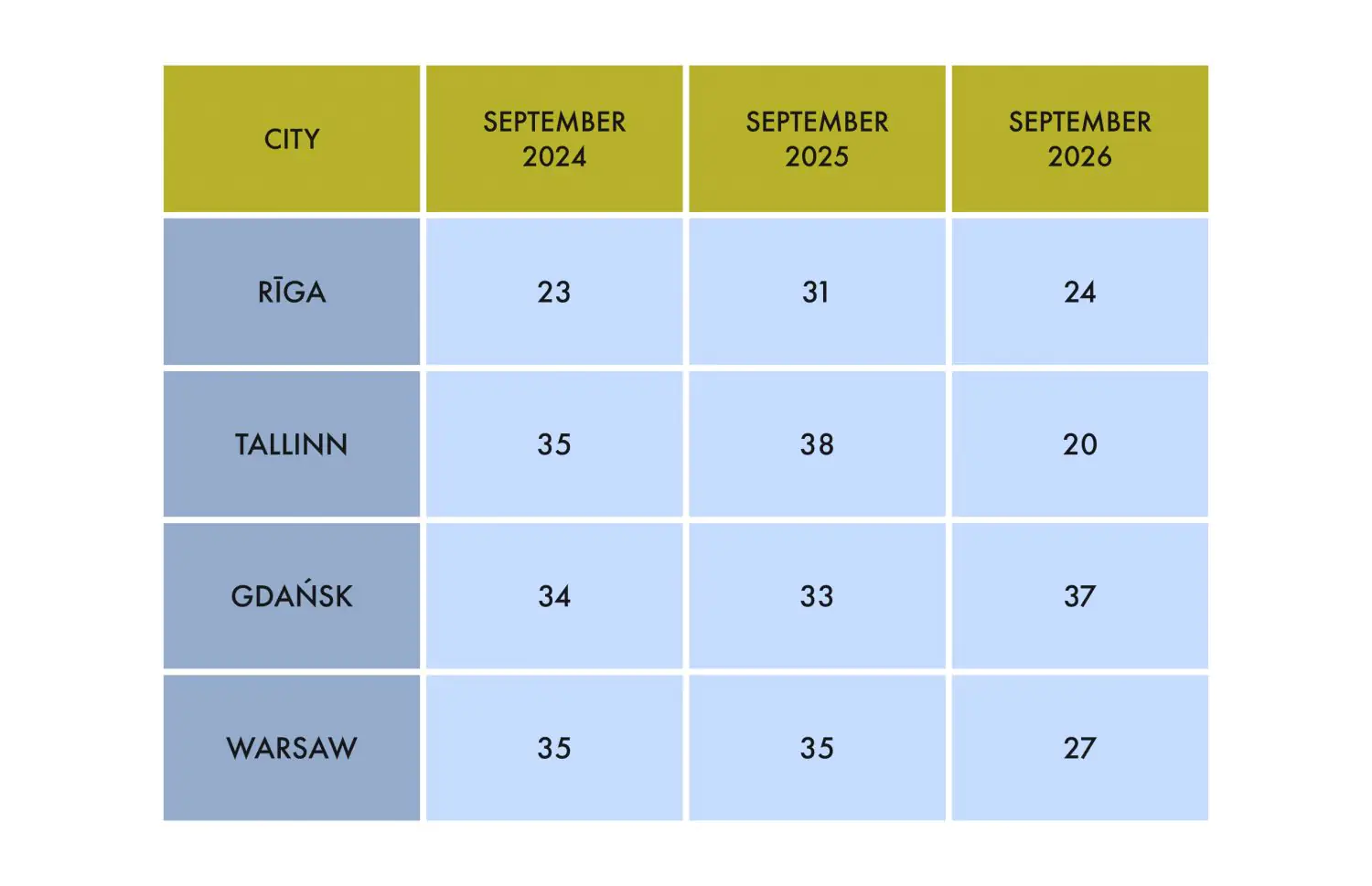
Rīga’s hotels can already host smaller conferences. According to Seerio, occupancy of event spaces and meeting rooms at the Rīga hotels in its sample rose from 23% in September 2024 to 31% in September 2025.
How Hotels Can Attract Guests in Winter
Winter occupancy depends on who the hotel caters to, says Katarzyna Sławińska of Accor. Hotels that rely on tourists staying a few nights feel the seasonal slowdown more sharply. Aparthotels with kitchens and living areas can also attract guests who come for work and need somewhere to stay for several weeks, including in winter.
At Carillon Aparthotel in Rīga, Keystone Collection focused on families and guests staying longer. The apartments have a kitchen, a separate bedroom and a living area. According to Jānis Vilisons, the hotel met its occupancy target, and average nightly rates exceeded expectations, especially in summer. In Tallinn, Accor was preparing to convert an existing hotel to its Adagio Access aparthotel brand.
Andrzej Szumczyk of IHG suggested combining both formats under one roof. The same team can look after standard rooms and apartments, and companies that regularly send employees on business trips can arrange accommodation through a single agreement with the hotel.
Hotels can also support occupancy by giving guests a reason to return. From the start of 2026 to the symposium, loyalty programme members accounted for an average of 25% of room nights sold at the Accor hotels Sławińska discussed.
Mid-sized business events can also help hotels through the winter, Szumczyk added. Bringing guests in during December and January, when hotels typically sell fewer rooms, can improve results for the year as a whole.
Why Visitors Choose Rīga
In 2026, Rīga launched a programme to support major international cultural events. The city hopes some will become annual fixtures and help Latvian artists and organisers reach audiences abroad, said Eva Altenburga, head of tourism at the Rīga Investment and Tourism Agency.
How easy it is to reach the city also matters, Altenburga says. Vilnius and Kaunas are adding air routes, and Estonia helps new airlines enter the market. According to Agnia Nast of Enterprise Estonia, UK visitor numbers rose after Jet2 expanded its Tallinn service from three British cities to five.
Each Capital Has Its Own Reasons to Visit
Estonia’s tourism campaigns show how much visitors can experience in a single trip, from spending time in nature and exploring local culture to trying Estonian food, says Nast.
Rob Davidson notes that many people in Western Europe know little about what sets Latvia, Lithuania and Estonia apart. What would draw a delegate who has already attended a conference in Tallinn to Rīga or Vilnius next time? Vilnius has found its own answer in a festival devoted to cold beetroot soup. According to Go Vilnius, the three-day festival drew nearly 180 000 people in 2026, including 33 800 visitors from abroad.
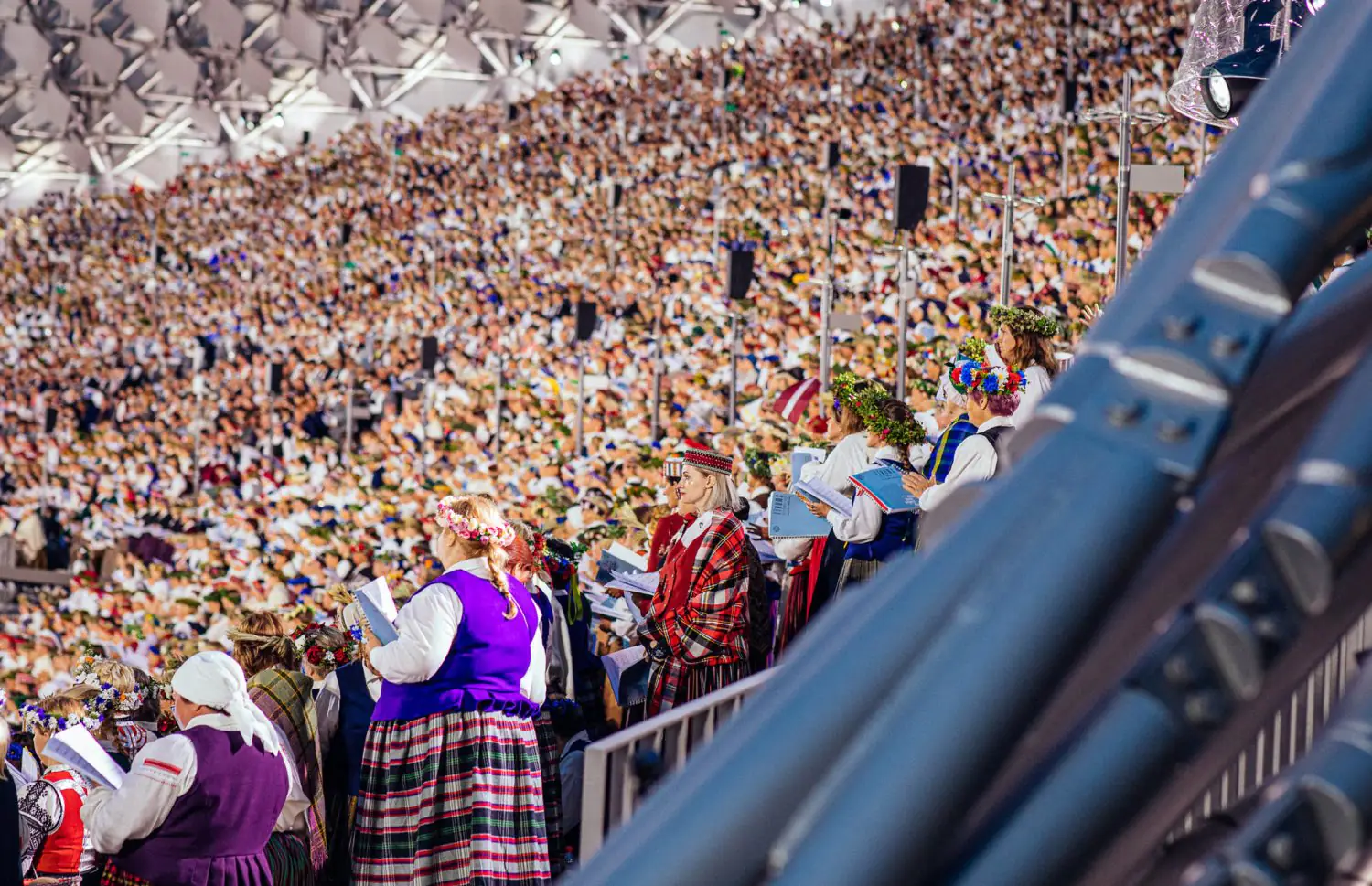
Rīga already has a reason to visit in May. Its marathon brings runners and their families and friends to the city. In other months, congresses, concerts and festivals can do the same. When dates are announced in advance, a delegate can plan to stay in Rīga for the weekend, and a music fan can book a trip around a November concert. That brings guests to Rīga’s hotels and restaurants beyond the summer season.
Jānis Vilisons of Keystone Collection proposes increasing funding to promote Rīga abroad and introducing a reduced VAT rate for restaurants and cafés. He says more marketing would raise the city’s international profile, while lower VAT would give businesses more room to invest in quality and growth. He sees convenient air connections, a safe urban environment, good food and international events as Rīga’s competitive strengths.
According to CPB’s Hospitality Viewpoint 2026 report, Latvia spends roughly a quarter to a third of what Lithuania and Estonia spend on promoting themselves as tourist destinations. CPB market analyst Jeļizaveta Sivačova told that a single advertising campaign can do little to change seasonal travel patterns. For hotels to see steadier demand throughout the year, she says, travellers need more reasons to come in the quieter months.
Rīga already has Staro Rīga, the Christmas market and several international events. Taken together, they have yet to generate strong demand throughout the winter, Sivačova says. She sees giving people more reasons to visit as the next priority for Rīga’s tourism strategy.