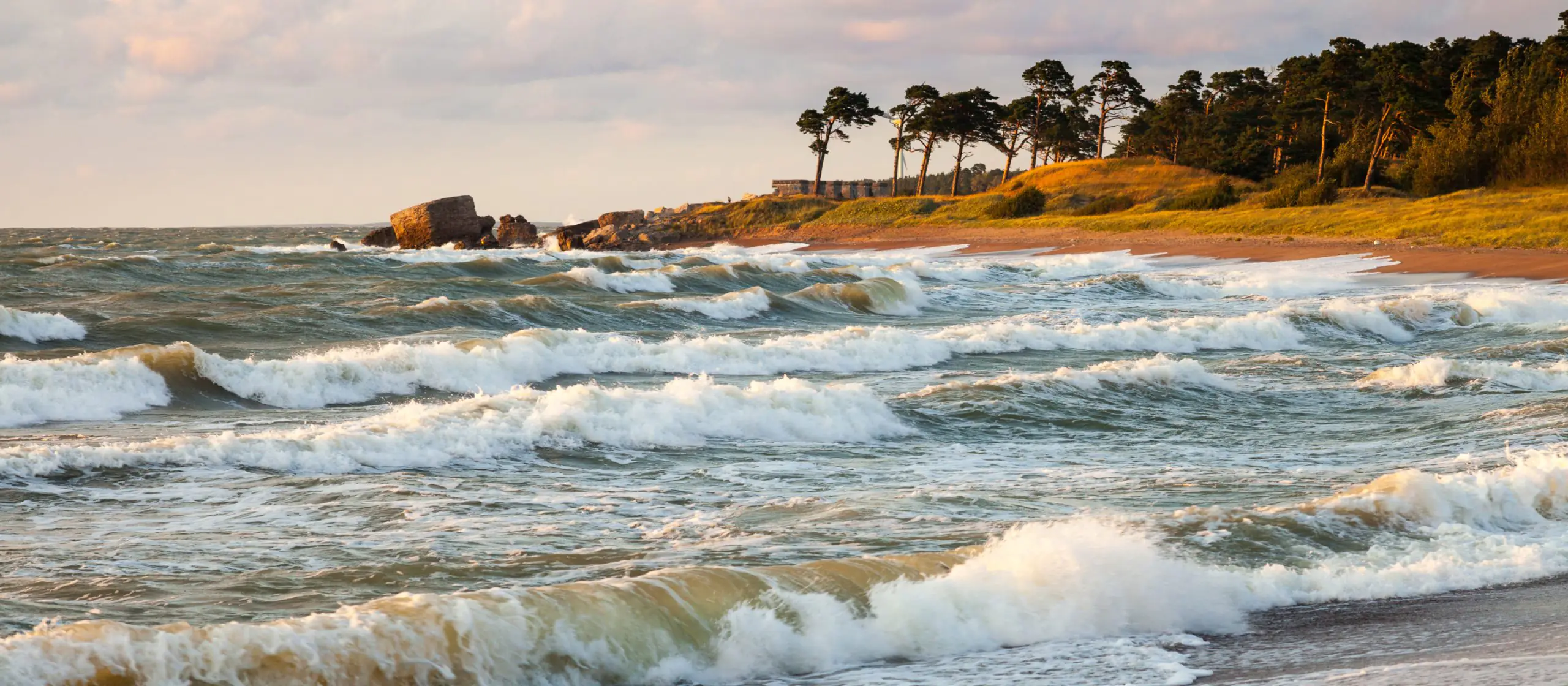
Vecāķi
Vecāķi was once a small fishing village, but everything began to change at the end of the 19th century. The renowned Latvian entrepreneur and philanthropist Augusts Dombrovskis obtained permission to lease coastal land for the construction of summer cottages, laying the foundation for a new resort.
The first 30 cottages were completed in 1898, and the resort was named Bad Magnushof. Spending a holiday here was considered just as prestigious as vacationing in Jūrmala. During World War I, Vecāķi suffered extensive damage, and a new phase of development began in 1933 with the opening of a railway connection. Numerous wooden villas featuring Jugendstil elements have survived to this day. Vecāķi is also home to Latvia’s oldest nudist beach.
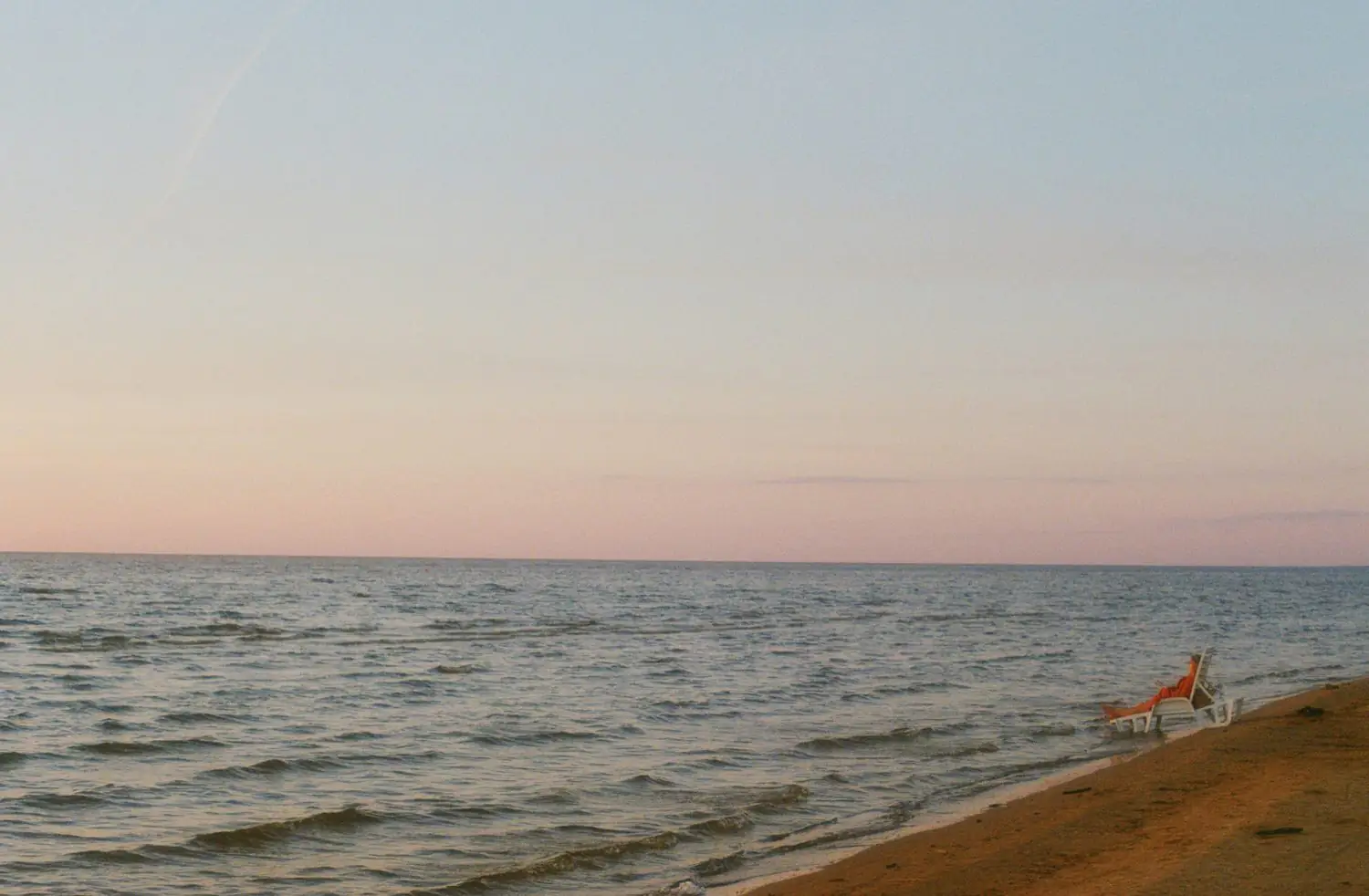
Today, Vecāķi is one of Riga’s most popular beaches, offering a wide stretch of fine white sand, dunes, walking trails, and well-developed sports facilities.
unsplash.com
Vakarbuļļi
If you drive through Bolderāja and cross the Buļļupe channel, you will reach Buļļu island, the largest island in Latvia. It emerged relatively recently: in the mid-18th century, the Lielupe river changed its course and found a new path to the sea. Daugavgrīva lies on the eastern side of the island, while the western part occupies the former lands of the Bullenhof estate.
peldvietas.lv
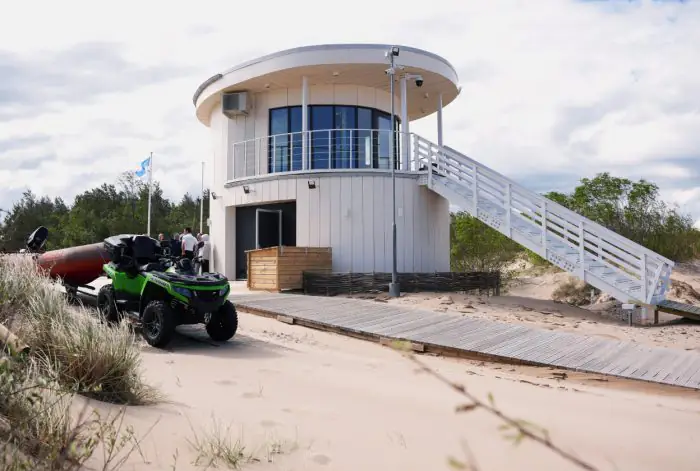
Today, Vakarbuļļi is one of Riga’s best-equipped beaches and has been awarded the international Blue Flag quality label. Visitors will find changing facilities, sports grounds, and boardwalks leading to the shoreline. About 500 meters west of the main entrance is a designated nudist beach.
Nearby, visitors can also explore the residence, workshop, and stone sculpture park of sculptor Pauls Jaunzems. The beach can be reached by bus No. 36 from Imanta, and during summer weekends by bus No. 3 from Pļavnieki.
Bābelītis
This secluded corner of Jugla has remained a favorite recreation spot for Riga residents for decades. In 1938, an unusual structure appeared here—a reserve power station concealed inside an artificial hill.
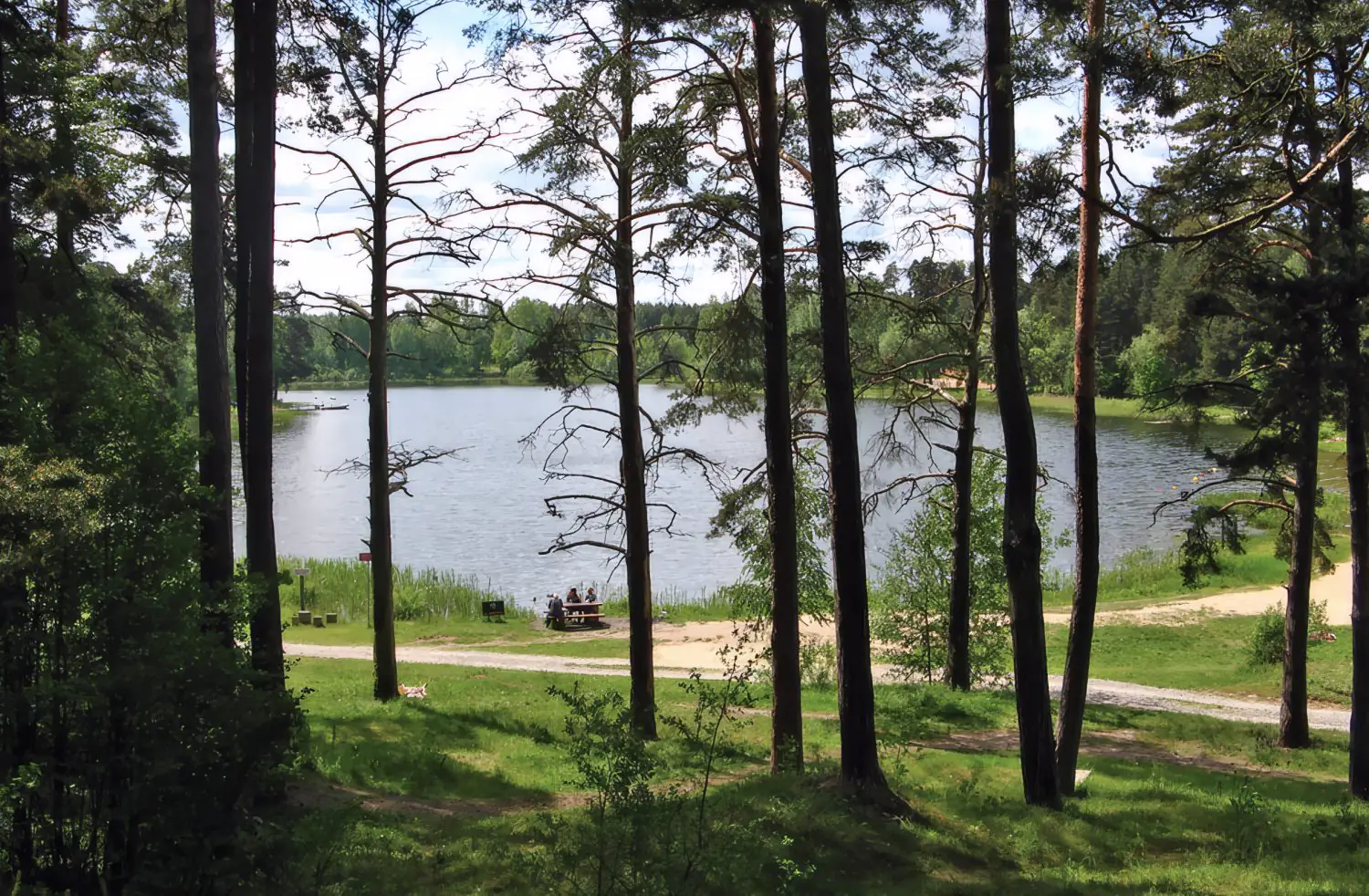
Lake Bābelītis gained particular popularity in the 1960s, when new residential districts began to develop rapidly around it. Thanks to its relatively small size and the absence of a current, the water warms up faster than in many other bodies of water, making it especially attractive on hot summer days.
In recent years, the area around the lake has been upgraded with new walking paths, recreation zones, and modern beach infrastructure.
dziedava.lv
Karosta
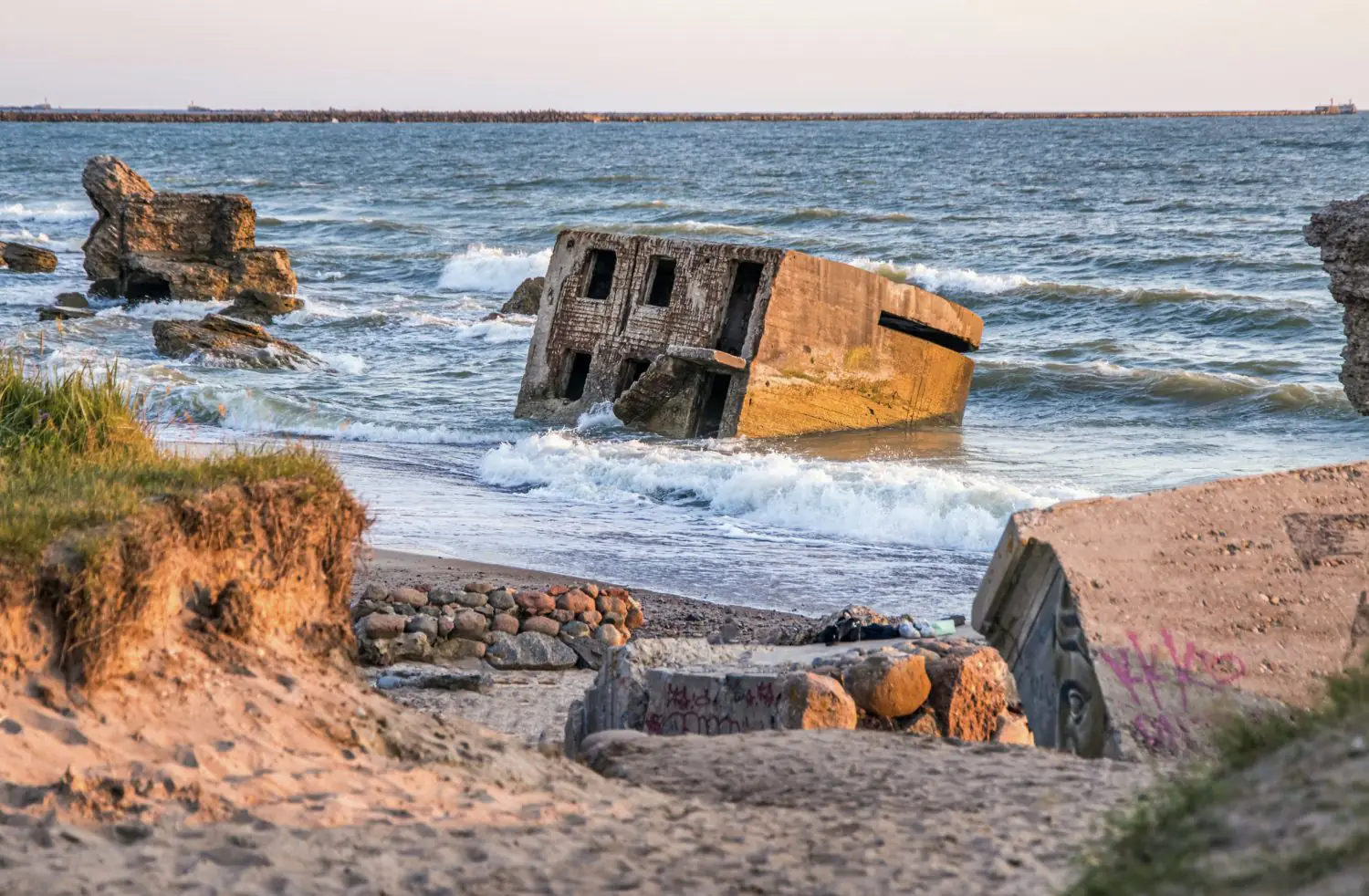
Karosta, near Liepāja, is one of Latvia’s most unusual districts, where history and natural landscapes are closely intertwined. The naval port and military town were established at the end of the 19th century by decree of emperor Alexander III. Among the sandy dunes, the Northern Forts were constructed—a vast system of coastal defenses with artillery batteries and underground passages.
However, part of the fortifications was demolished as early as 1908 after military authorities concluded that their location no longer met strategic requirements. Today, fragments of the concrete structures still protrude from the sea and sand, creating one of the most recognizable landscapes on Latvia’s coastline.
tock.adobe.com
During the Soviet era, Karosta remained a restricted military zone, inaccessible even to most residents of Liepāja. Following the withdrawal of Russian troops in 1994, the area gradually opened to visitors and became a popular destination for walks and exploration of military heritage.
Karosta beach differs from most Latvian beaches: it is windier, rockier, and more open. It is especially popular with kitesurfers, photographers, and those looking for less crowded stretches of coastline. For family recreation, Liepāja’s central beach—with its wide expanses of white sand—or nearby lake Beberliņi, a former quarry surrounded by pine forest with a wake park, camping facilities, and recreation areas, may be a better choice.
Sigulda
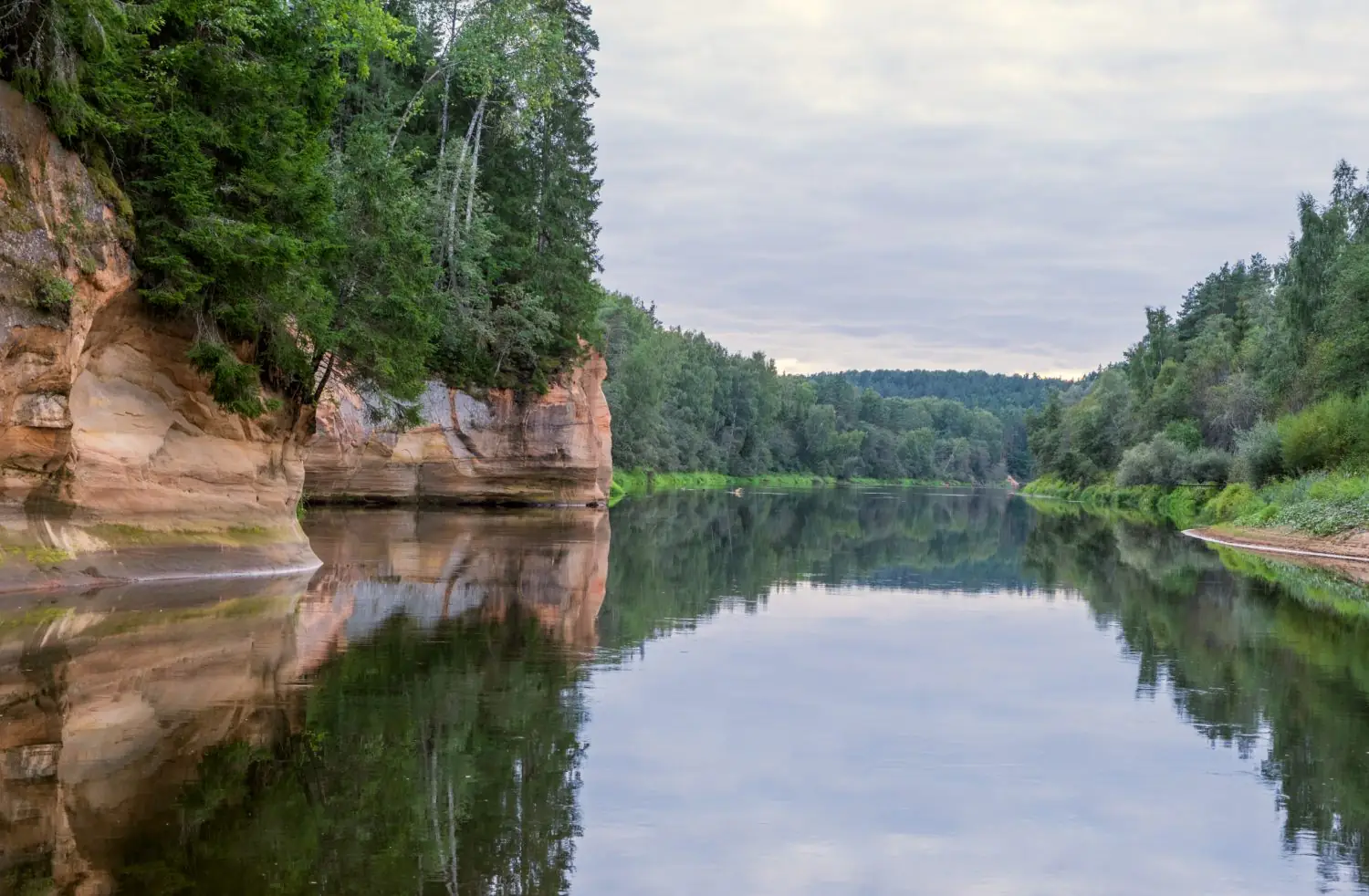
In the Gauja river valley, often referred to as the “Latvian Switzerland,” visitors can do more than hike scenic trails and hills—they can also swim in one of the country’s most beautiful rivers.
The beach near Sigulda developed naturally as a resting place for travelers exploring the surrounding slopes and forest trails. Following the arrival of the railway and the construction of summer homes in the late 19th century, the area began attracting not only hikers but also holidaymakers looking to spend time by the water. Before the construction of a permanent bridge in 1937, a ferry crossing operated here across the Gauja river, and swimming was often combined with boat trips.
tock.adobe.com
During the Soviet period, the beach was officially developed and became one of the most popular swimming locations in the Gauja valley. Its gently sloping shore and relatively calm current—unusual for a river—contributed significantly to its popularity.
Today, visitors will find changing cabins, sports grounds, recreation areas, and boat rentals. After hiking nearby trails or visiting Sigulda’s medieval castles, it is one of the best places to cool off on a summer day.
Rāzna
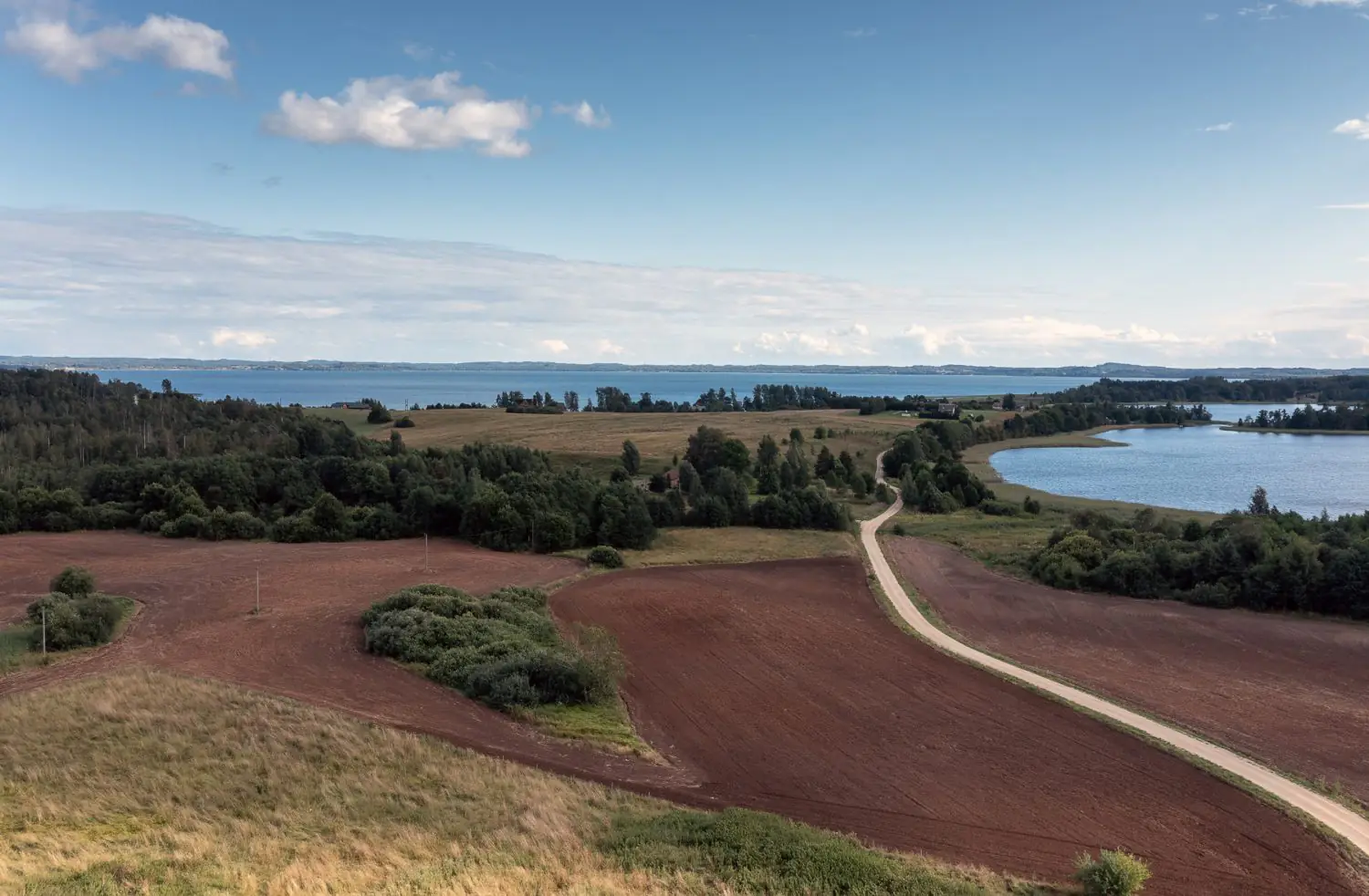
Lake Rāzna is Latvia’s largest lake by water volume and the second largest by surface area after lake Lubāns. Owing to its scale, it is often referred to as the “Sea of Latgale.” Standing on the shore, the opposite side of the lake can almost disappear beyond the horizon.
Until the early 20th century, its sandy and pebbled shores were used mainly by fishermen and boat owners. During the interwar period, however, the lake’s clear waters, rolling hills, and tranquil atmosphere began attracting visitors from across Latvia. One of the region’s most notable landmarks is Mākoņkalns hill, with the ruins of a medieval castle and panoramic views over the lake.
In the second half of the 20th century, Rāzna gradually became the main center for water recreation in Latgale. Holiday camps, boat stations, sports facilities, and opportunities for sailing were developed around the lake.
Today, the lake lies within Rāzna national park and remains one of the country’s most picturesque summer destinations. One of the most popular public beaches is located in Lipuški, where visitors can enjoy pontoons, terraces, and picnic areas. The lake is also ideal for windsurfing, sailing, or simply spending a relaxing day by the water while enjoying the landscapes of Latgale.