Why windmills were needed
This text is based on the map of Latvian windmills compiled by Gleb Derevianko. We selected the most interesting examples, but if you would like to explore the topic in greater detail, we recommend studying the full map.
There are two types of windmills in Latvia: the Dutch type and the German type.
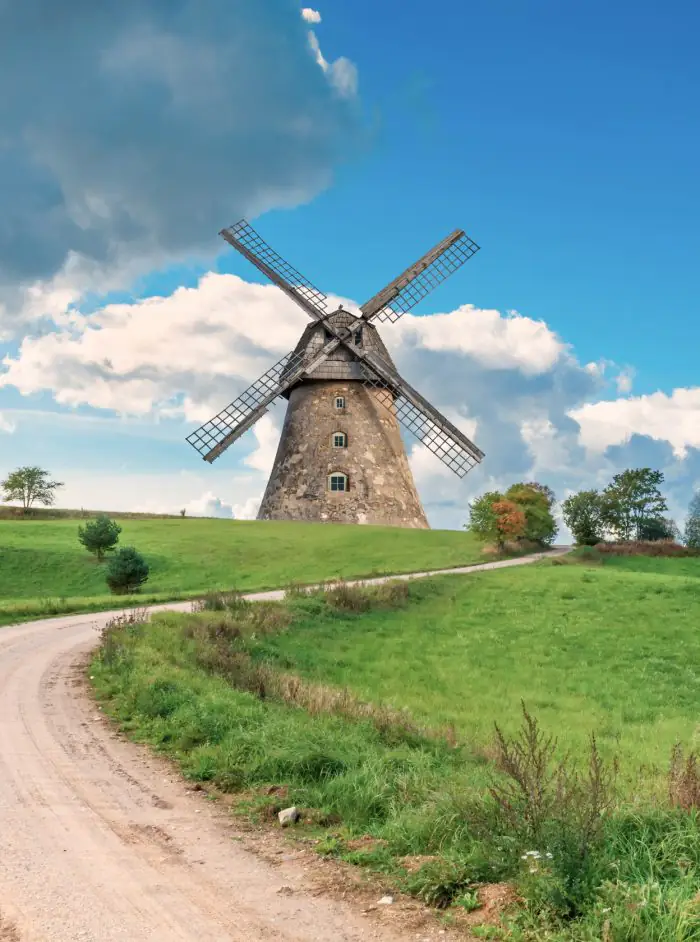
In the Dutch type, only the upper section rotates, while the structure itself is permanent and usually built from stone. Stone was commonly used because Latvian fields often contained large boulders that interfered with plowing. Farmers removed the stones from the fields and used them to construct various farm buildings and sometimes even homes—an old-fashioned example of zero-waste construction. In the Zemgale region, windmill towers made of brick are also quite common.
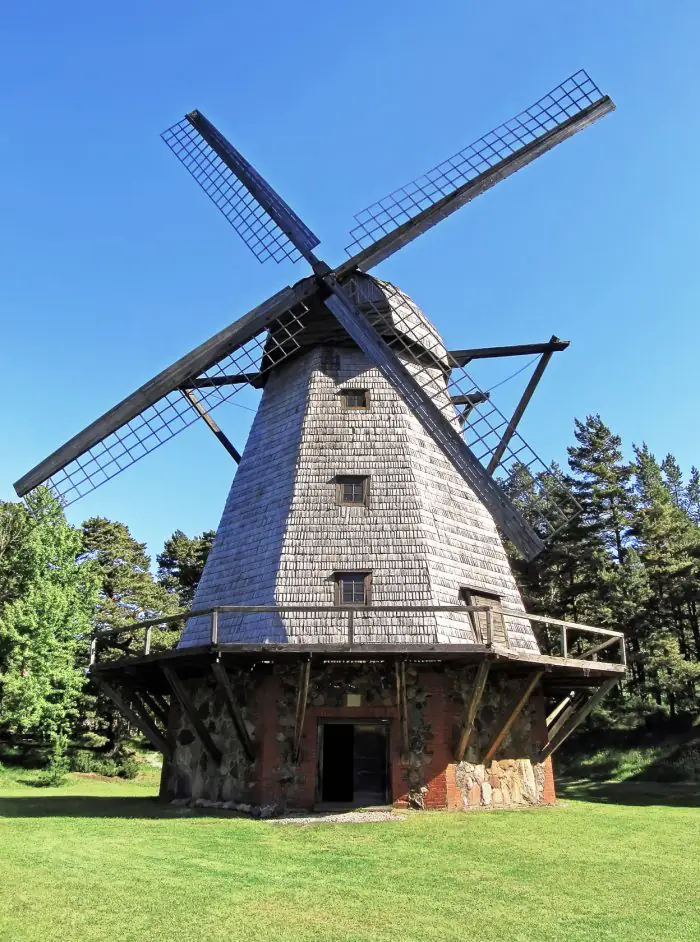
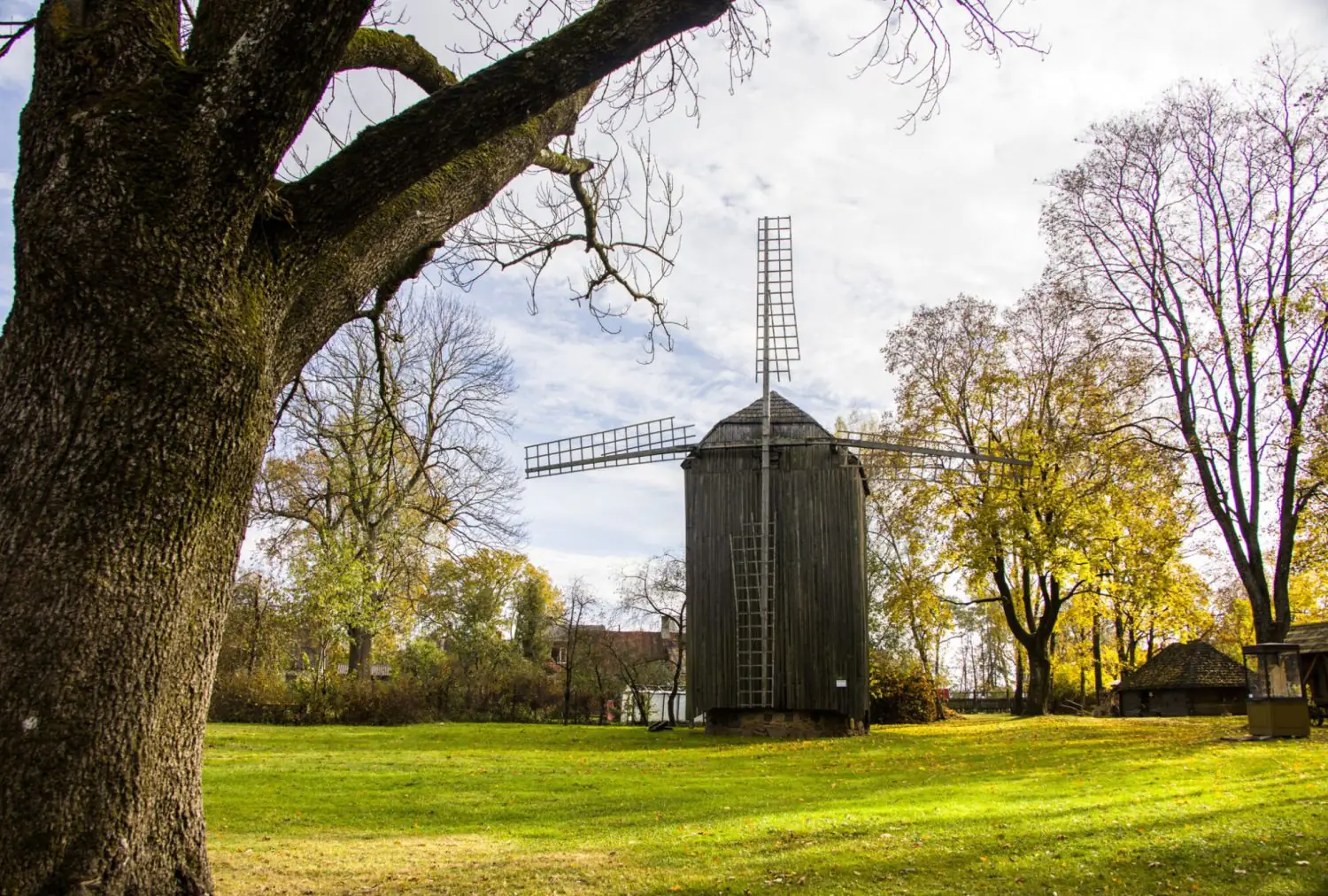
In the German type, the entire wooden (lightweight) body is mounted on a central post and rotates as a whole. Both types were used primarily for grinding grain.
As technology advanced, more efficient and faster methods of turning grain into flour emerged. For this reason, windmills are no longer used for their original purpose. Fortunately, some of them in Latvia have been preserved by giving them new functions: they have been transformed into restaurants, museums, and other cultural and public spaces.
Reconstructed and restored Dutch-type windmills
Ausekļu vējdzirnavas
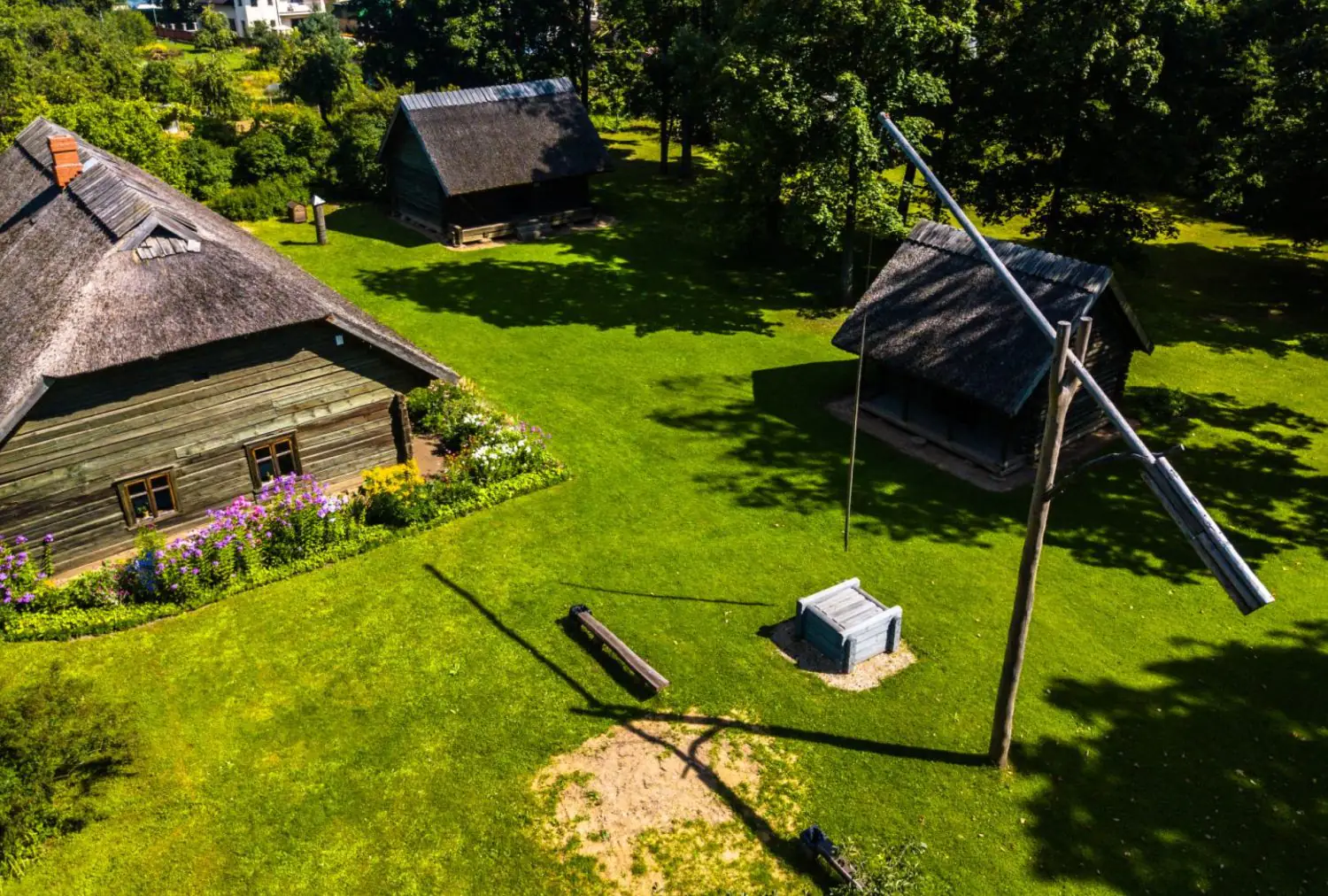
This windmill, believed to have been built at the end of the 19th century, has been gradually reconstructed together with its surrounding territory since 2005. A recreation area and a museum of antique agricultural and household items called Ausekļu Dzirnavas have been created here. The site has a long history: in 1896, the Ausekļu watermill on the Iecava River was launched here for the first time and remained in operation until 1950.
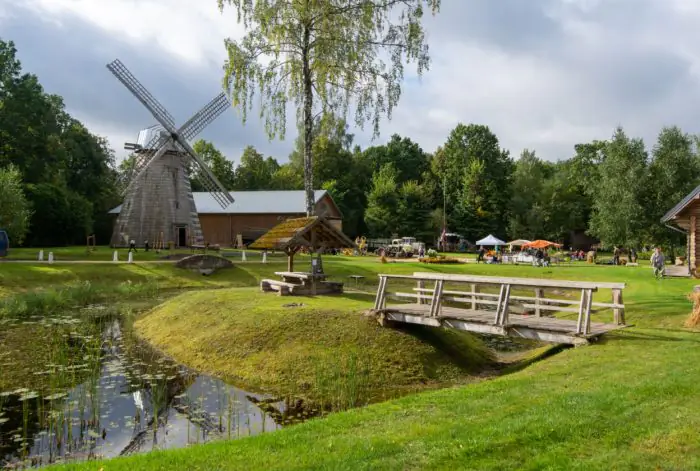
During the restoration work, a unique message written by the builders of the first mill for future generations was discovered in the foundation of the old mill—a clear sign that the reconstruction of the mill should continue. In 2013, the association Lauku ceļotājs awarded the complex the cultural heritage label Latvian Heritage for preserving national traditions and adapting the site to the needs of modern tourists.
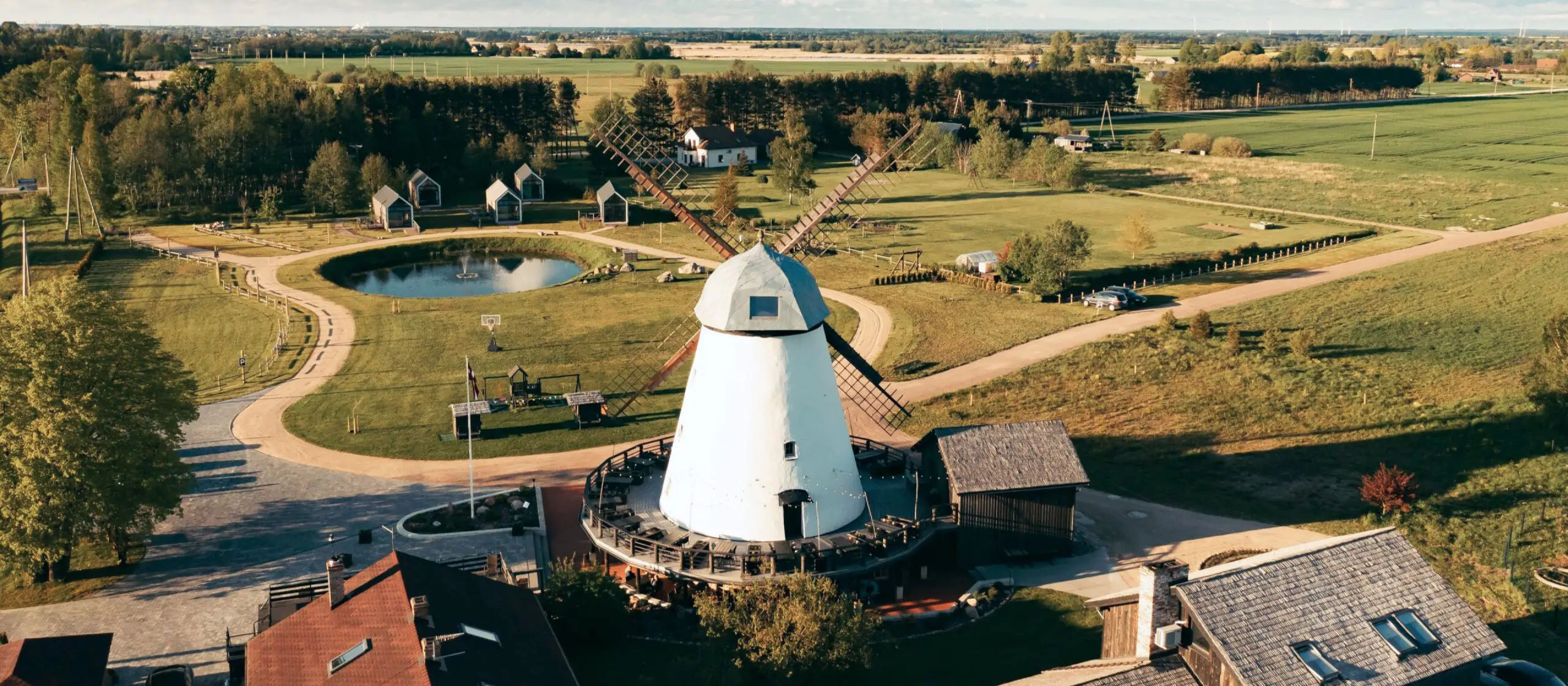
Pasiekstes vējdzirnavas
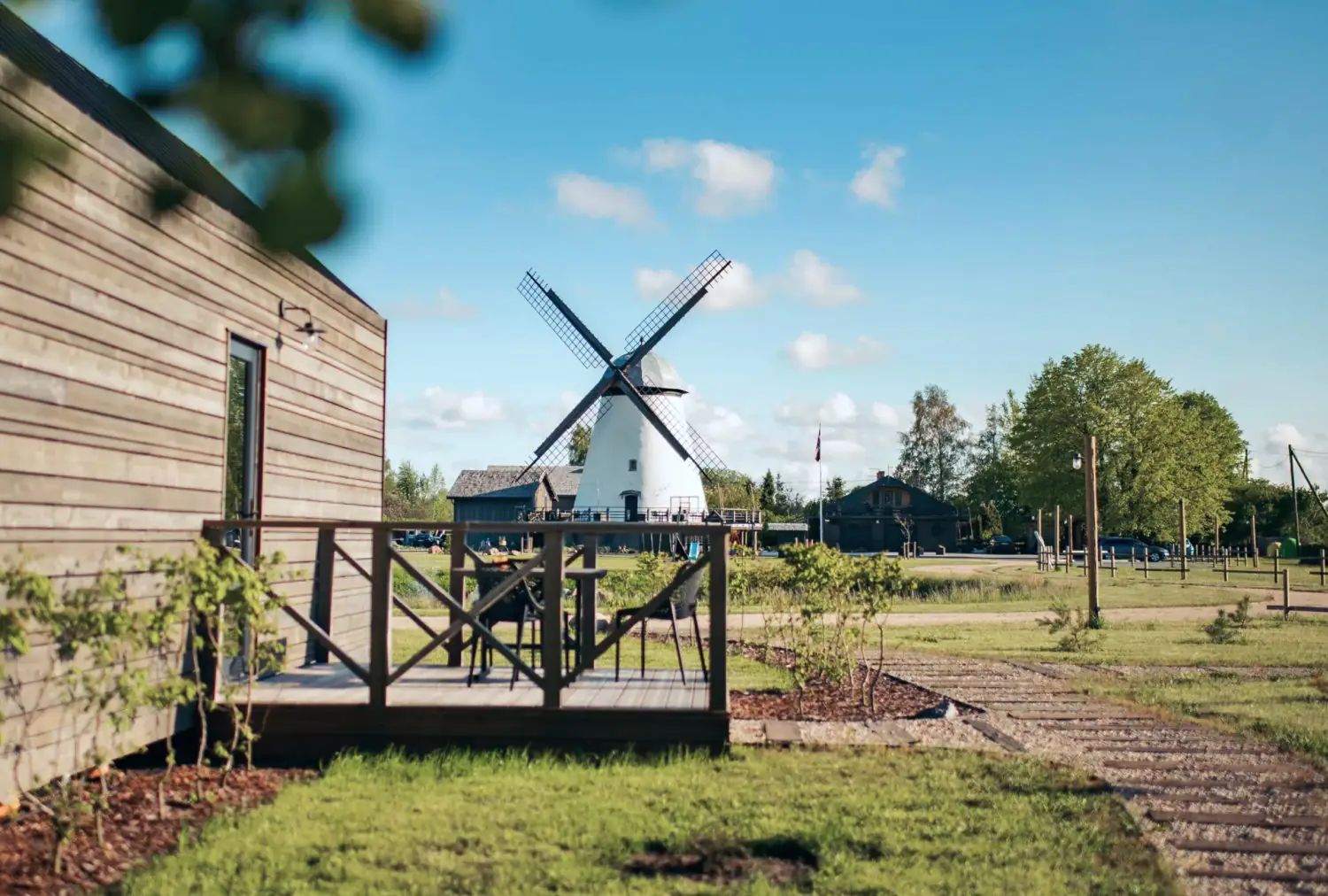
Built in 1895, this windmill remained operational until the early 1960s. It is a state-protected cultural monument. Today, the windmill houses a bar, and apartments are available for rent on the surrounding property.
Strantes vējdzirnavas
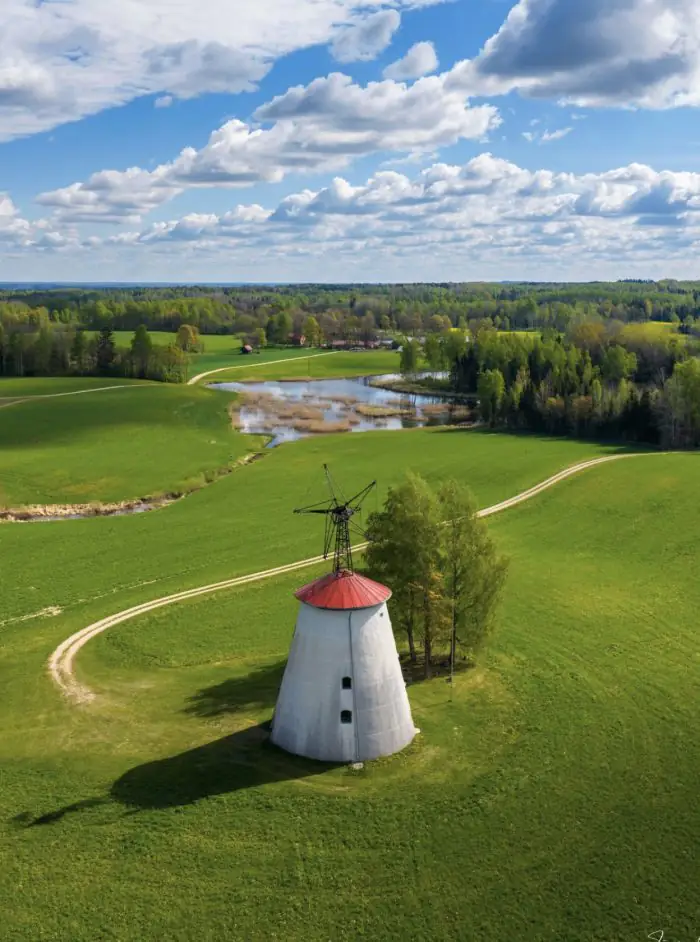
In 2018, the windmill received a new roof, staircase, window frames, and flooring. It currently belongs to the hunting club Vidzeme and is used for hunting-related purposes. Anyone may visit the windmill and view it from the outside. It was built around 1900.
Liepupes vējdzirnavas
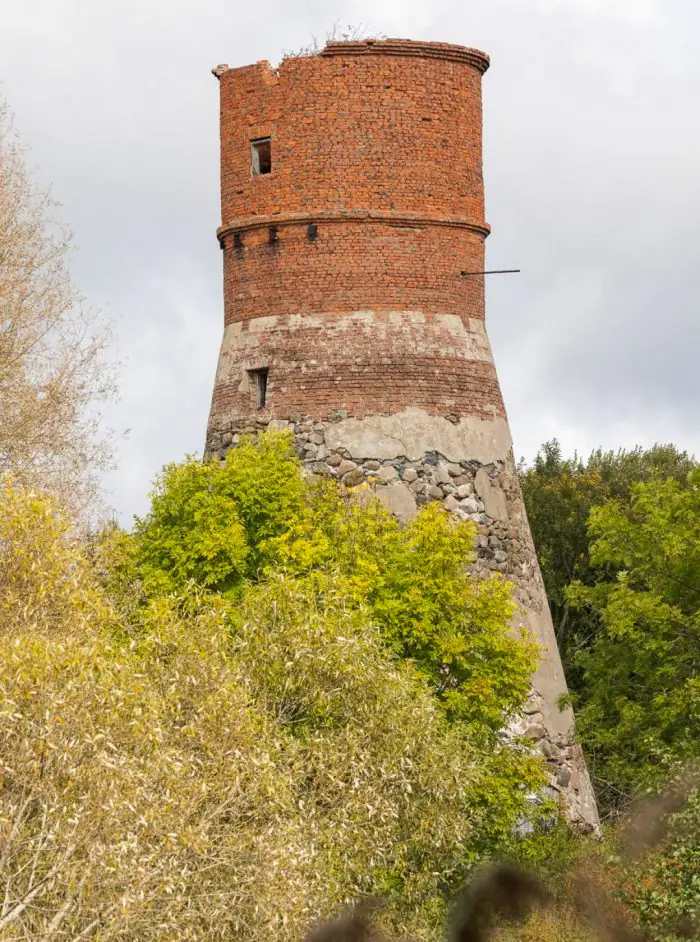
The foundation of this windmill, made of fieldstones, was constructed in the 19th century. In the second half of the 20th century, it was converted into a water tower.
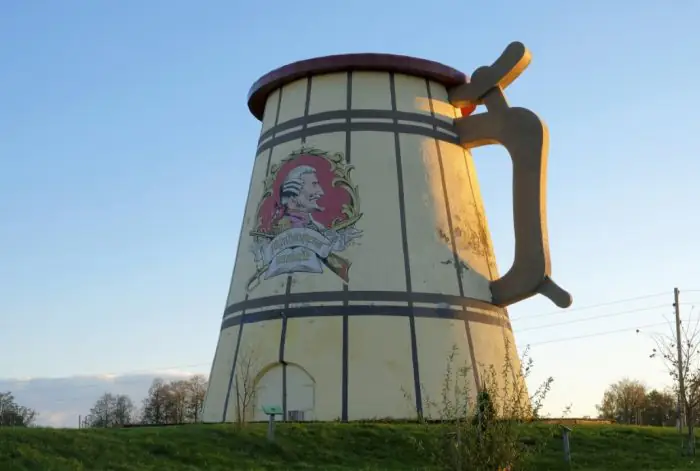
The Munchausen beer mug
The Munchausen trail leads visitors to an unusual sight—the former body of a windmill transformed into a giant beer mug. It is located on the grounds of the Munchausen Museum.
Āraišu vējdzirnavas
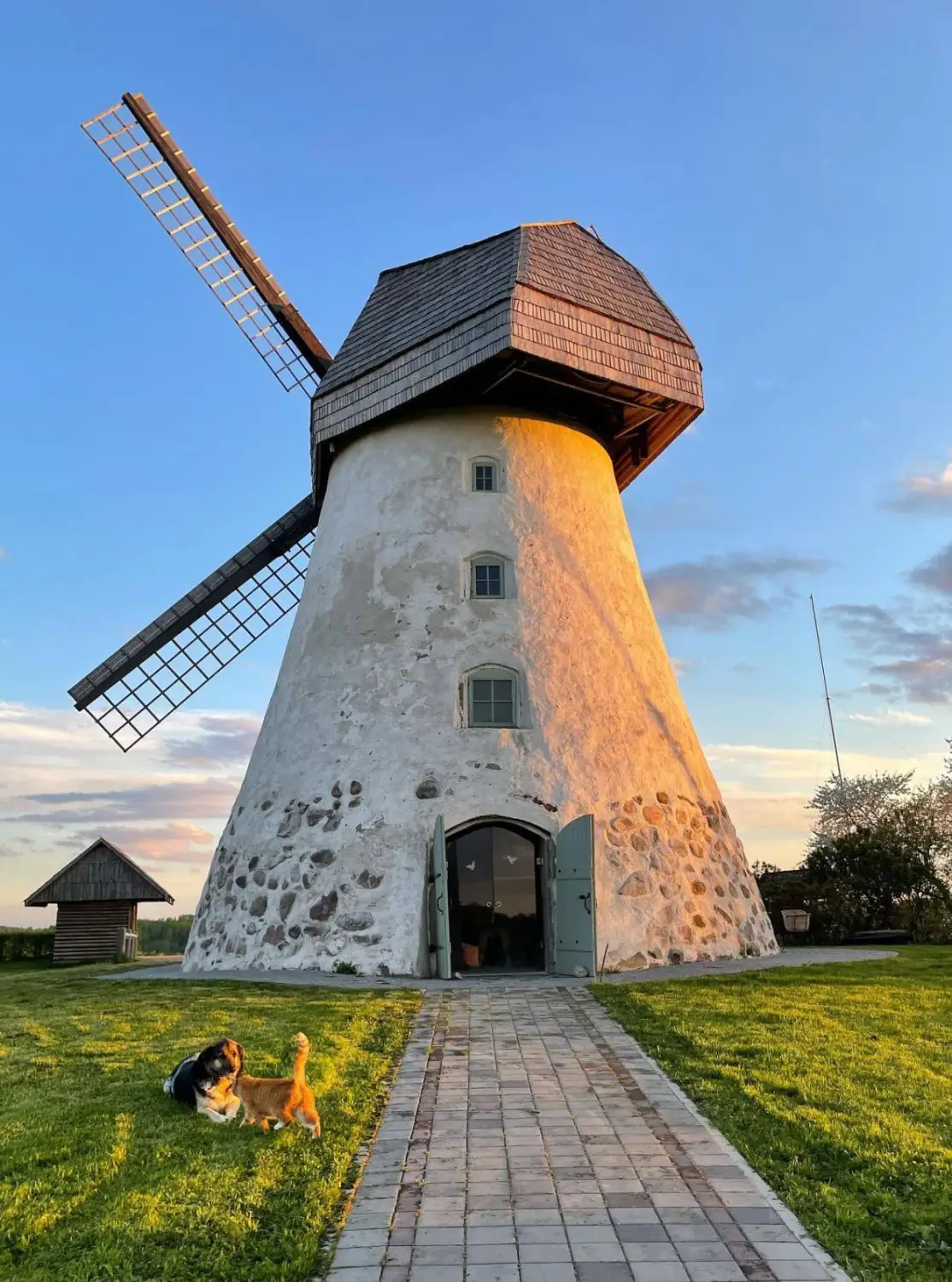
This windmill was built in the mid-19th century. During reconstruction, a stone bearing the inscription “Anno 1852” was found in one of the walls, which is believed to indicate the year of construction.
This example clearly demonstrates the structure of Dutch-type windmills: the upper section automatically turns toward the wind using a special mechanism.
The inside of the windmill can be visited with the owner’s permission.
German-type windmills
Only a few windmills of this type remain in Latvia today, and they are mainly preserved in open-air ethnographic museums. Their poor state of preservation is explained by the fact that the entire structure was made of wood, making it more vulnerable to decay, fires, and other damaging environmental factors.
Sēļu sēta
This windmill stands on the grounds of the Sēļu sēta complex, part of the Jēkabpils History Museum. The site showcases the architecture and household items of the Sēlija region. The windmill’s body is made of wood and mounted on a central axis standing on a stone base. Unlike Dutch-type windmills, where only the upper section rotates, in the German type the entire structure turns toward the wind.