When we think about road safety, most of us imagine more traffic lights, more road signs and higher curbs separating cars from pedestrians. Yet over the past few decades a different approach has been gaining ground across Europe. Instead of adding more infrastructure, it suggests removing some of it – encouraging people to pay attention to one another again.
This approach is known as shared space. Today, it can be found in the Netherlands, Denmark, Germany, the United Kingdom, New Zealand and many other countries. Some of its principles have even appeared in Riga, although not always under that name.
When the Street Becomes a Public Space
The shared space concept is closely associated with Dutch traffic engineer Hans Monderman. In the 1990s, he proposed rethinking the traditional way streets are designed, which relies on keeping different road users strictly separated.
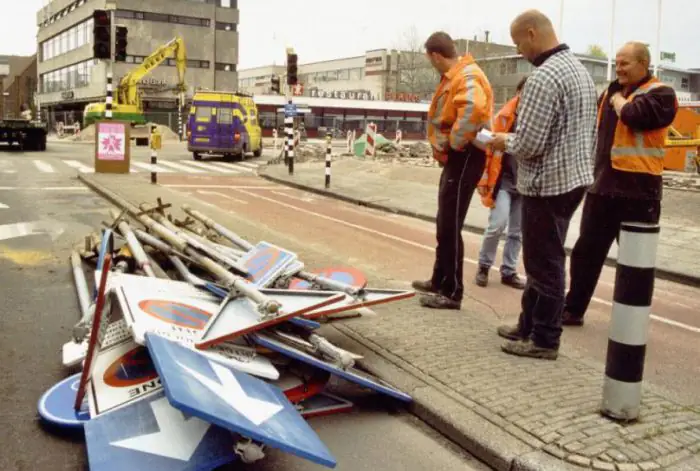
While a conventional street divides space into sidewalks, cycle lanes and carriageways, all governed by signs and signals, shared space seeks to restore the street’s original purpose: not simply as a transport corridor, but as a public place.
The idea is based on a simple observation. The more instructions drivers receive from road infrastructure, the less attention they pay to their surroundings. Remove some of those instructions, and the street no longer feels like territory reserved for cars. Drivers slow down, pedestrians become more confident, and everyone begins interacting with one another directly rather than relying solely on signs and signals.
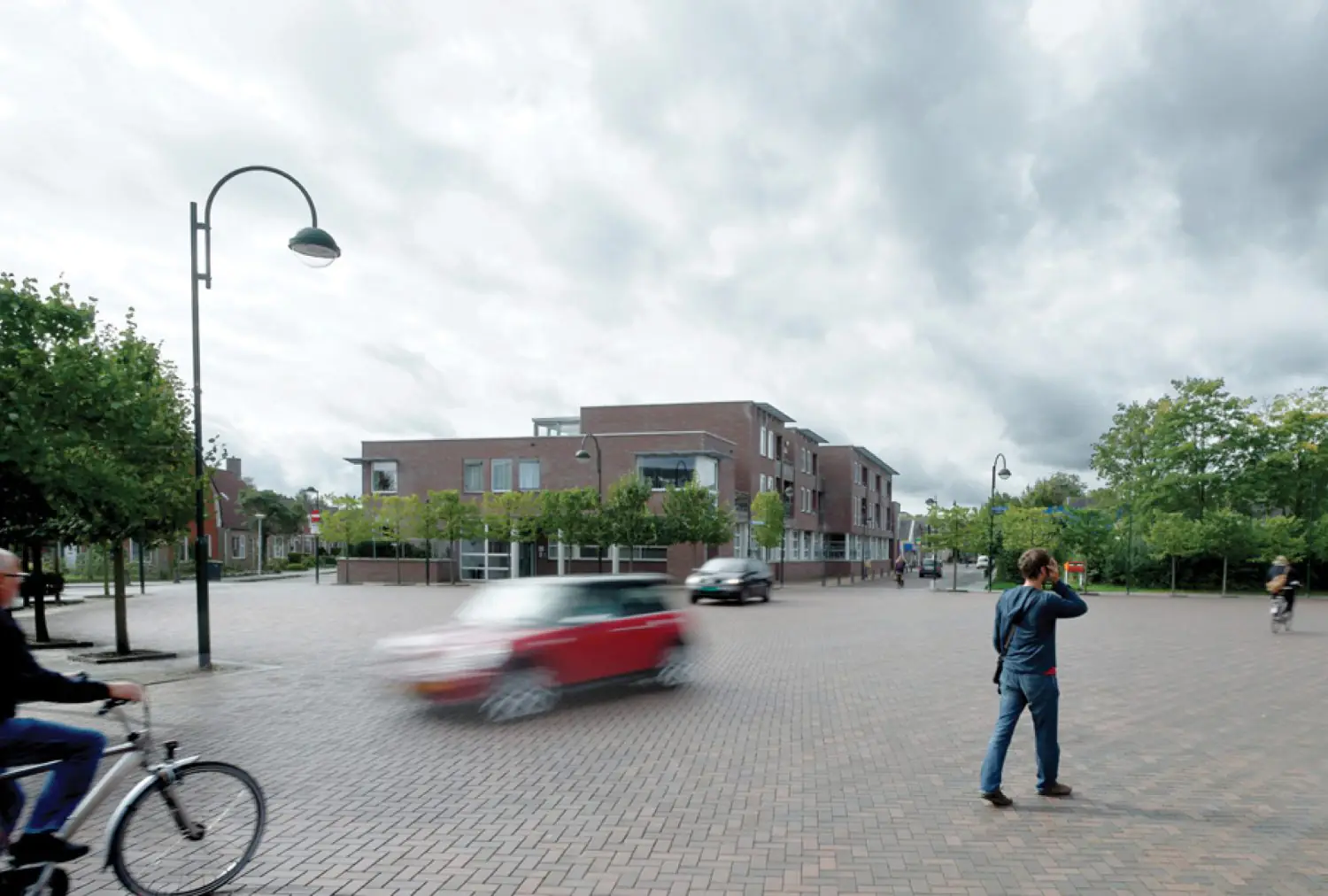
The result is a street that feels calmer, safer and more pleasant to spend time in. Of course, shared space does not mean eliminating traffic rules altogether. It is intended for places where vehicle speeds are already low and where the quality of the urban environment takes priority.
The Netherlands: A Testing Ground for a New Approach
Although some elements of shared space had existed before, it was in the Netherlands that the concept was developed systematically.
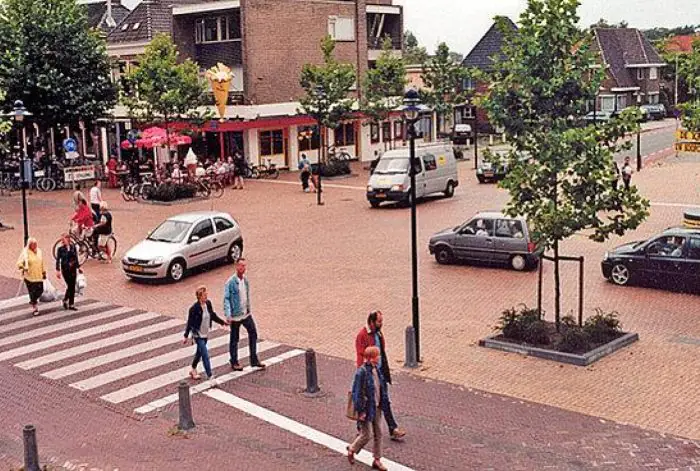
Projects in the province of Friesland, where Monderman worked, are often cited as pioneering examples. In towns such as Drachten and the village of Makkinga, intersections were transformed into open public squares without traffic lights or conventional road markings. Instead of following instructions from the infrastructure, people had to make eye contact and negotiate priority themselves. Despite a steady increase in traffic volumes, the number of accidents in Drachten fell from an average of 8.3 per year between 1994 and 2002 to just one per year by 2005.
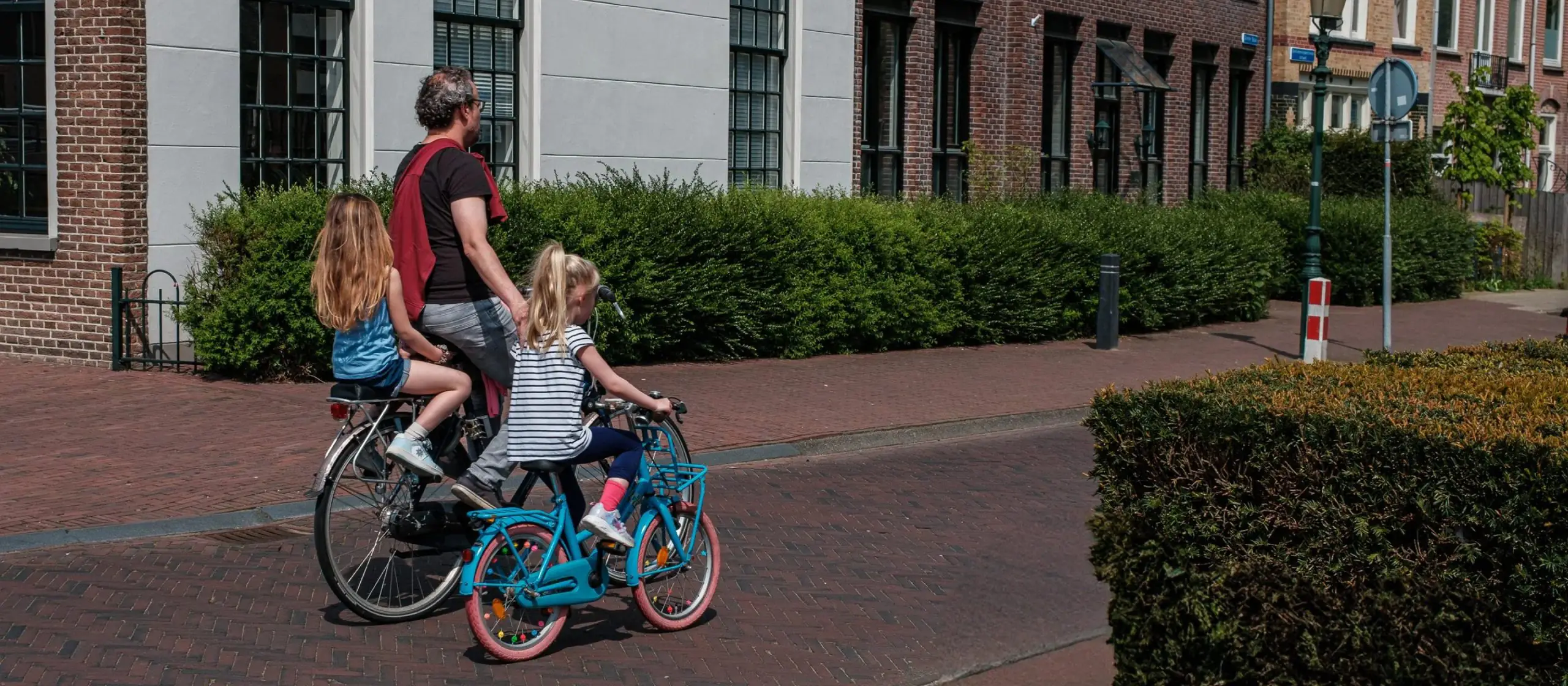
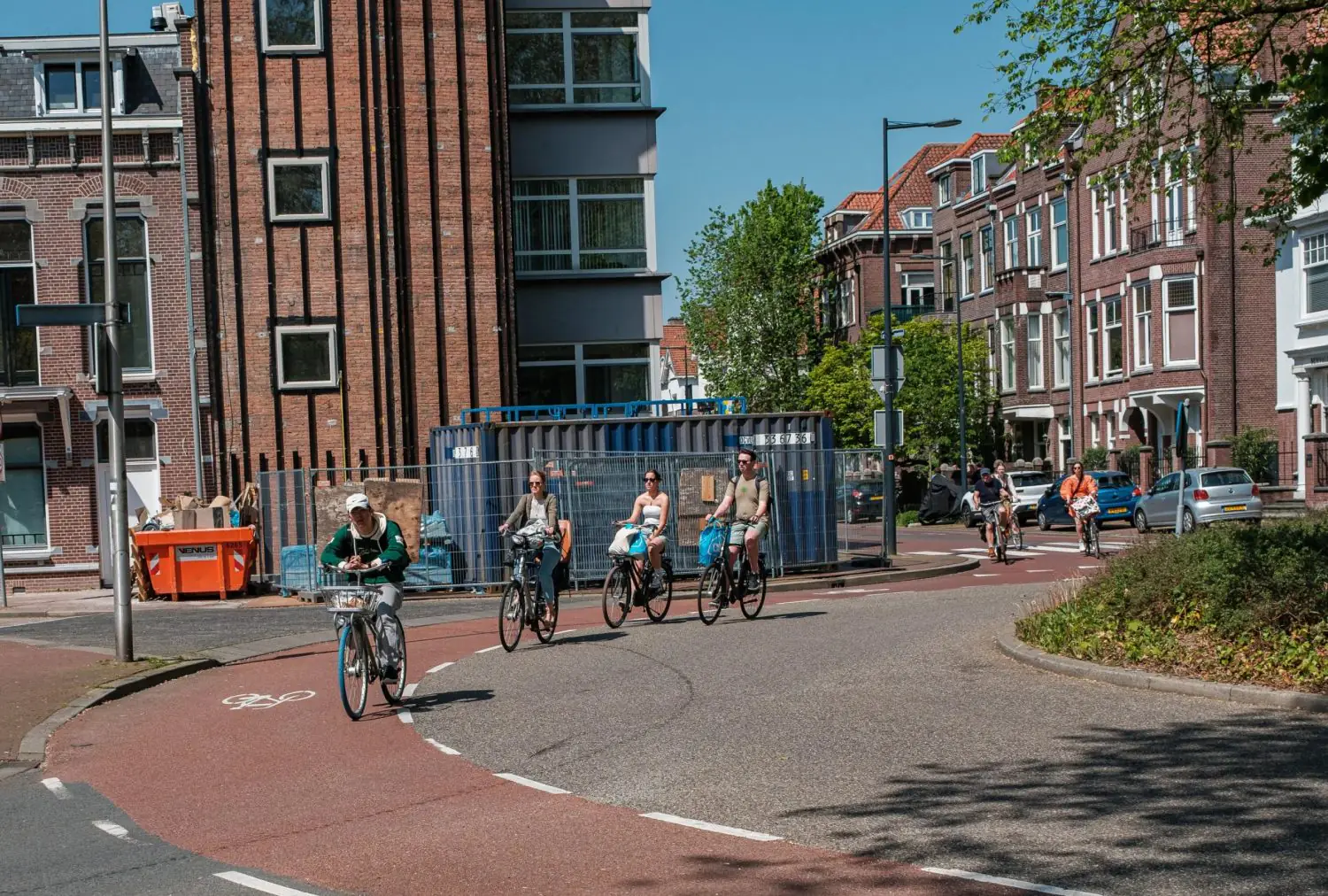
More broadly, the Netherlands demonstrated that streets can successfully serve both transport and social functions. Today, the historic centres of many Dutch cities feature streets where cars, cyclists and pedestrians comfortably share the same level.
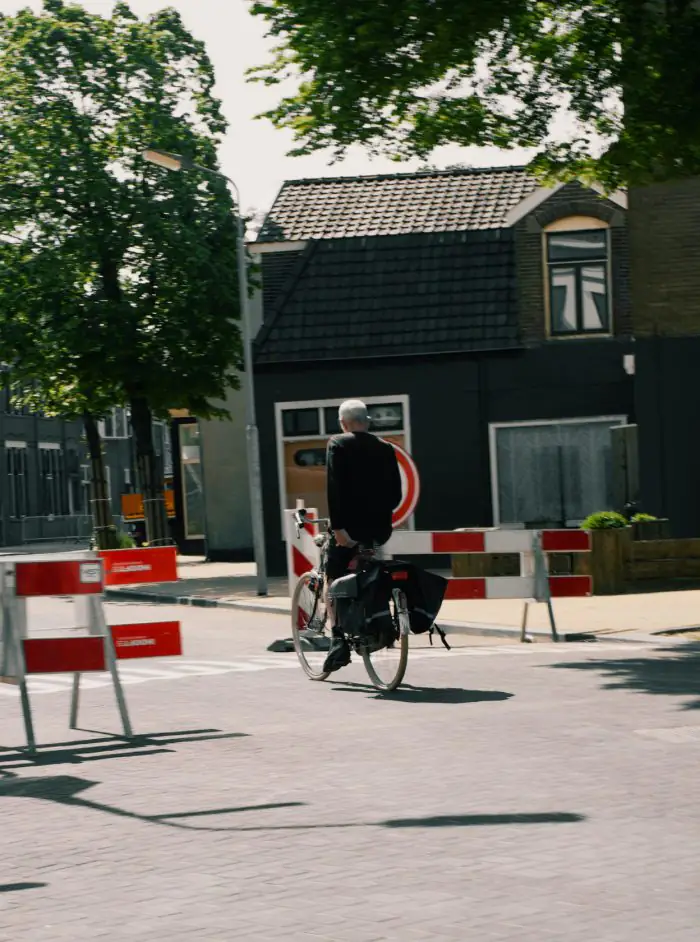
The central districts of Utrecht provide a particularly striking example. Many streets feel less like roads and more like extensions of the city’s public squares. Cars have not disappeared, but the logic of the space has changed: drivers become guests rather than the dominant users of the street, while pedestrians and cyclists take priority.
Shared Space Across Europe
Similar ideas have gradually been adopted elsewhere in Europe.
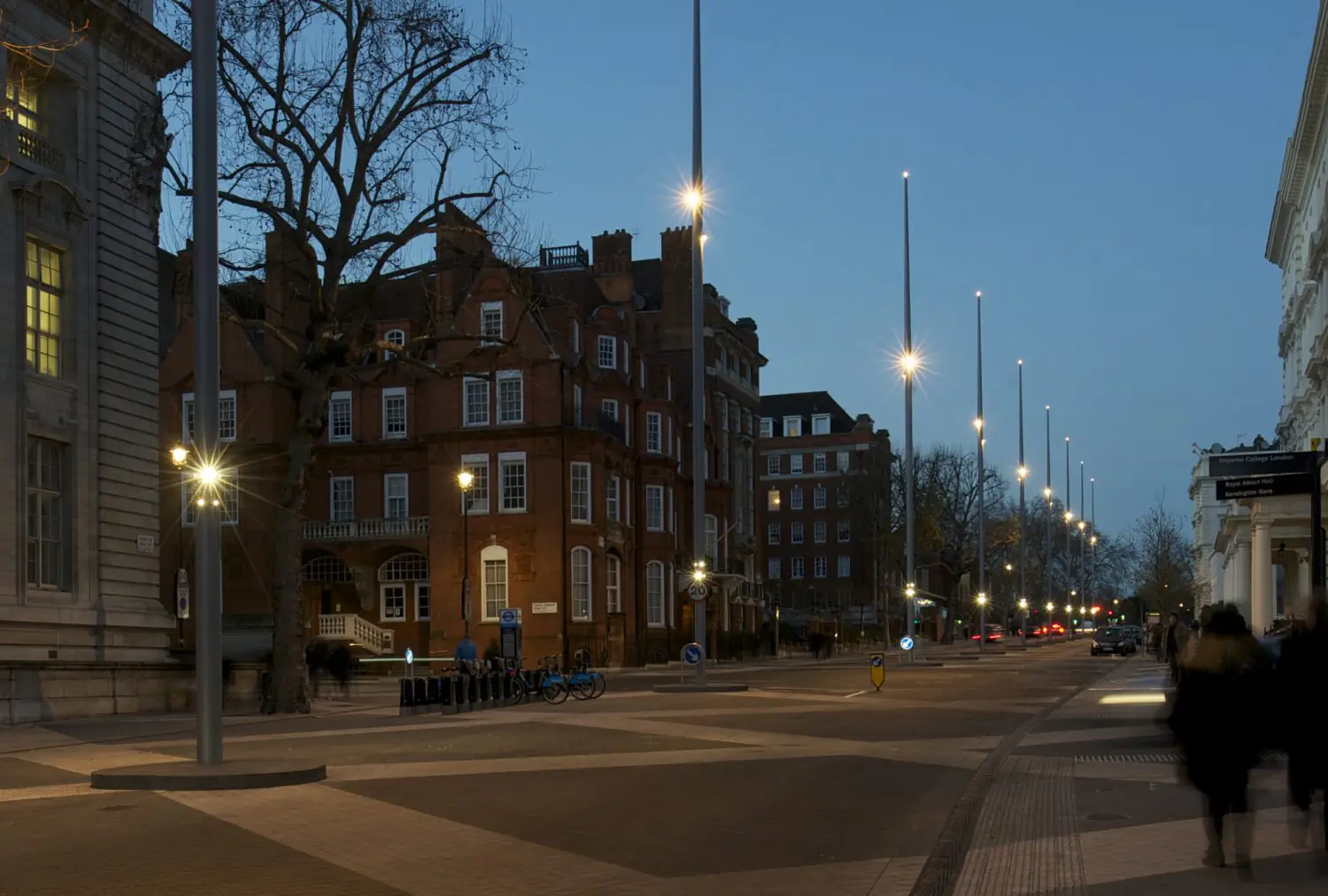
One of the best-known examples is Exhibition Road in London. Home to the Victoria and Albert Museum, the Natural History Museum and the Science Museum, the street welcomes thousands of visitors every day. During its redesign, the traditional separation between roadway and pavement was replaced with a single continuous surface. The result was a space that became more comfortable not only for pedestrians but also for motorists. Traffic slowed naturally, and the street evolved into a public space.
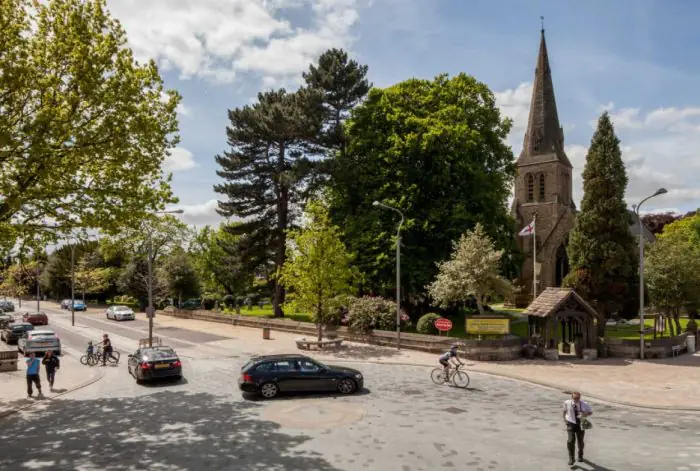
In the Cheshire town of Poynton, one of the busiest junctions was redesigned without traffic lights. At first, the idea seemed risky. Yet after the reconstruction, traffic began flowing more smoothly, average vehicle speeds fell, and the number of collisions and fatal accidents dropped from an average of 1.1 per year to zero.
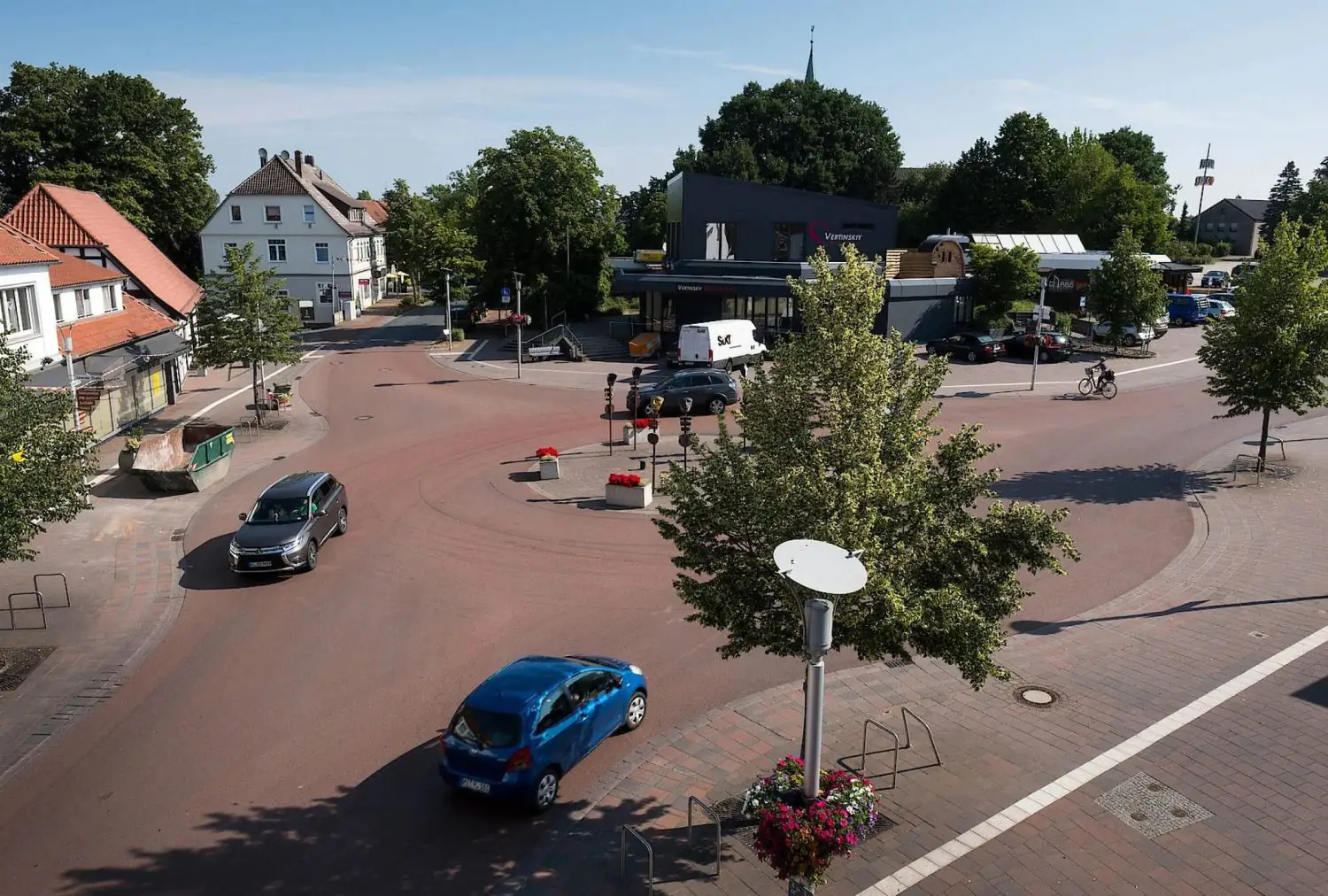
Another widely cited example is the German town of Bohmte. In the mid-2000s, most road signs, traffic lights and conventional road markings were removed from the town centre, which was redesigned as a shared low-speed environment. Over time, residents reported not only improved safety but also a more attractive main street that benefited local businesses.
Urban planners themselves emphasise that shared space is not a universal solution. It works best where traffic volumes and speeds are relatively low and where the street’s primary purpose is not to move as many cars as possible, but to create a place that works well for people.
What Could Riga Learn?
At first glance, projects like these may seem too ambitious for Riga. But a closer look shows that the city has already begun introducing some of the same principles.
In recent years, Riga has steadily embraced traffic calming measures. New pedestrian refuge islands, wider sidewalks, narrower traffic lanes and an expanding cycling network are gradually changing the way the city’s streets function. In some neighbourhoods, speed limits have already been reduced to 30 km/h. The goal is not to discourage driving, but to make the streets safer and more comfortable for everyone.
Shared space could be seen as the next step in that process.
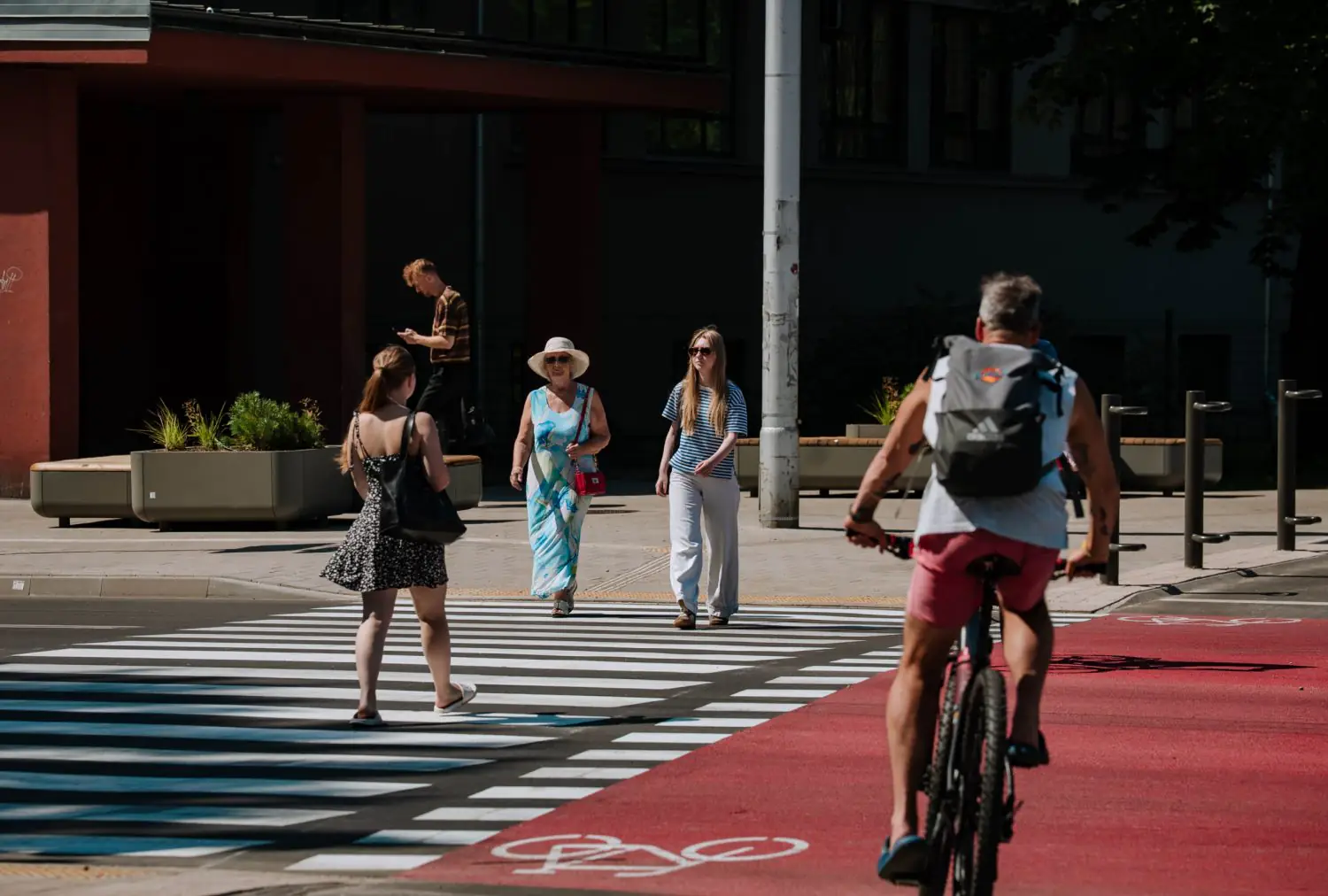
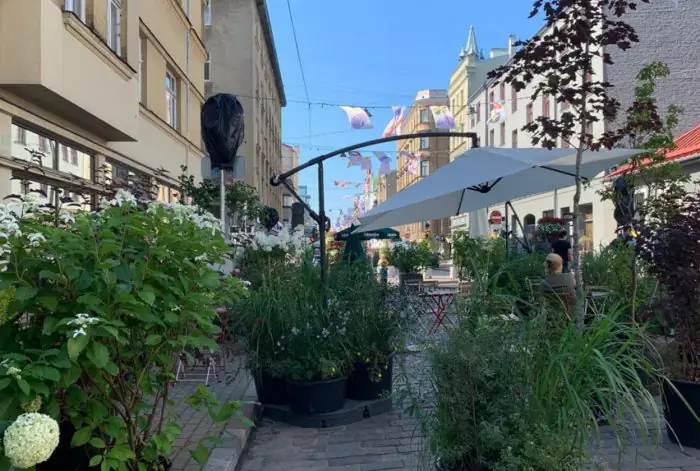
One of Riga’s most notable experiments in recent years was Tērbatas iela. During the summer of 2020, the street was closed to regular traffic for a month and transformed into a space for walking, outdoor cafés, and public events. It was not a classic shared space project, but it clearly demonstrated how quickly a street’s atmosphere changes when people, rather than cars, become the priority.
Miera iela offers another promising opportunity. With its cafés, independent shops and relaxed character, it already feels like one of Riga’s most welcoming public spaces. A more consistent reduction in traffic could strengthen that identity even further.
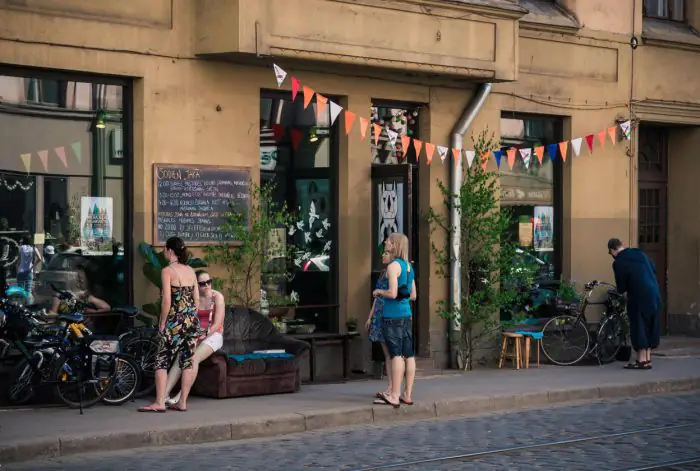
In many ways, the Old Town already comes close to the shared space model. Cars and pedestrians have long shared the same streets, although this has developed more organically than through a coordinated urban strategy. A more deliberate redesign of the historic centre could make it even more attractive for both residents and visitors.
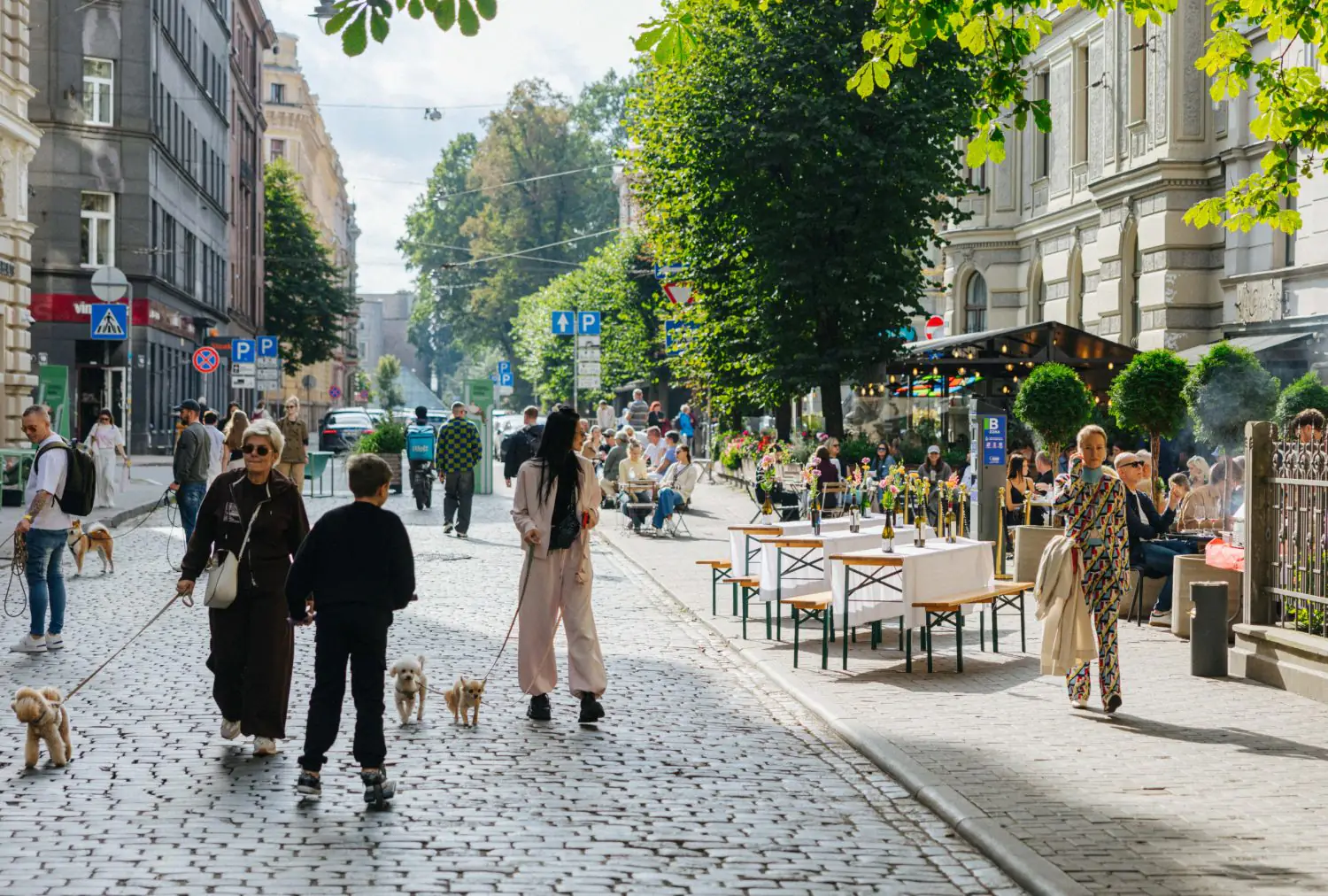
Interesting experiments are also emerging beyond Riga. In Sigulda, the town centre has been designated as a 30 km/h zone marked with the sign “One Road for All,” indicating that all road users share the street on equal terms. Since the change was introduced, the number of accidents has declined, and local authorities are planning to expand the area. It is another sign that this approach is relevant not only for large cities.
A City Worth Staying In
Throughout the twentieth century, European cities were reshaped around the needs of the automobile. Today, many of them are gradually shifting their priorities. Even busy streets are once again becoming places where people can meet friends, sit at a café terrace or simply enjoy a walk without feeling as though they are standing beside a highway.
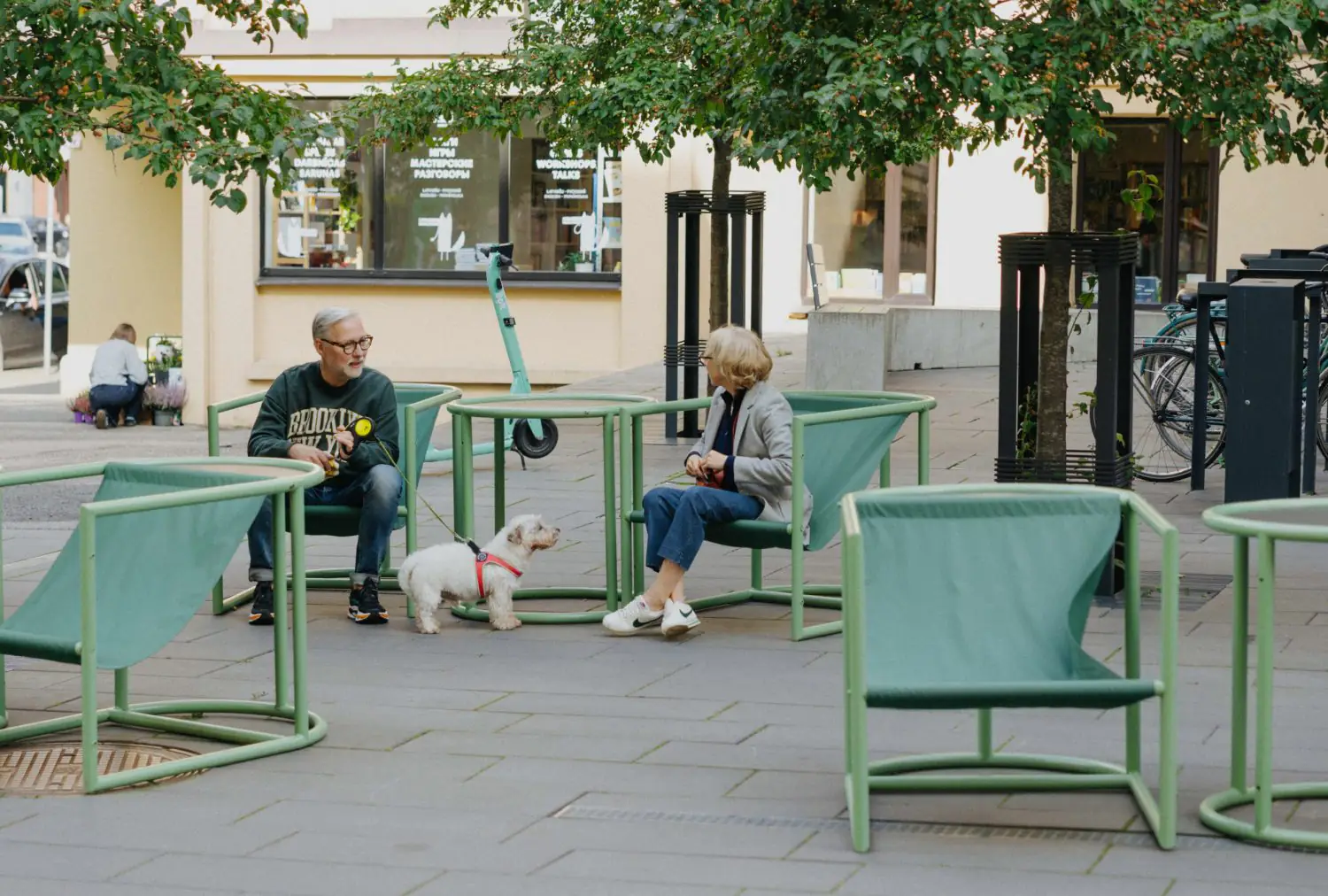
Shared space is not, of course, a cure-all. It depends on reliable public transport, well-designed cycling infrastructure and thoughtful transport policy. But Europe’s experience suggests that the less a city is designed around cars and the more it is designed around people, the more enjoyable it becomes to live in.
Perhaps that is the real idea behind shared space.