The city’s history begins with the Livonian Order Castle, first mentioned in 1290. The fortress, with its massive walls and inner courtyard, formed the foundation of the urban layout. Over time, the building changed its function repeatedly—from a defensive structure to a prison and barracks—and was constantly rebuilt. For this reason, during the 1996 renovation, the municipality decided not to restore it to its “original” appearance, but instead to blend elements from different eras.
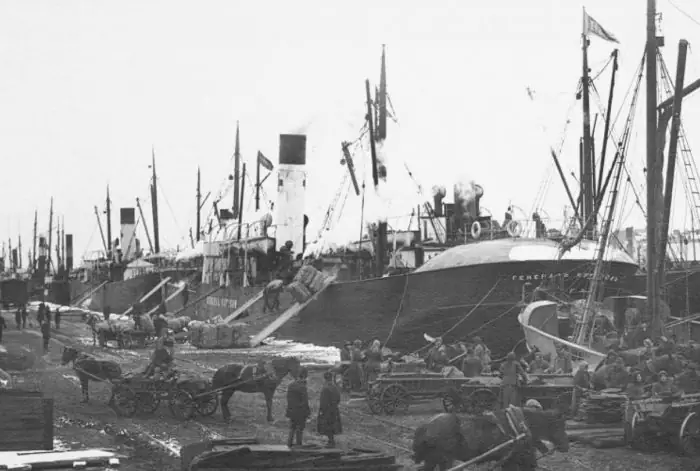
Ventspils reached its peak in the 17th century, during the reign of Duke Jacob Kettler. The port on the Venta River (historically known as Windau) developed rapidly, shipbuilding grew, workshops and warehouses appeared, and trade with Western Europe brought prosperity to the city.
St. Nicholas Lutheran Church
Address: Tirgus ielā 4
Among the city’s religious buildings, St. Nicholas Lutheran Church stands out—an austere example of Classicism with columns, a portico, and a tower.
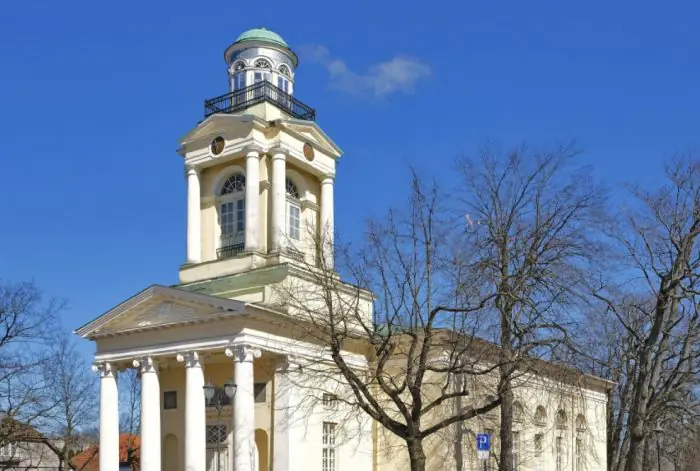
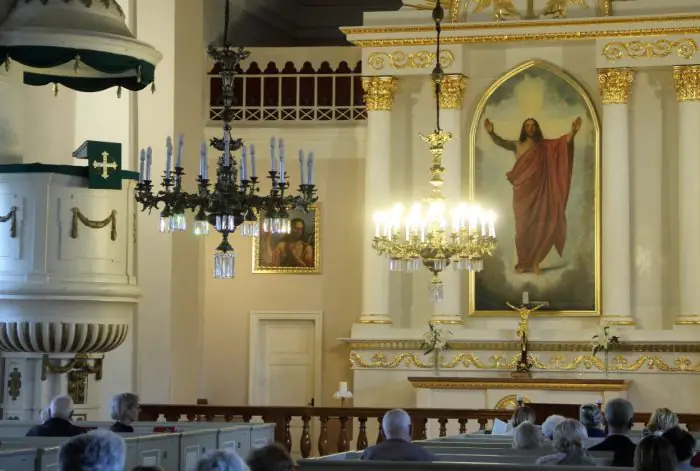
The building’s history goes back to the 17th century, when an older church already stood on this site; however, by the late 1600s it had fallen into disrepair. A first attempt to build a new church was made in 1718—a foundation was even laid and walls began to rise, but construction halted for many years due to a lack of funds. It was not until 1833 that Pastor Friedrich Paufler managed to secure financing from Russian Emperor Nicholas I. The new church was consecrated just two years later.
The Turn of the 19th–20th Century: A Trading City and Apartment Buildings
In the 19th century, Ventspils transformed from a small settlement around the castle into a trading city. The development of the port drove population growth, and with it, active construction.
The atmosphere of that era is best captured on Kuldīgas and Tirgus iela, where the first stone apartment buildings appeared—with symmetrical facades and restrained ornamentation. By the end of the century, however, the architecture grew more varied, incorporating elements of Historicism and Jugendstil, most noticeably on Pils iela.
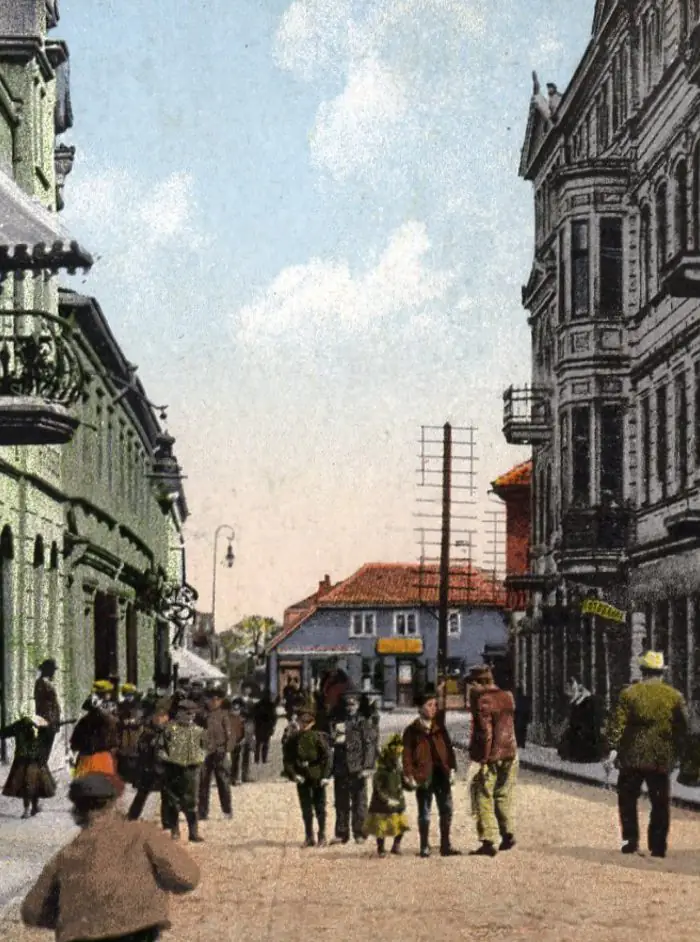
The Vulfson House
Address: Pils iela 40
One of the most notable examples of Art Nouveau in Ventspils, this building was constructed in 1905 as an apartment building with ground-floor shops. The three-storey structure, featuring elements of eclectic Jugendstil, was adorned with mascarons, decorative ornaments, and a striking corner turret with Neo-Baroque motifs. The building remains residential to this day, with commercial spaces on the ground floor.
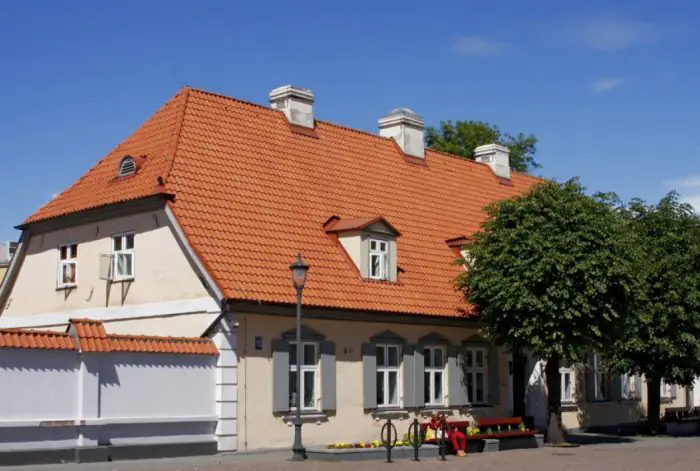
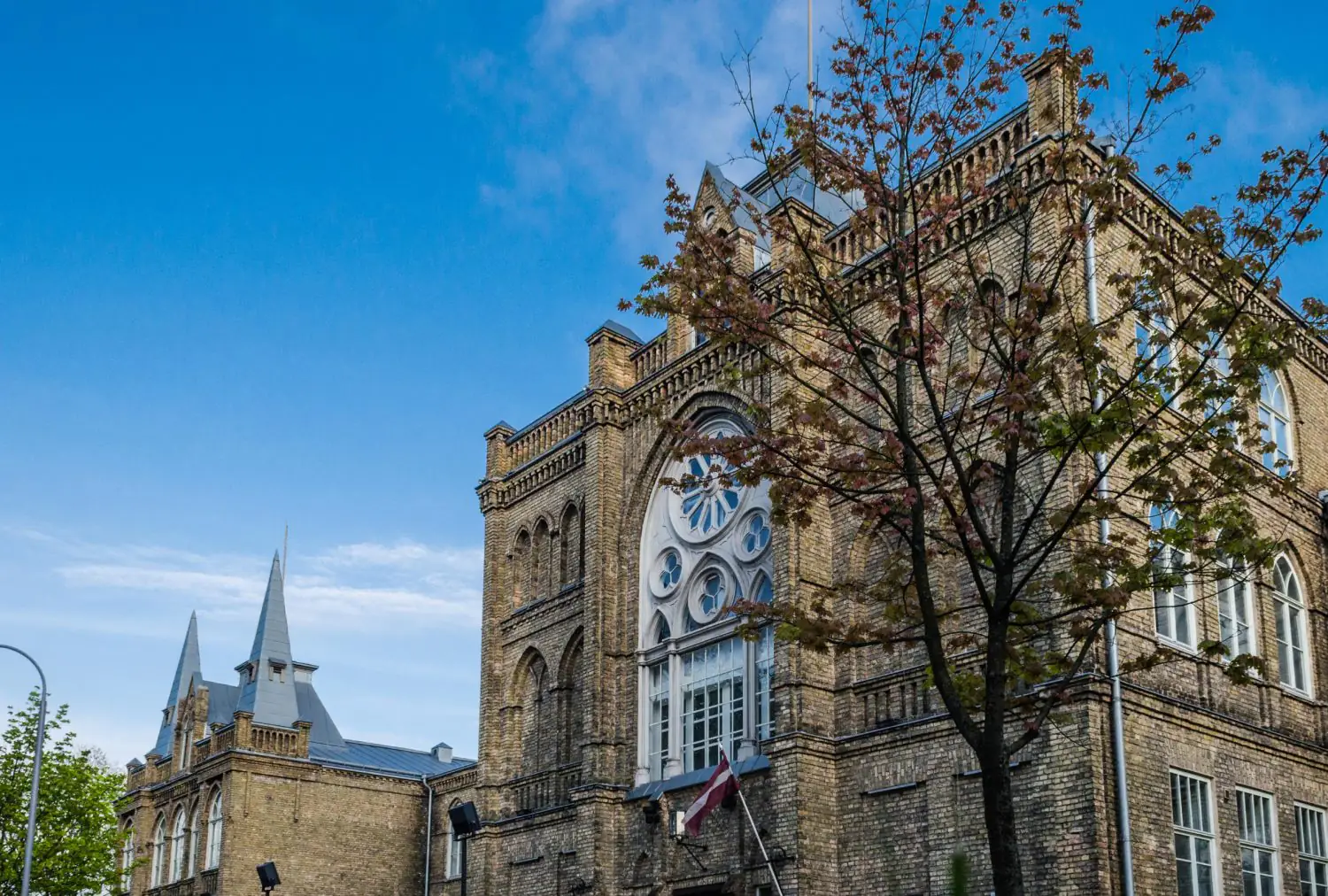
Ventspils State 1st Gymnasium
Address: Kuldīgas ielā 1
One of the most recognizable historic school buildings in Ventspils. Construction began in 1911 to serve a girls’ gymnasium. Its architecture draws on Neo-Gothic forms and details—vertical accents, tower-like elements, a brick facade, and arched windows make it look more like a European town hall or a small castle than an ordinary school.
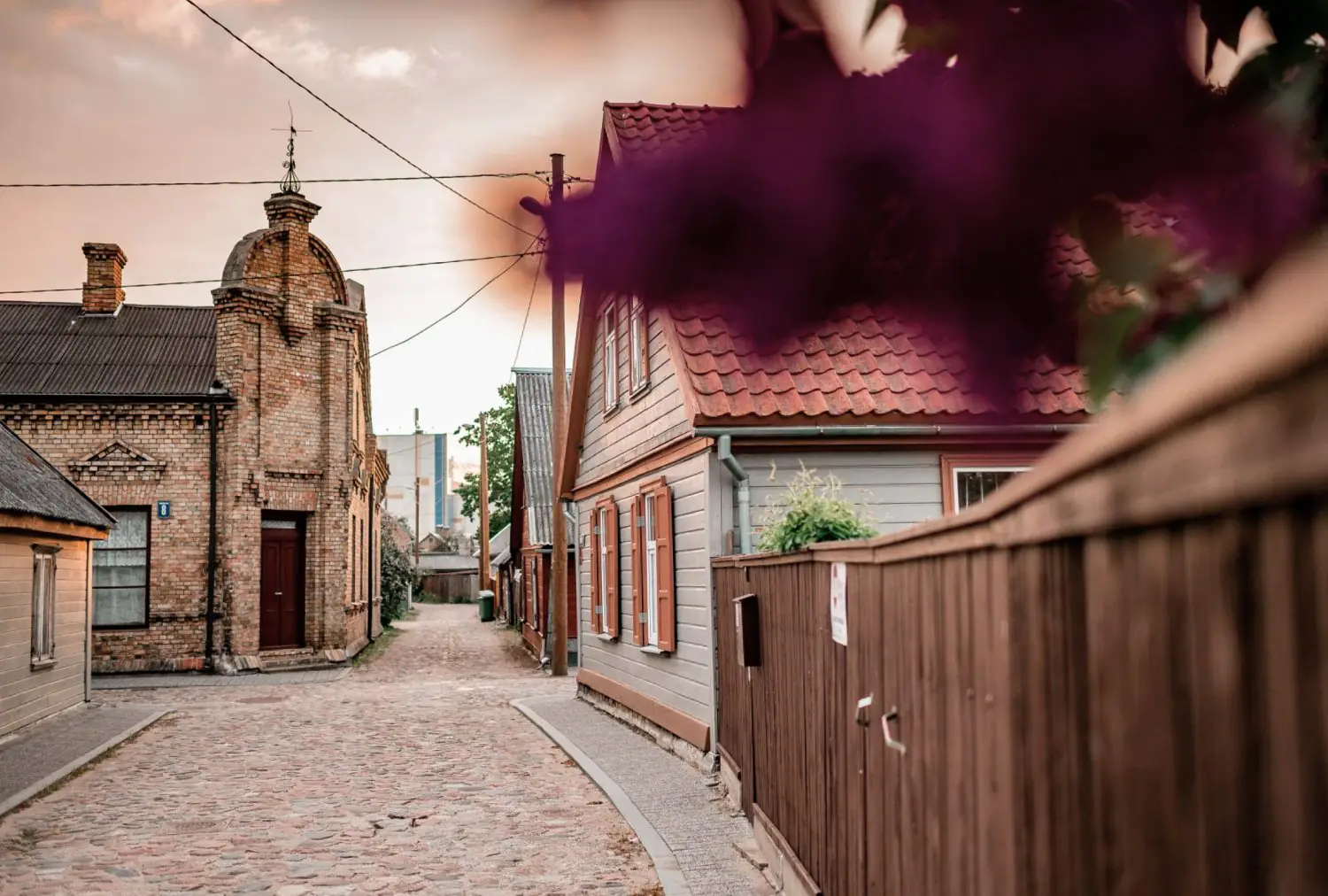
The city’s wooden architecture also deserves special attention. On less central streets—for example, in the Avotu or Krišjāņa Valdemāra area (historically known as Ostgals, literally meaning “port outskirts”)—one-storey wooden houses from the 19th century can still be found. Built quickly and cheaply, they are almost devoid of ornamentation, yet it is precisely these buildings that reveal the everyday life of the city.
A City of Function, Not Decoration
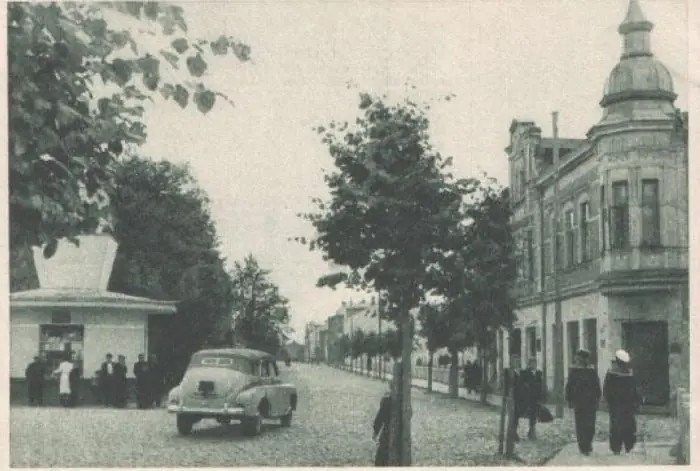
The 20th century transformed the character of the city. During this period, the port set the pace of development: warehouses were built, railway lines were laid, and workshops and technical buildings appeared. Architecture became simpler and more austere—functionality took center stage.
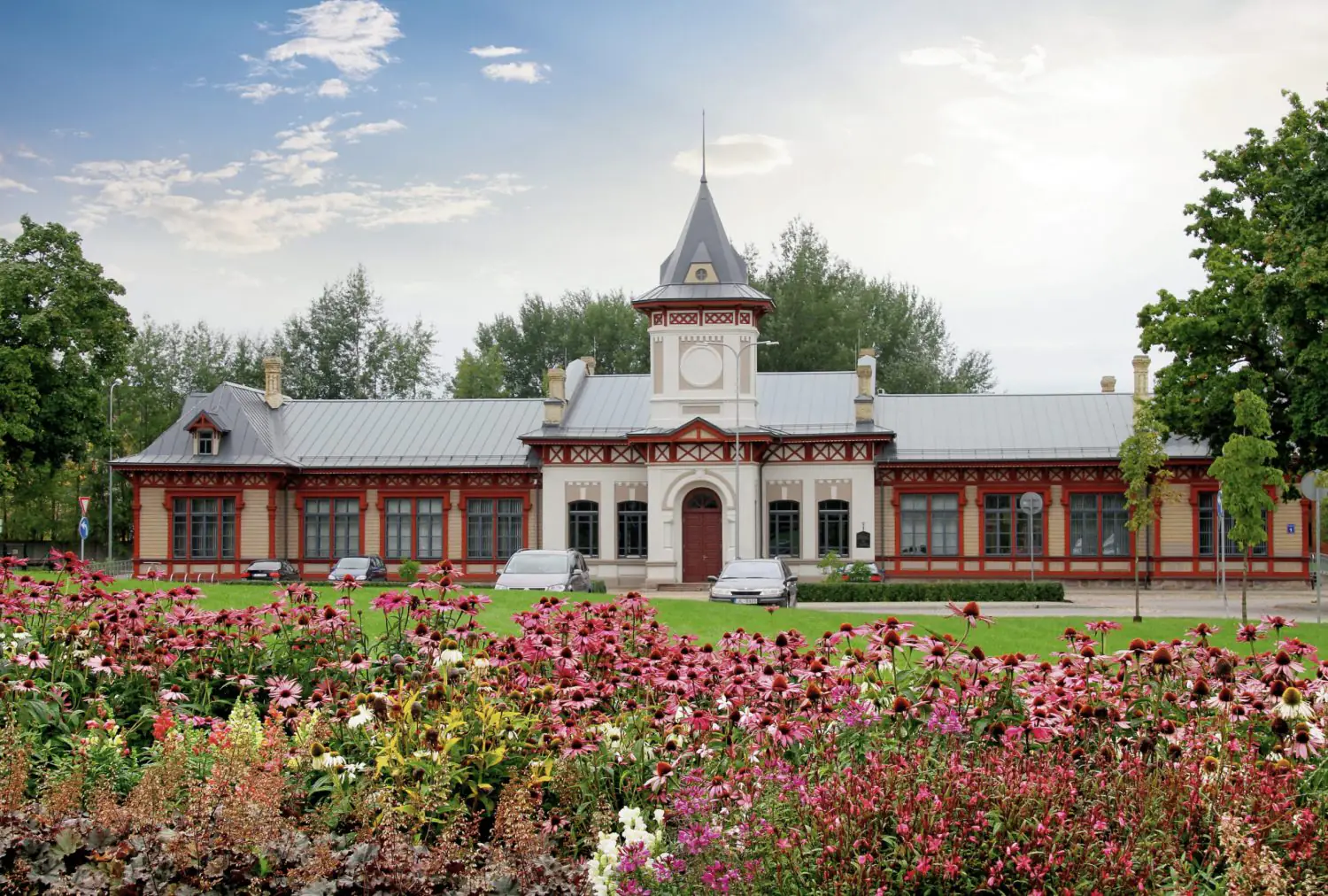
The Railway Station
In 1901, a railway station opened in the city. The wooden station building with carved decorative details is a characteristic example of early 20th-century railway architecture in Latvia. Together with the water tower, it has survived to this day, although regular passenger service was discontinued by 2010.
The North and South Piers
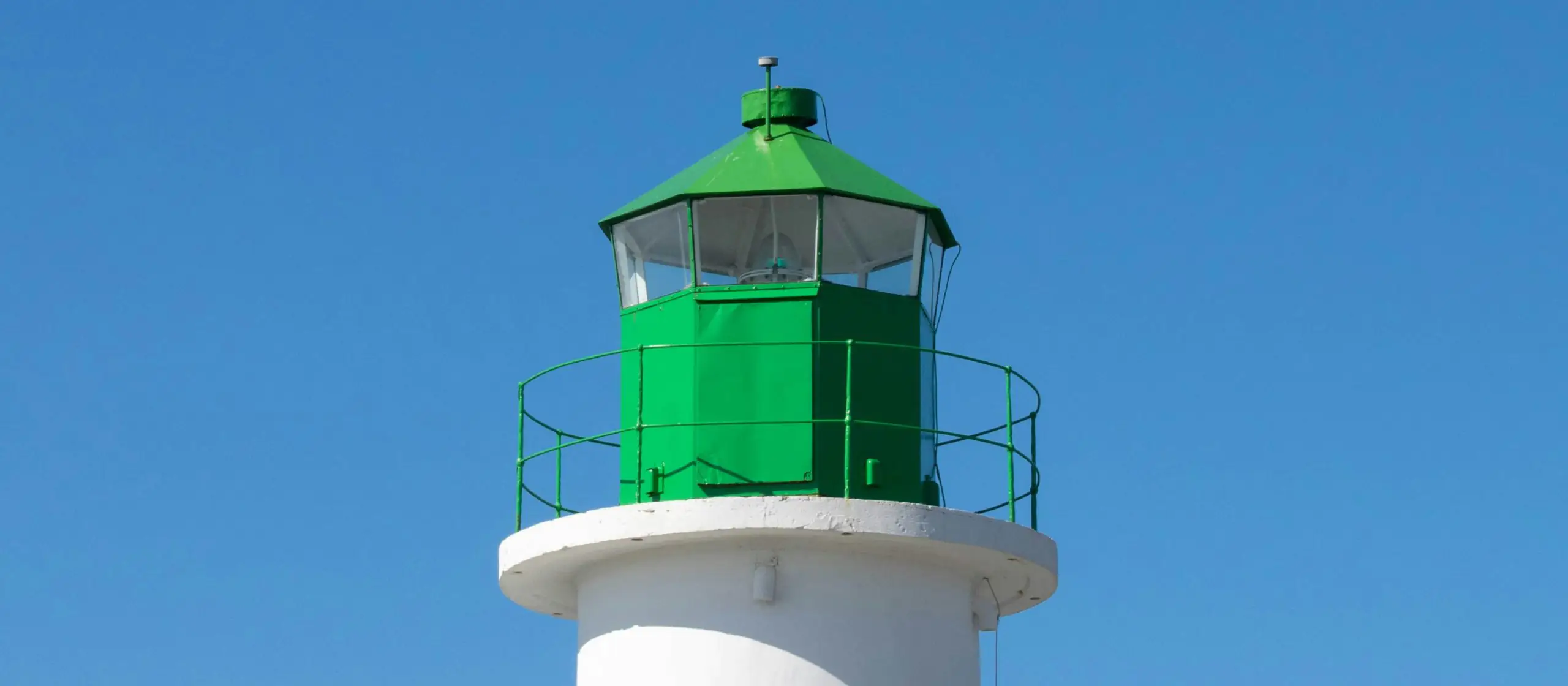
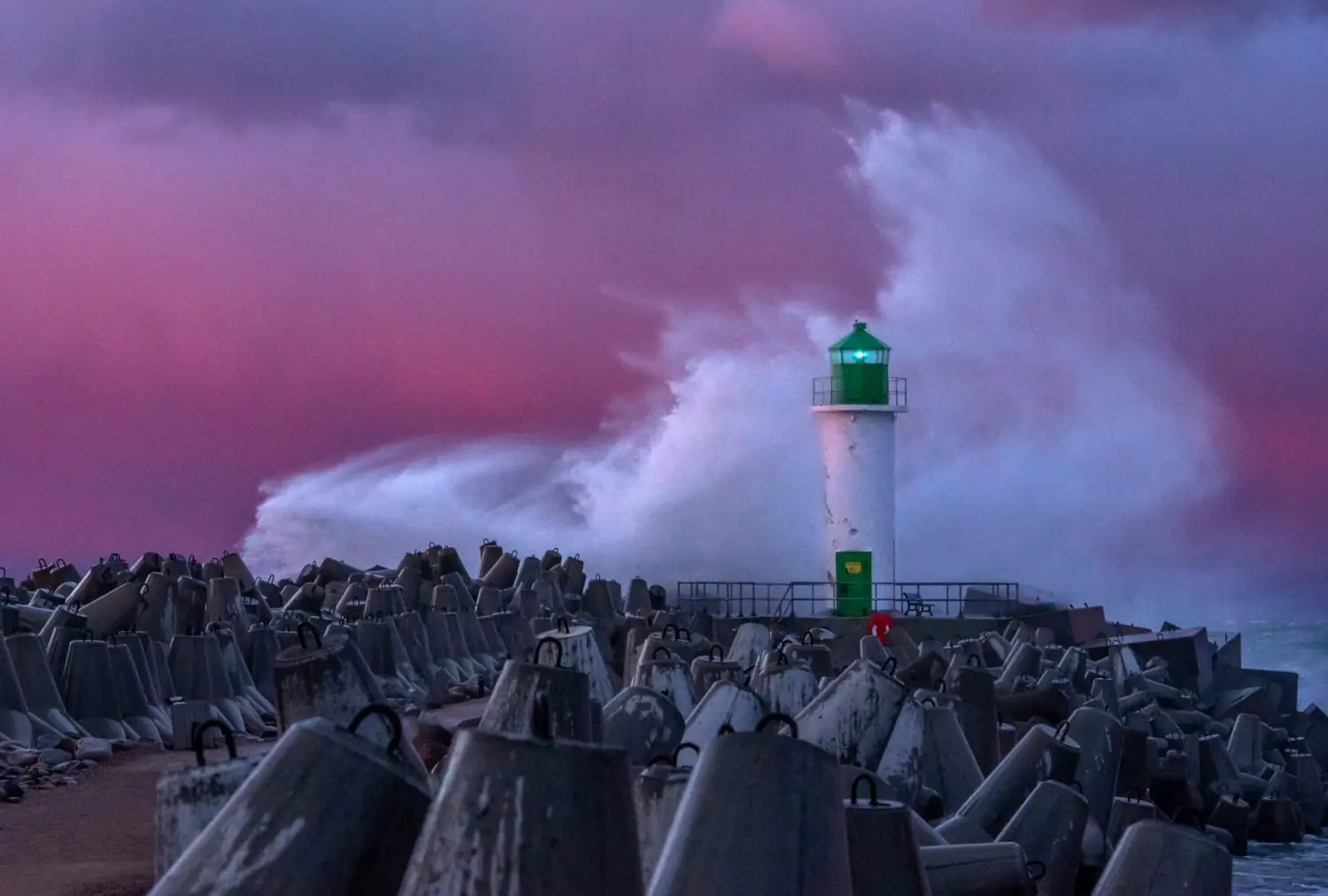
The city’s proximity to the sea shapes not only the economy of Ventspils, but also its visual identity. Structures typical of coastal cities play an important role here. Among these are the harbor entrance lighthouses—white towers with green and red roofs (the North Pier lighthouse shines red, the South Pier green). During World War I, all coastal infrastructure was destroyed. Both piers were rebuilt in 1937 and have survived to this day.
The Soviet Period: Expansion and Standardized Construction
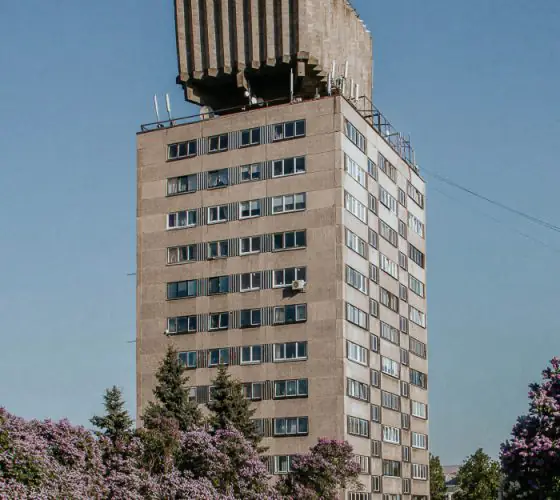
As in other Soviet cities, architecture during this period became increasingly standardized. Whereas Ventspils had previously developed mainly around the castle and the port, large residential neighborhoods with prefabricated apartment blocks now began to appear. Architecture became utilitarian: simple forms, no ornamentation. Within these districts, everyday infrastructure took shape—schools, kindergartens, and shops.
The 21st Century: Rethinking and Renewal
After the 1990s, Ventspils began actively reimagining its urban environment—investing not only in new construction, but also in renovation.
The city still has many industrial areas, but industrial buildings are increasingly being integrated into the cityscape with care.
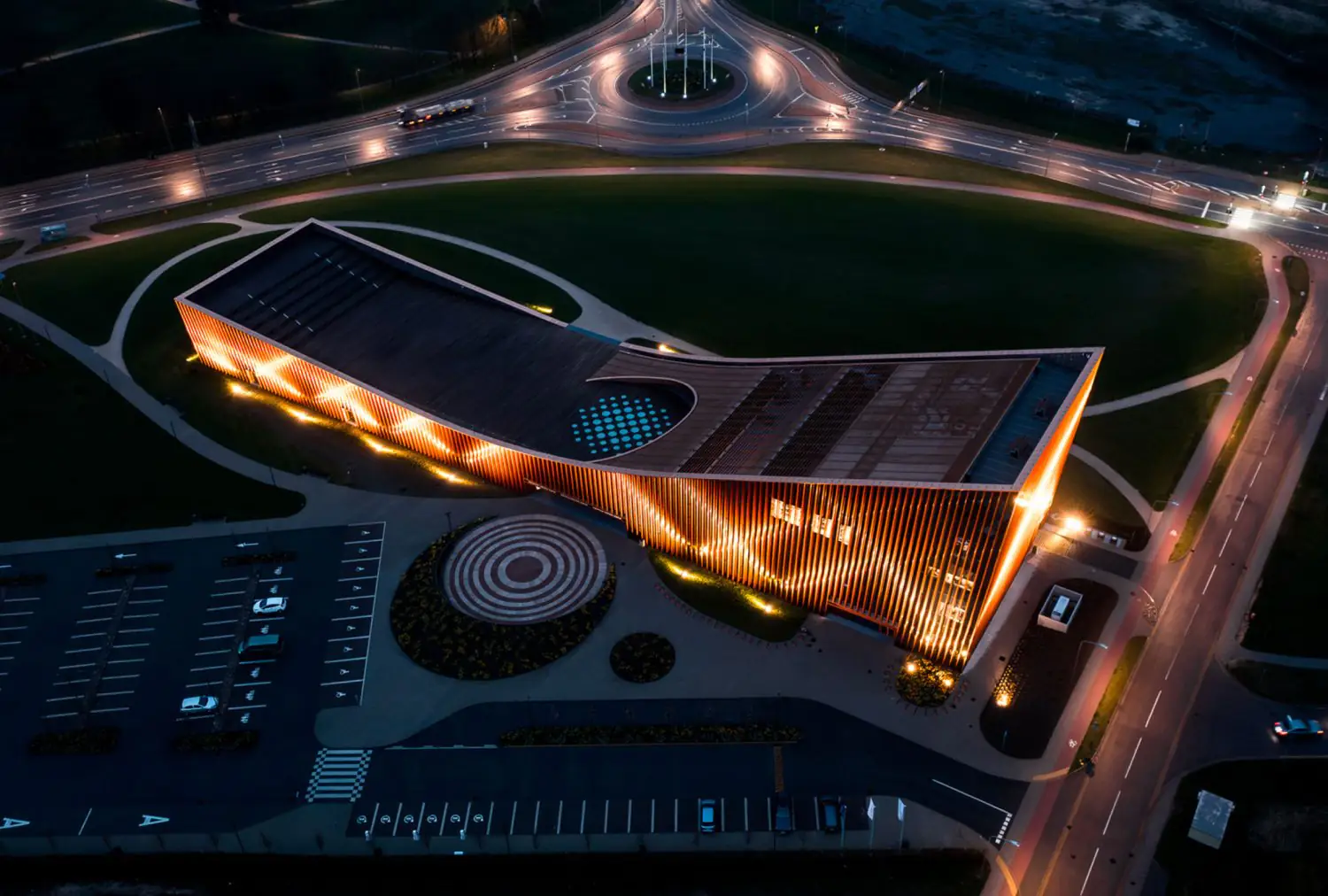
Contemporary architecture has become a distinct direction of the city’s development. One of the most striking examples is the VIZIUM Science and Innovation Centre—a building with a complex structure, slanted walls, large spans, and unconventional geometry. Even before construction began, the project won an international architecture competition in 2016. One of the defining features of the facade is its copper panels, which reflect sunlight and cause the building to continuously shift in hue depending on the weather, time of day, and season.
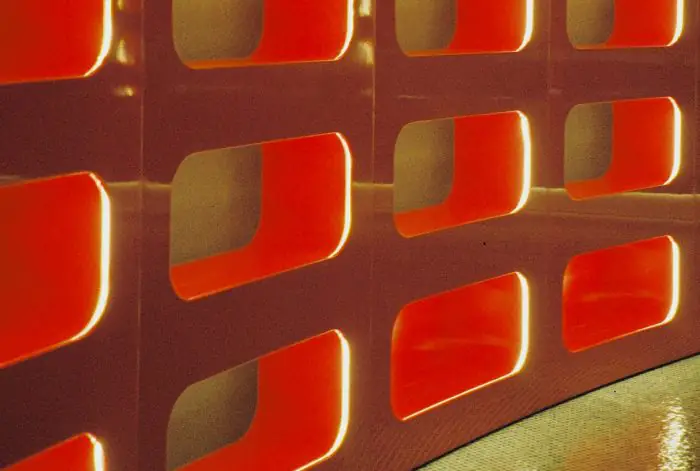
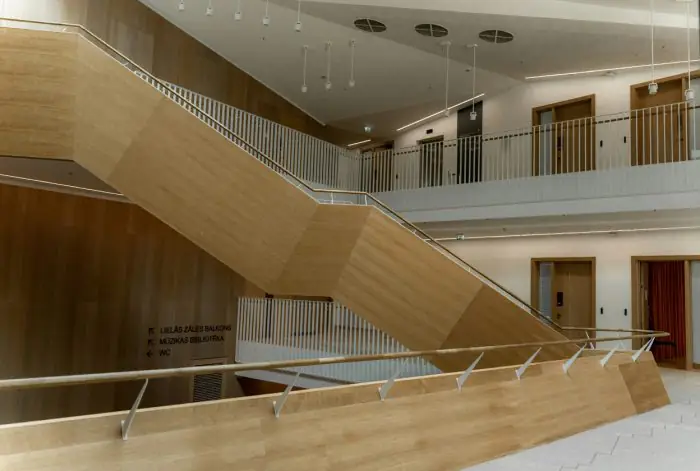
The project subsequently received several prestigious awards: it was named the Most Energy-Efficient Building in Latvia 2022 and received the Latvian Construction Award 2021.