For centuries, guilds—communities of craftspeople who taught and supported one another—existed in Latvia. The oldest in the country is the Chimney Sweeps’ Guild (Latvijas Skursteņslaucītāju amata brālība). Established in 1738, the guild is nearly 300 years old, and the chimney sweeps themselves trace its history back to this date.
Chimney sweeps are still trained according to the medieval guild system, without the need for colleges or specialised schools. To enter the profession, one must first become an apprentice (māceklis) to a master and work alongside them for at least three years. Then, one must pass an exam to become a journeyman (zellis). After that, the long journey towards becoming a master (meistars) begins, a title that cannot be attained for at least eight years. Only then can a chimney sweep work independently and train others. As well as practical skills, chimney sweeps must be familiar with the code of ethics—a set of professional rules that all guild members must follow.
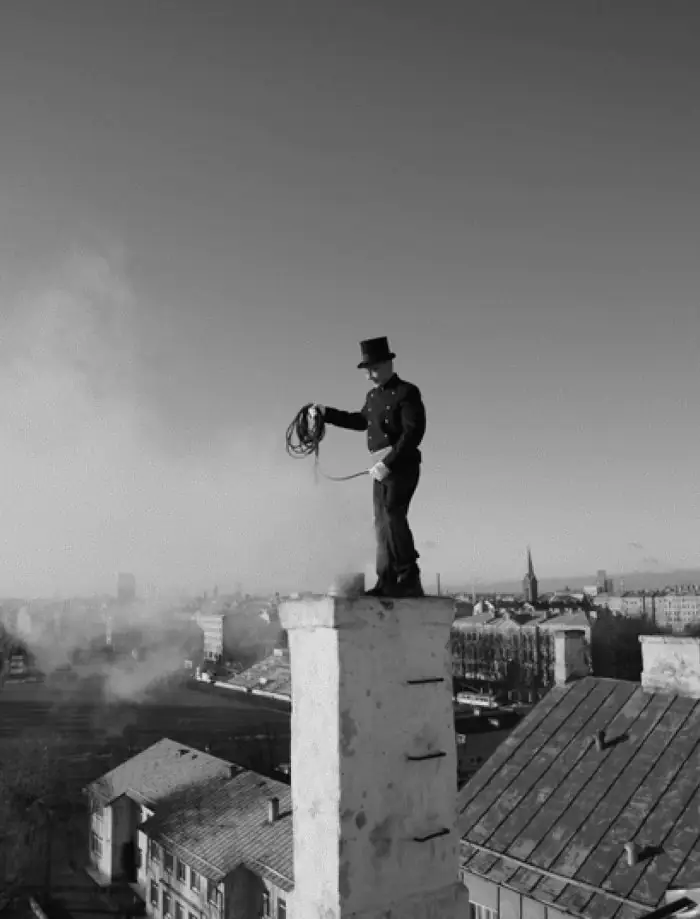
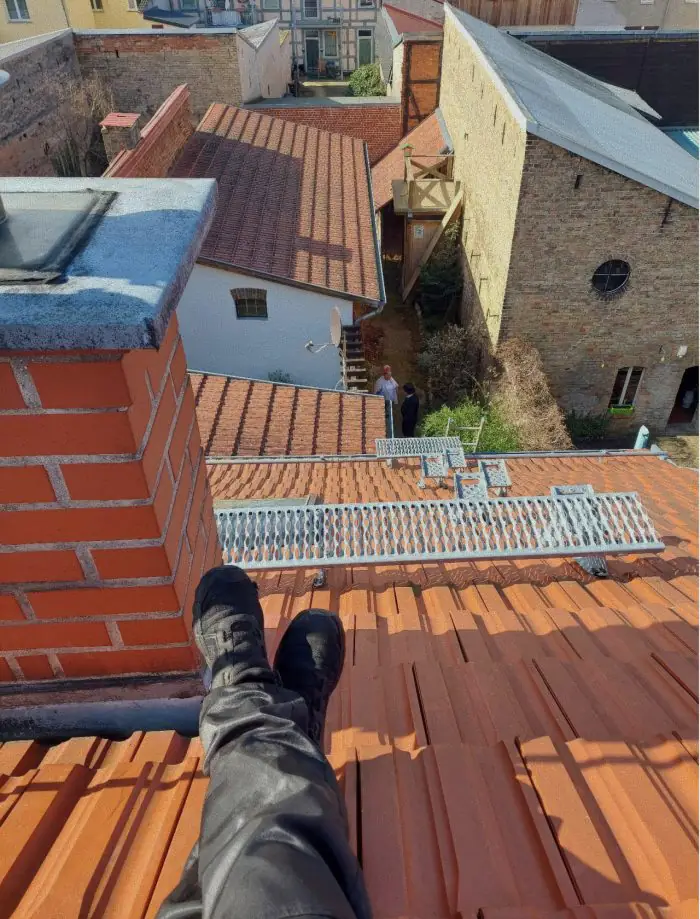
The tools used by chimney sweeps have changed very little over the centuries. The most important is a cable with a brush and weight on the end that is used to scrape soot from the top of the chimney down. The soot falls into the cellar or onto the ground floor, where it is collected via a special hatch. To detect cracks in the brickwork, blockages, or traces of soot, the sweep uses a small mirror on a cable. If daylight or the sky is reflected in the mirror when the flue is straight, it means the flue is clear.
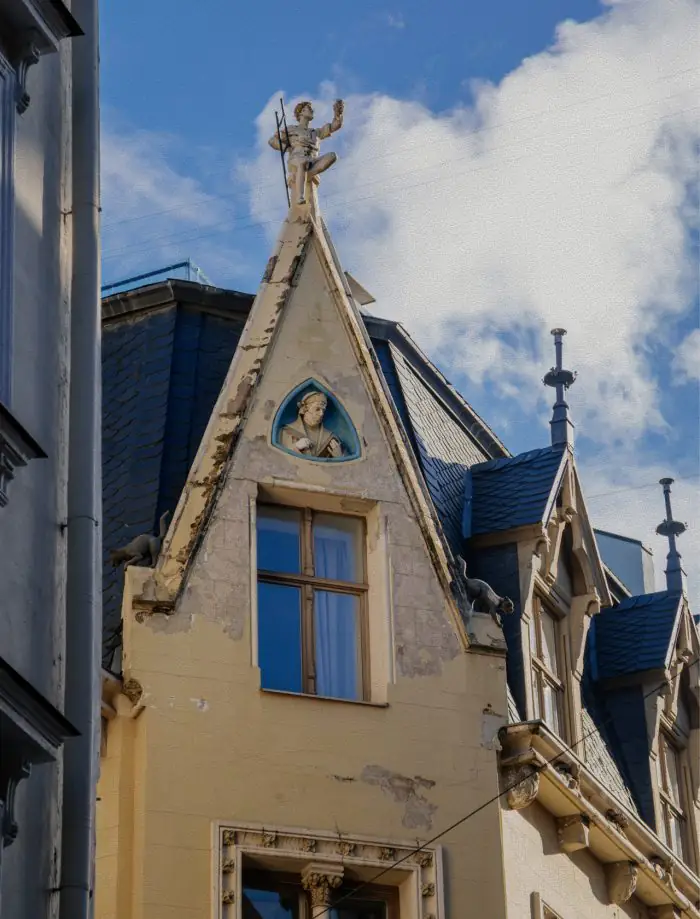
The services of chimney sweeps are still in high demand. There are thousands of fires in Latvia every year, and soot ignition in flues remains one of the most common causes. These days, as well as cleaning flues, chimney sweeps carry out preventative inspections, check ventilation systems and help prevent carbon monoxide leaks. Their busiest season begins in late summer and runs through to the Christmas holidays, with appointments often being booked up months in advance.
From Parent to Kid
Currently, there are around 70–80 chimney sweeps working in Latvia. A full list can be found on the guild’s website. The trade is often passed down through the generations, so some of them are second- or third-generation master chimney sweeps.
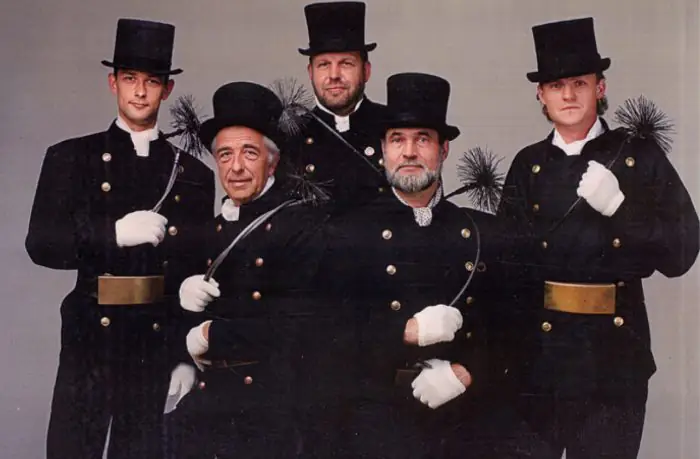
Guntis Brakmanis, for example, is a board member of the Latvian Chimney Sweep Guild and director of the company Skursteņmeistars. He worked his way up from apprentice to master under his father’s guidance. Varis Vilcans, one of Riga’s most famous chimney sweeps, comes from a family of chimney sweeps—his father, uncle, father’s cousin and brother all practised the trade. Together with his own experience, this amounts to over 150 years of family history in the trade.
It was Vilcāns who posed for the monument “The Chimney Sweep and the Mason,” installed in 2007 on Mūrnieku Street in Riga. The role of the mason was portrayed by renowned Latvian actor Kārlis Sebris. Sculptors Kārlis Īle and Ģirts Burvis dedicated the work to all Latvian craftsmen. It is considered the first monument in the country dedicated to craftsmanship as such.
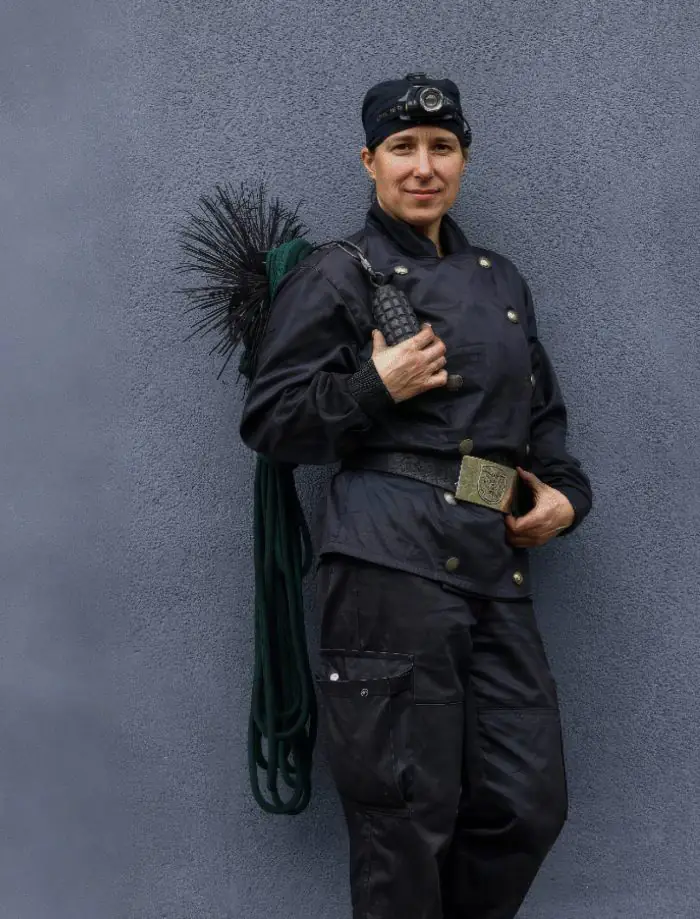
Most of those trained as chimney sweeps are men, and there is currently only one woman in the Latvian guild. She is Līga Ondzule from Skrīveri, who inherited the trade from her father. He worked as a firefighter and swept chimneys in his spare time, but gradually became so passionate about the craft that he decided to devote his entire life to it. Father and daughter still attend many call-outs together, and the master himself says that the work has helped them spend more time with one another.
A Button for Good Luck
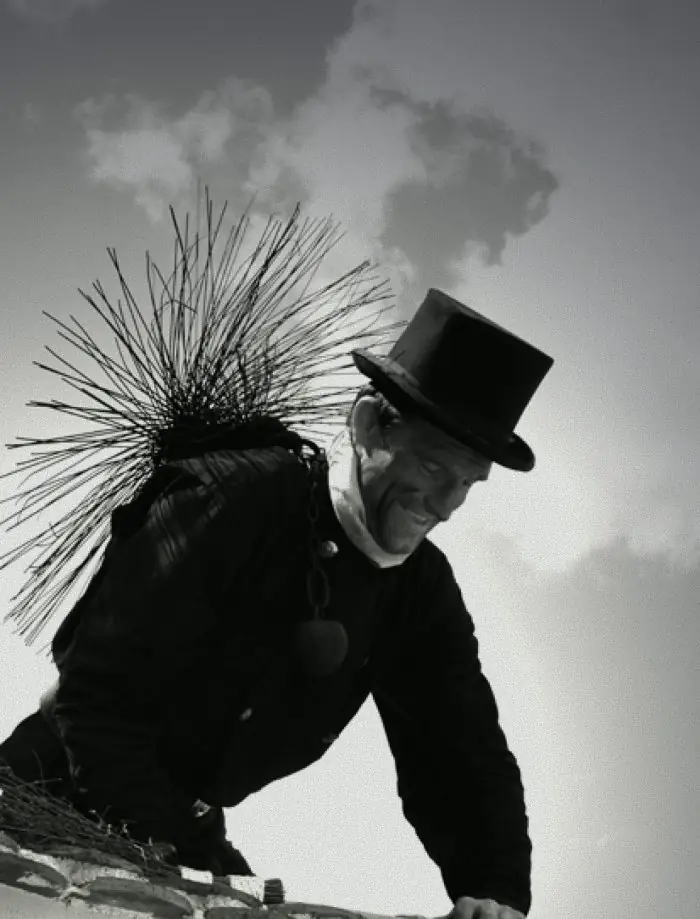
You don’t need to own a fireplace to meet a chimney sweep. You can meet them at town festivals and professional events, or simply on the streets of Latvian towns. These craftsmen are easily recognisable by their uniform: a black tailcoat with twelve metal buttons and a top hat, which used to be used to store small tools. According to one legend, chimney sweeps started wearing old black tailcoats and top hats that had belonged to undertakers because soot was less noticeable on such clothing.

Another belief, originating from the German-Hanseatic tradition and adopted in the Baltic states, holds that meeting a chimney sweep brings good luck. People believed that fortune favoured those who worked with fire every day yet remained unharmed. In Germany, it is customary to give figurines and cards depicting chimney sweeps as Christmas gifts. In many countries, there is a tradition of rubbing the button on their tailcoat for good luck.
There are many variations of this superstition. According to one version, the chimney sweep must be covered in soot, meaning he has just finished work. Each button is said to have its own meaning: the top right button promises good luck in love; the next button promises peace in the family; and the third button promises a celebration or good news. You must touch the button without the chimney sweep noticing. However, a button that has come off is said to guarantee a happy family life.
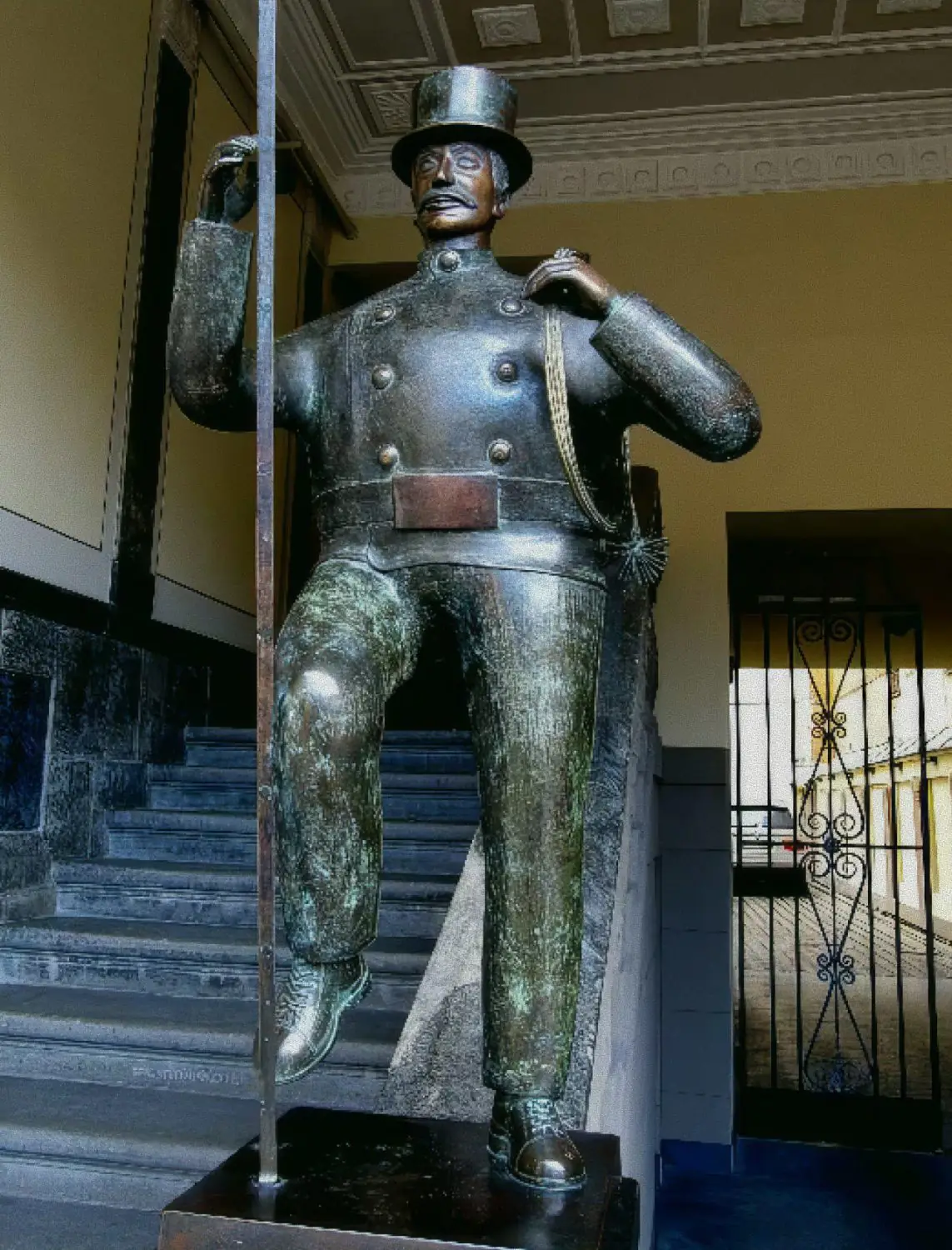
The tradition is still alive today. As Varis Vilcans recounted, ‘If I were walking instead of cycling, especially somewhere closer to the centre, people would be tugging at my buttons non-stop.’
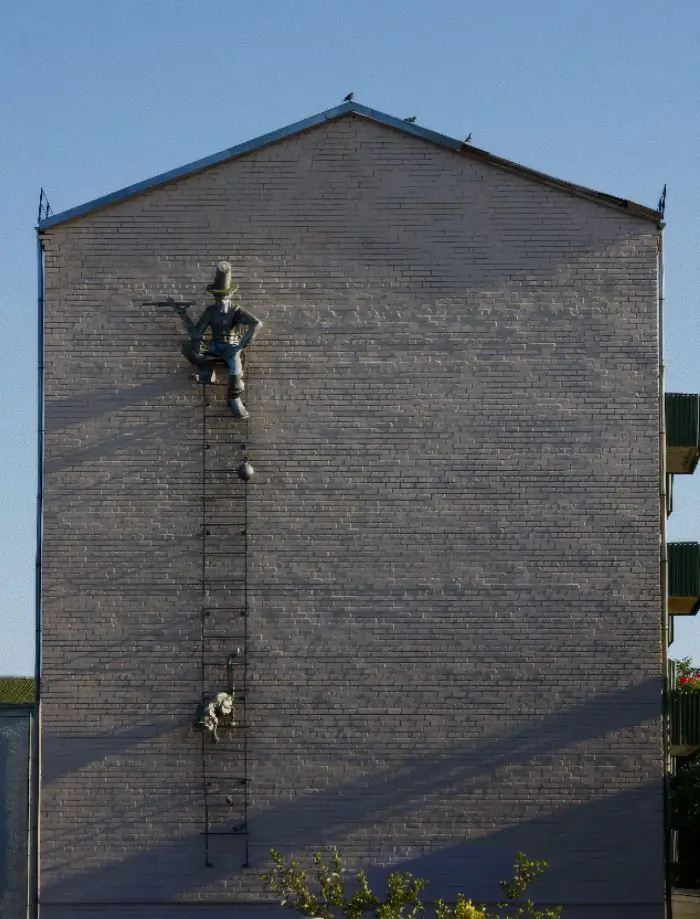
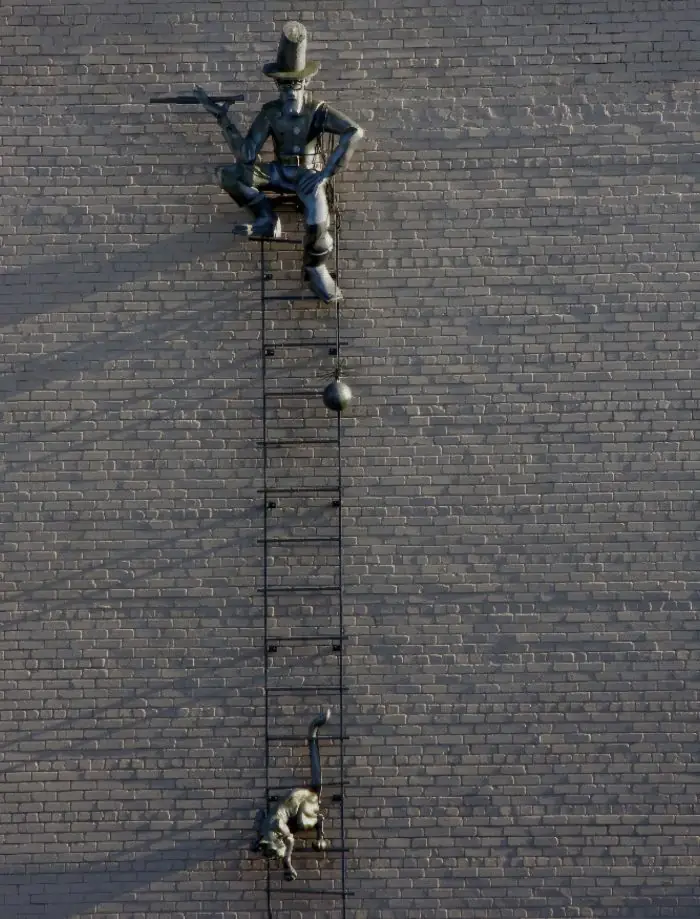
If you’d prefer to avoid disturbing the master himself, you can visit another of Riga’s landmarks: the Albert the Chimney Sweep sculpture near Albert College. Created by Yevgeny Shitov and Dmitry Marchenkov, this sculpture was unveiled in 2010. Albert is believed to be the patron saint of schoolchildren and students, which is why people come to the monument to seek good luck before exams. His buttons have long been polished to a shine, and college graduates are given lucky buttons crafted by Varis Vilcans.