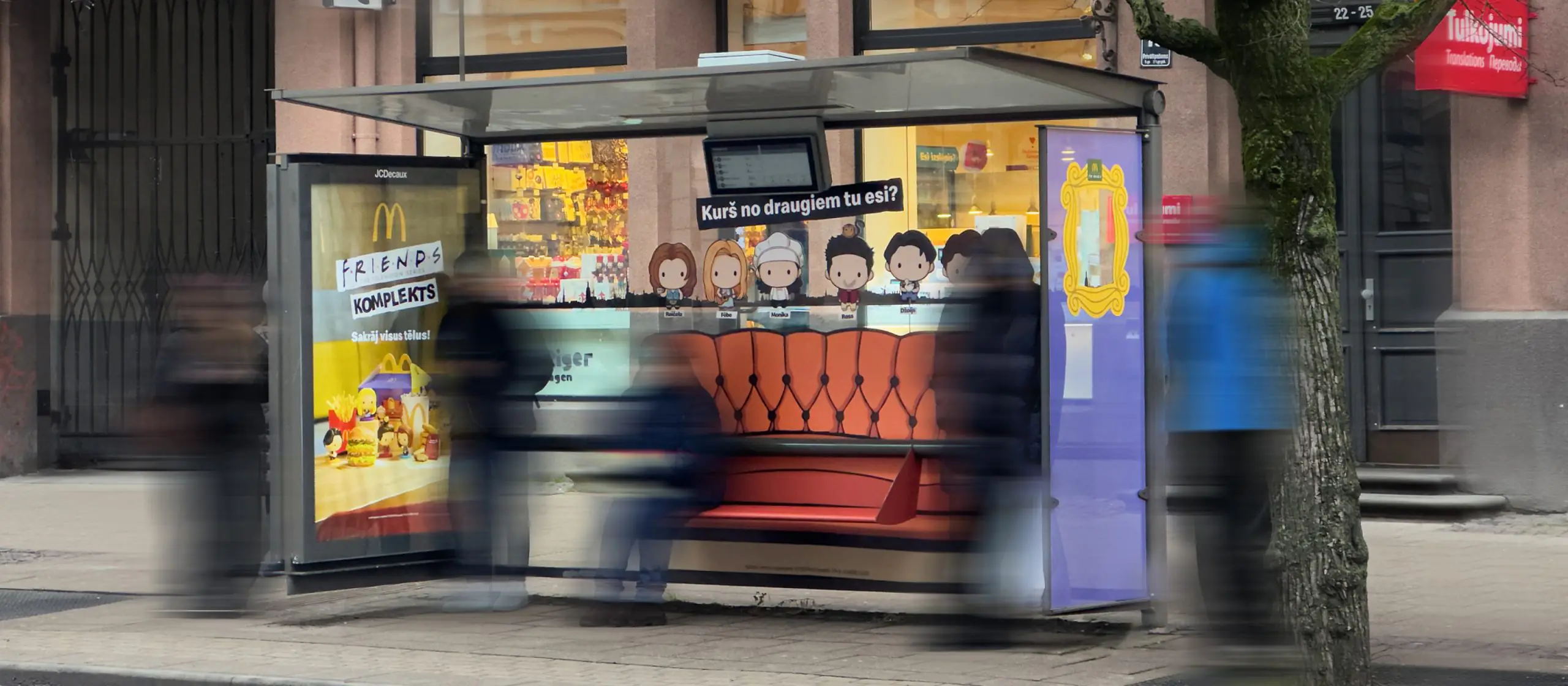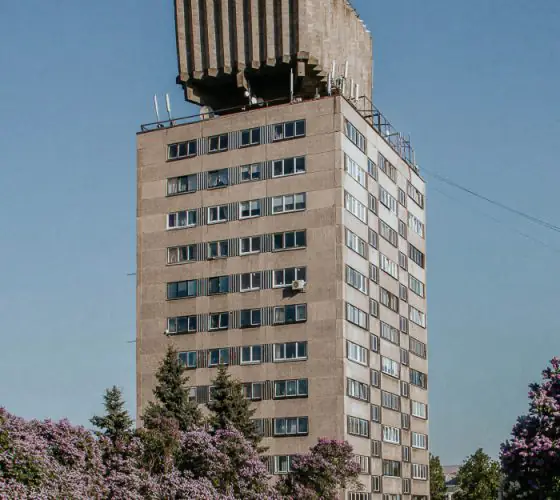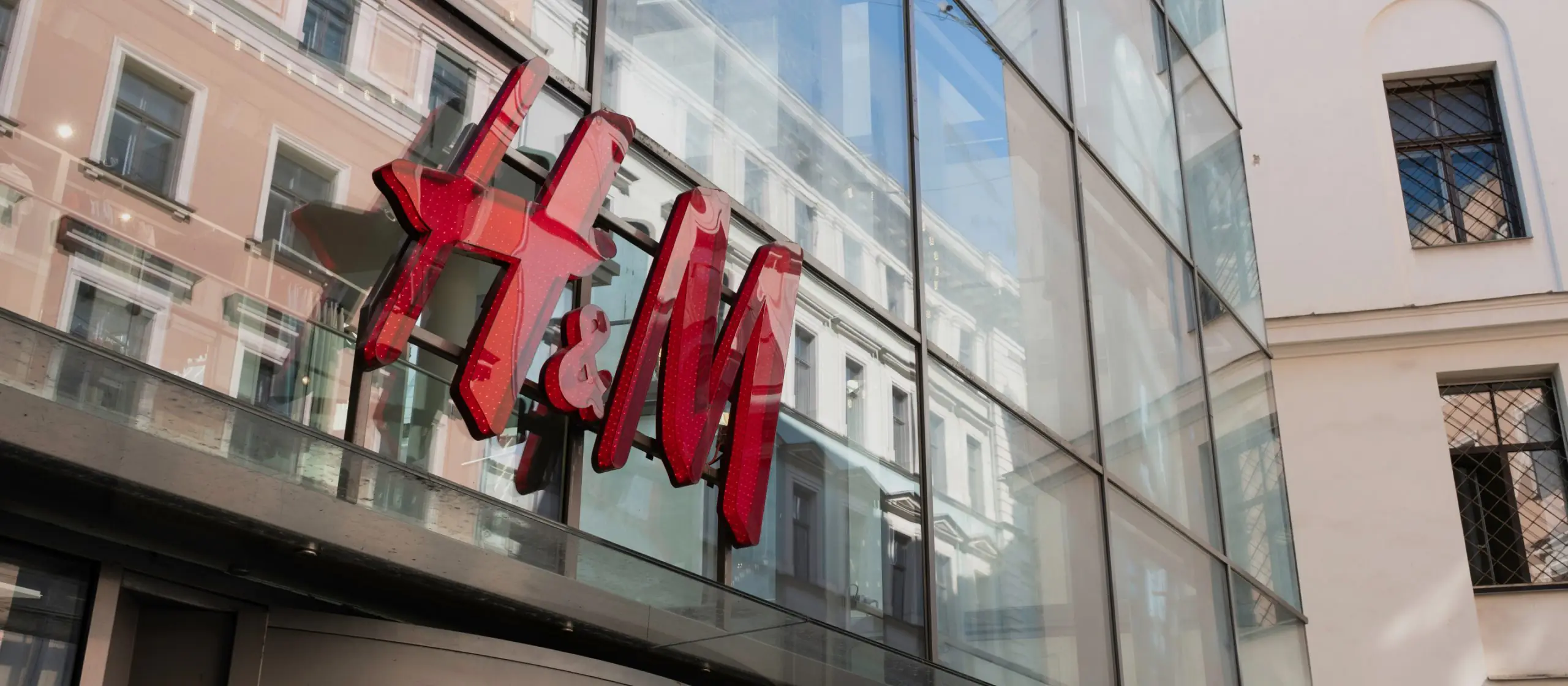
The changes are based on Riga City Council regulations No. RD-23-199-sn, adopted in 2023. They introduce new standards for advertising placement and set a transition period until January 1, 2028. Riga City Council representatives said the goal is to create a harmonious urban environment. The regulation largely preserves the norms established in 2013, while adding new requirements.
A new standard: signage without background
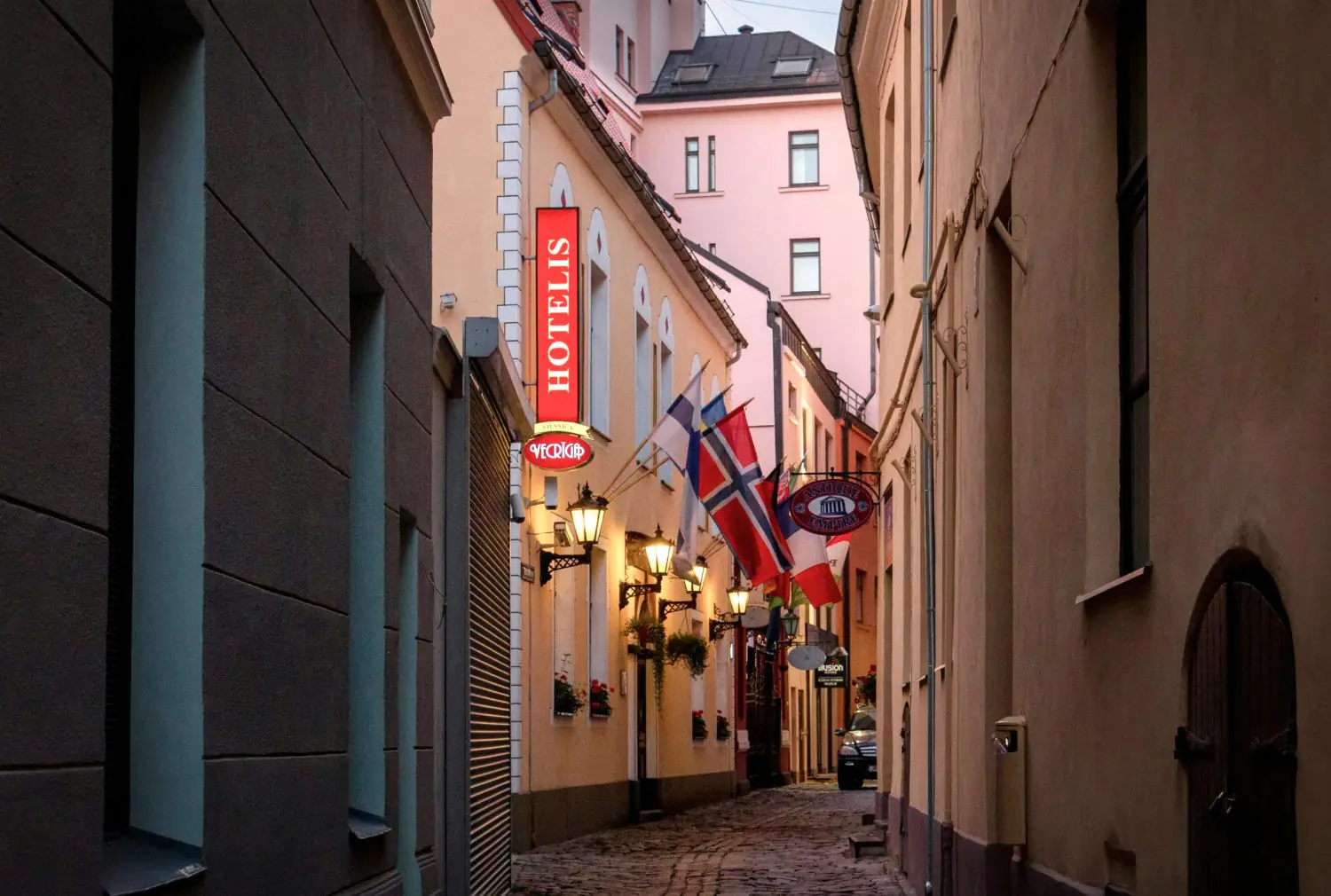
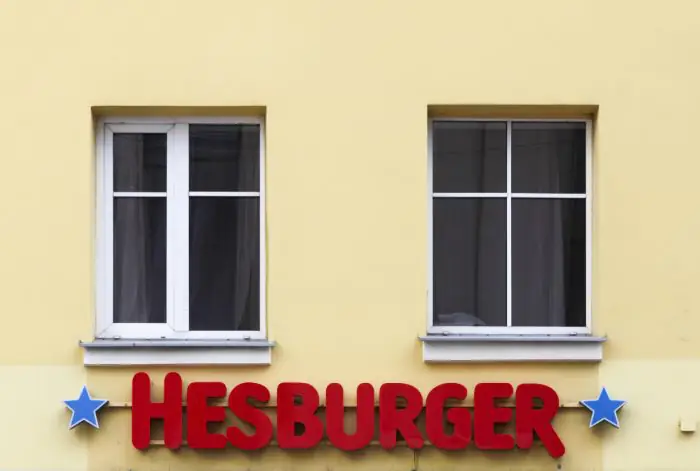
The key change concerns signage and will be most noticeable for businesses. In Riga’s historic center and its protection zone, a new approach is introduced — a rejection of background structures. Traditional light boxes and plastic panels will no longer be allowed. Instead, only three-dimensional letters and logos mounted directly on the facade or placed on a transparent base will be permitted.
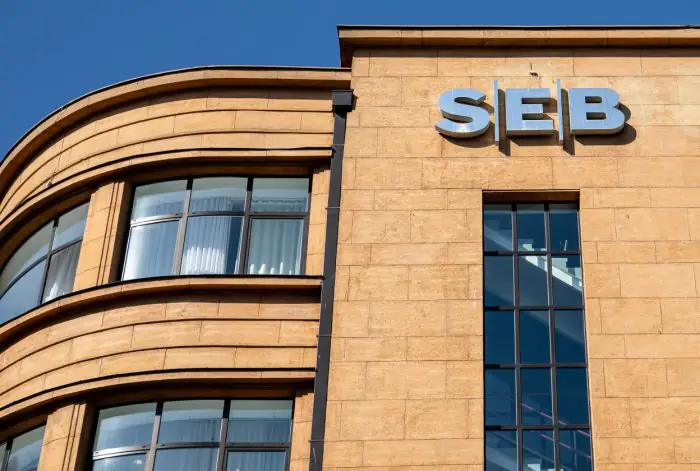
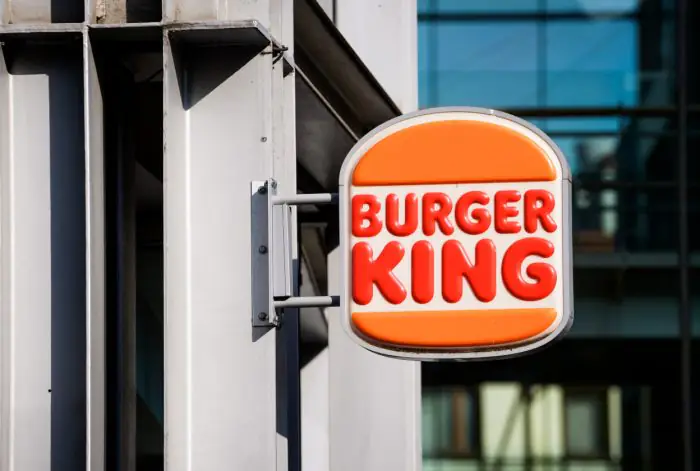
If a background is used, it must match the building’s color so as not to disrupt the architectural appearance. Priority is given to metal, wood, and glass; facade painting is also allowed if it does not damage the historic environment. Lighting must be calm, static, without flashing or harsh colors.
Riga City Council explained that this approach is not just about replacing signs, but about changing the philosophy of urban space: advertising should no longer dominate architecture or distract from historic buildings.
Screens, banners, and stretch ads are leaving
Other formats are also changing. Digital screens on building facades will be banned in the historic center, except for certain transport infrastructure objects. Stretch banners between buildings, poles, and trees will disappear, and banners that previously covered streets will be phased out of the urban environment. Advertising on construction mesh will be allowed only temporarily and with strict time limits.
A separate rule concerns building condition: advertising on facades in poor condition or covered with graffiti is prohibited. Riga City Council emphasized that the city is abandoning the practice of “covering problems with banners,” focusing instead on improving the quality of the urban environment.
Even windows are regulated — advertising stickers cannot cover more than 15% of their surface, which directly affects shop displays, the municipality noted.

Areas with the strictest regulations
Old Town (Vecrīga): all advertising on background panels is banned, as are banners on mesh (except for short-term renovation periods) and any digital screens on facades. Only authentic signage and three-dimensional letters are allowed.
“Quiet center” (Elizabetes iela, Alberta iela, Vilandes iela): strict rules apply to preserve architectural details — advertising cannot cover any decorative elements.
Boulevard circle: the area around the Freedom Monument, Bastion Hill, and the Latvian National Opera. Stretch banners across streets are completely prohibited here.
Protected wooden architecture areas (e.g., Kalnciema iela): materials must match the historical context (wood, metal, paint), and modern plastic is not allowed.
What it means for businesses
For businesses, this means not only replacing signage but also additional costs. Old structures will have to be dismantled, and new ones produced individually, approved, and adapted to the building’s architecture. Compliance will be monitored by the Riga City Development Department, and violations may result in orders to remove non-compliant structures.
In practice, businesses are being pushed to move from standard solutions to formats that meet the new requirements.
Global examples
The reduction of aggressive outdoor advertising is a growing trend. One of the most radical examples is São Paulo, Brazil, where the “Clean City” law was adopted in 2006. The mayor effectively banned all outdoor advertising: within a year, around 15,000 billboards and 300,000 signs disappeared. The city was “uncovered,” revealing historic facades and previously hidden slums. The economy did not suffer — businesses adapted, moving online and into more creative communication formats.
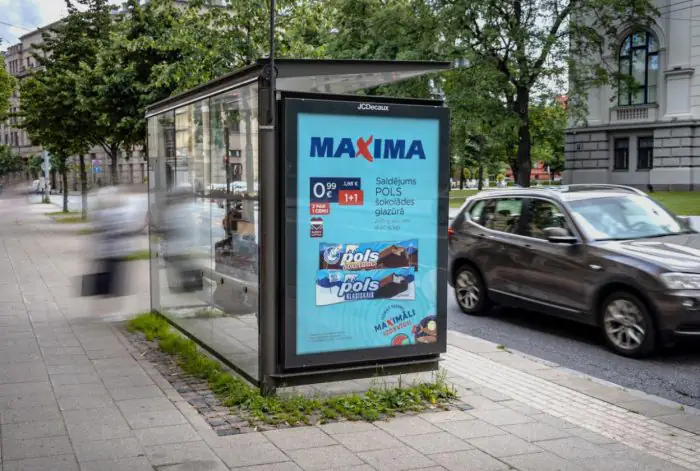
In Europe, one of the first major steps was taken in Grenoble, where in 2014 the city did not renew its contract with JCDecaux and removed commercial advertising from the streets. Billboards were replaced with trees — around 50 new green areas — and public notice boards. Later, the Netherlands joined the trend: in Amsterdam and Haarlem, from 2022 to 2026, restrictions are introduced not on all advertising but on “harmful” products — meat, fossil fuels, and air travel — to reduce consumption and environmental impact.
The Baltic capitals are moving in the same direction, but more gradually. In Tallinn, strict rules for the historic center have long been in place: no neon boxes, only wrought-iron signs or minimal lettering. Estonia was also among the first in the EU to almost completely remove outdoor alcohol advertising.
Vilnius has chosen a design code approach: clear requirements for fonts, sizes, and materials are enforced, and signage that does not fit the architecture is not approved. In 2024–2026, control over the brightness of digital screens has also been strengthened to reduce visual noise.