Lithuania leads, Latvia grows fastest
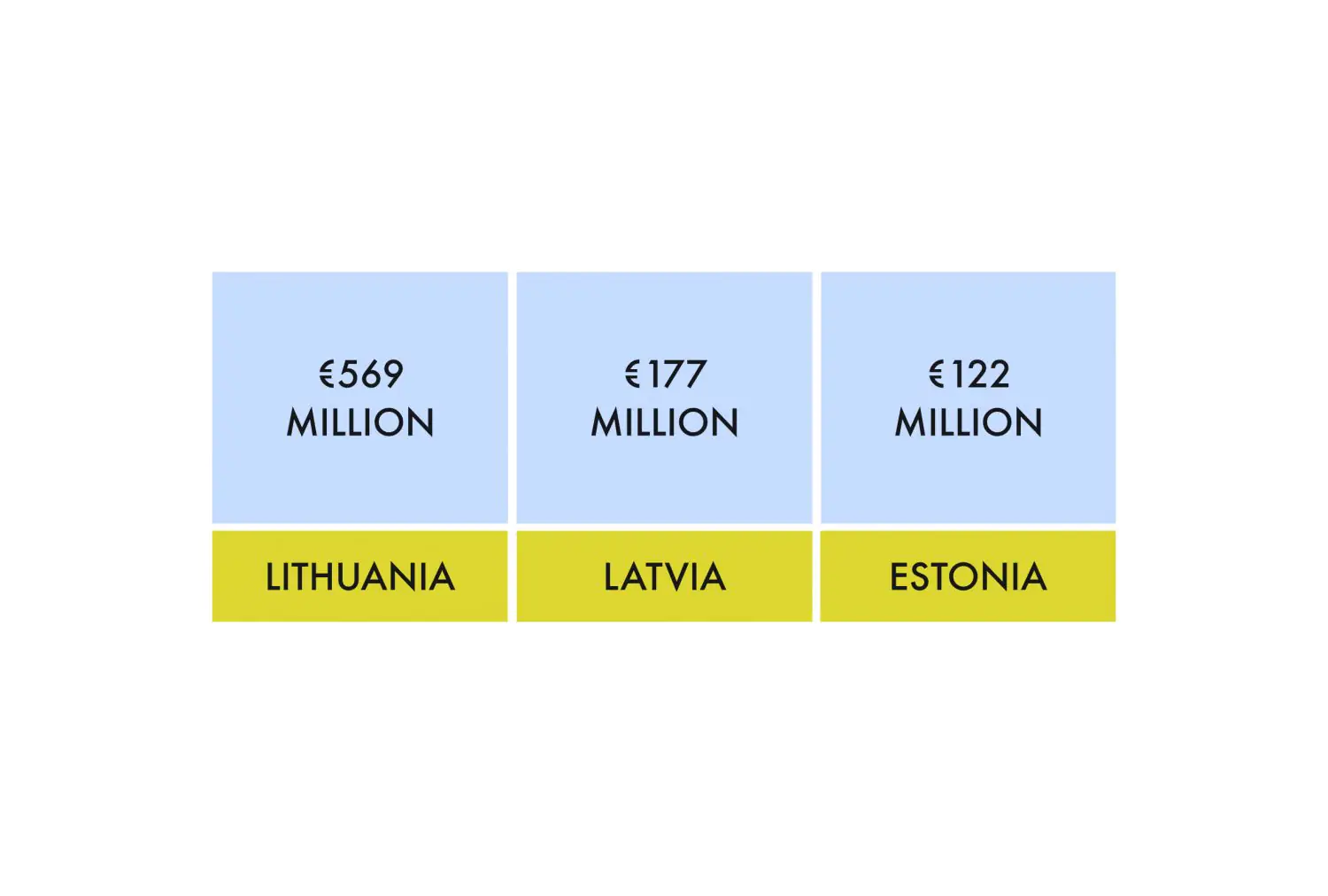
In the first half of 2026, commercial real estate investment volumes reached €569 million in Lithuania, €177 million in Latvia and €122 million in Estonia. Latvia recorded the fastest growth in the region—around 70% year-on-year. As in Estonia, the market is driven primarily by local capital. Lithuania has a more mature market, with more than 120 real estate funds operating in the country. According to Colliers, the growing number of transactions could help bring international investors back to the market.
The largest transaction in the Baltics was W. P. Carey’s acquisition of a portfolio of 19 Kesko Senukai retail properties for €177.5 million, with around €133 million attributable to Lithuanian assets.
In Latvia, Provendi Asset Management acquired the Alojas Biroji and Zaļā 1 office buildings from Eastnine, Maxima Latvija acquired a retail property on Grostonas iela from EIKA, and Eugesta acquired a VGP-developed logistics centre.
Development land also remained in demand: River Properties acquired a site next to Skonto Stadium for €4 million, while Realto acquired the former Cita Santehnika property for redevelopment.
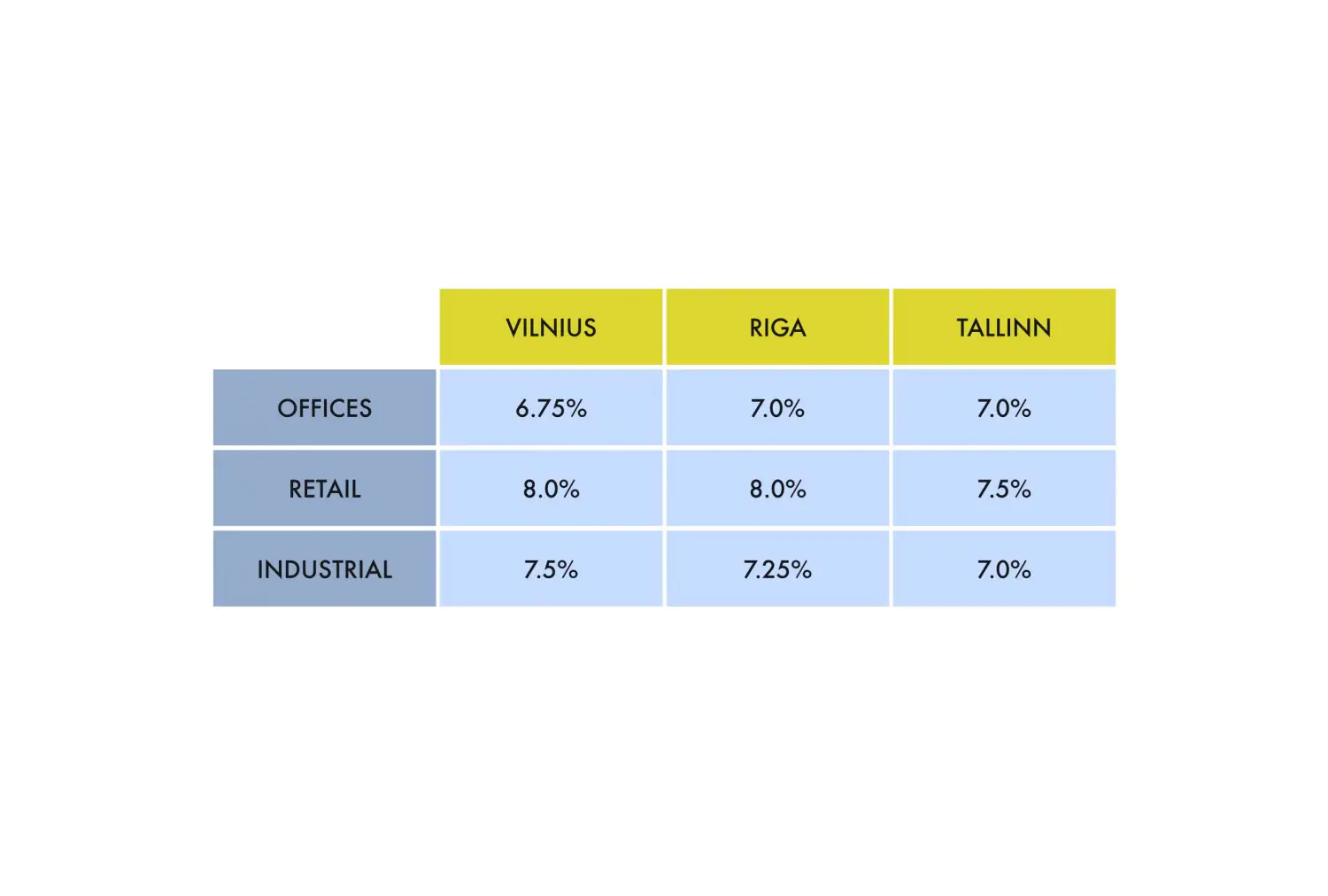
In the second quarter, office prime yields stood at 7% in Tallinn and Riga and 6.75% in Vilnius. For shopping centres, prime yields were 8% in Tallinn and Riga and 7.5% in Vilnius, while industrial property yields stood at 7.5%, 7.25% and 7%, respectively.
Offices are getting smaller—expectations are rising
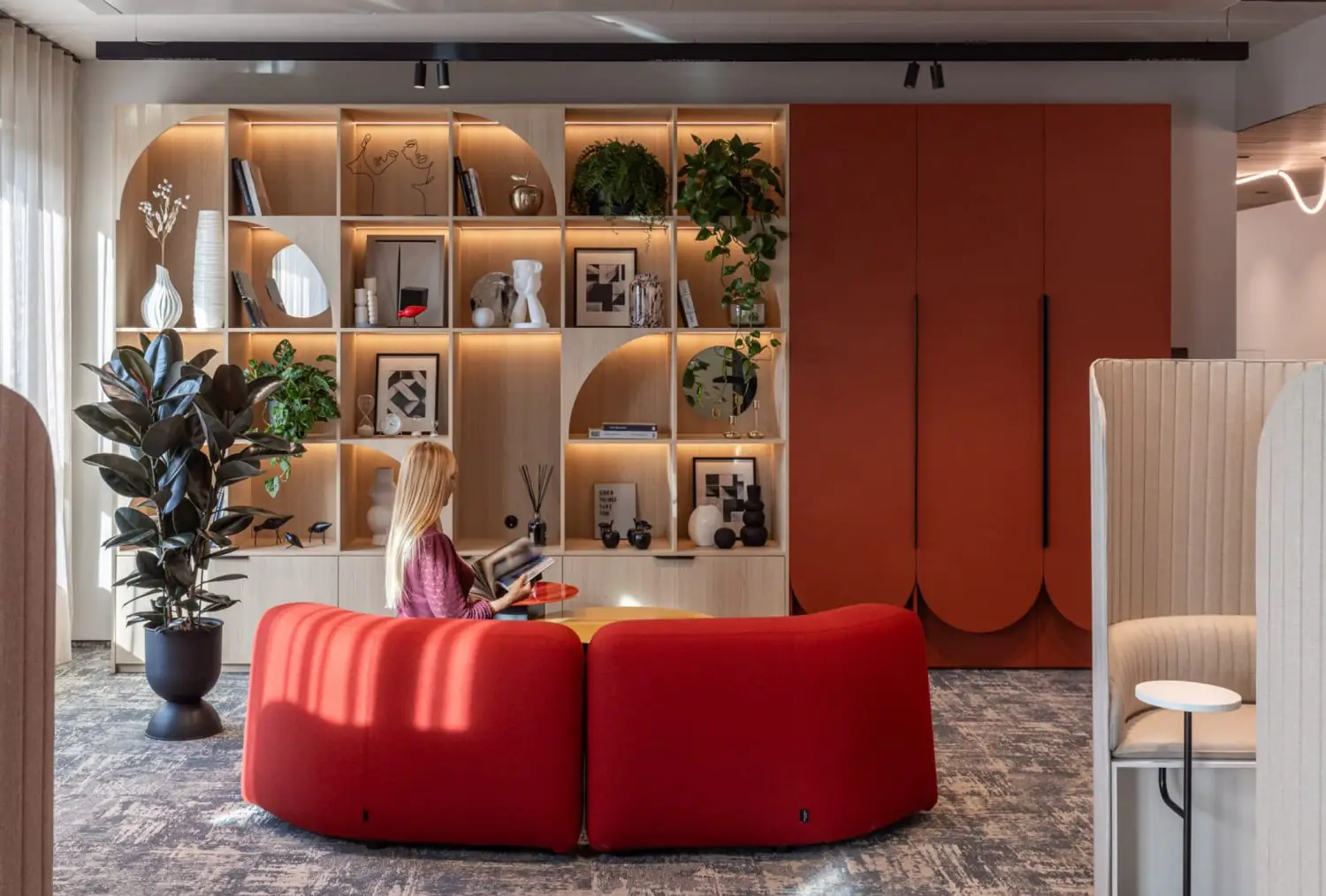
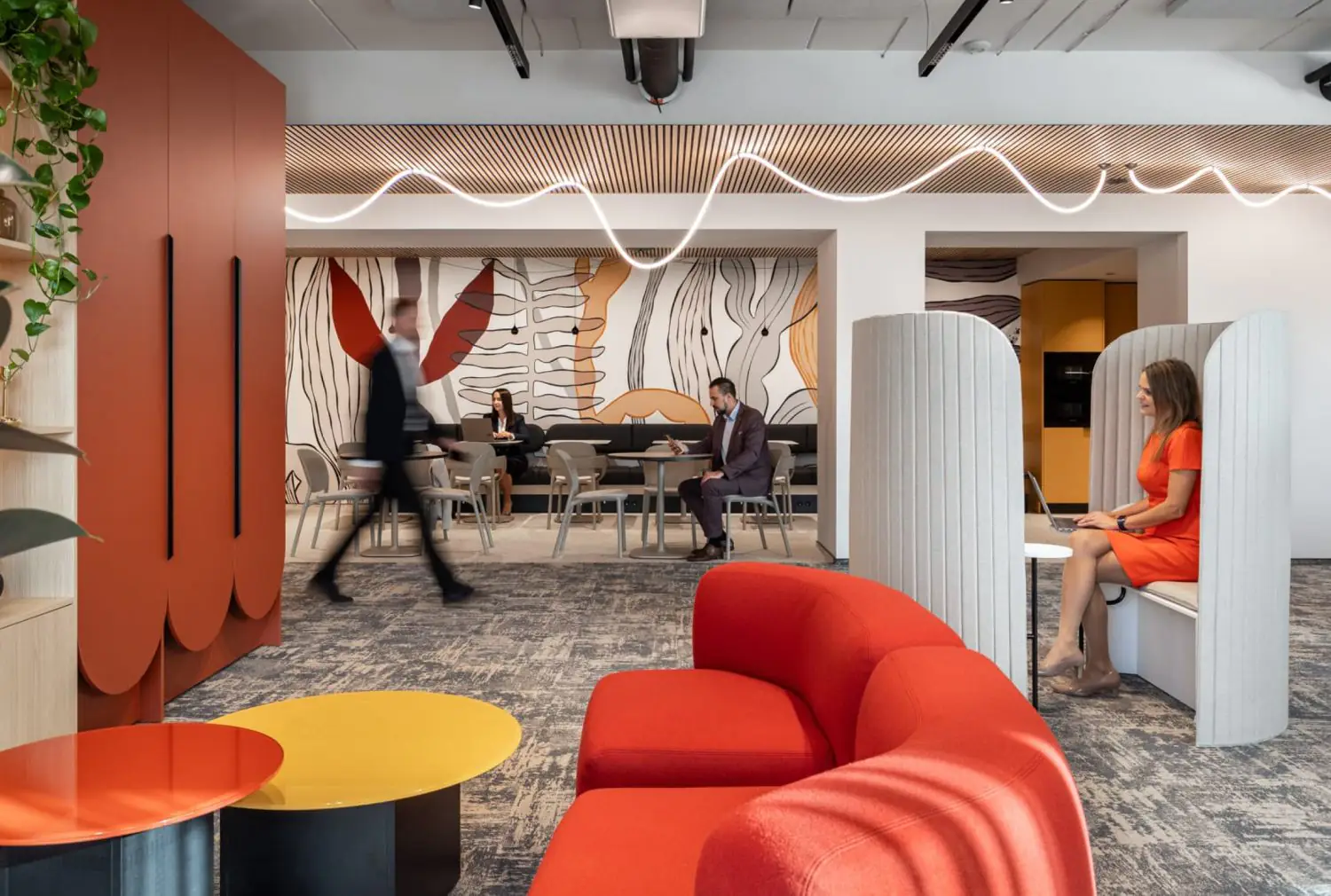
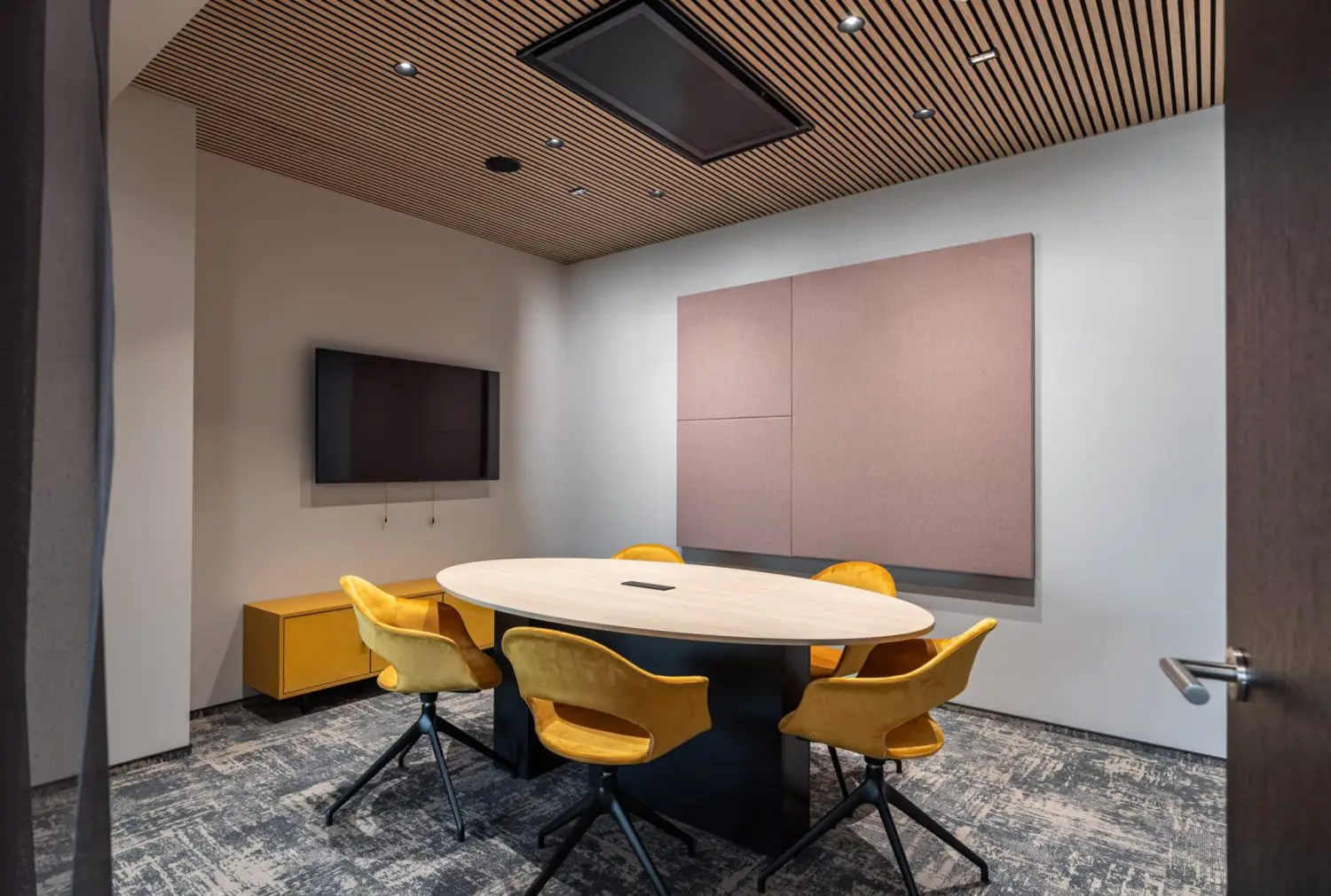
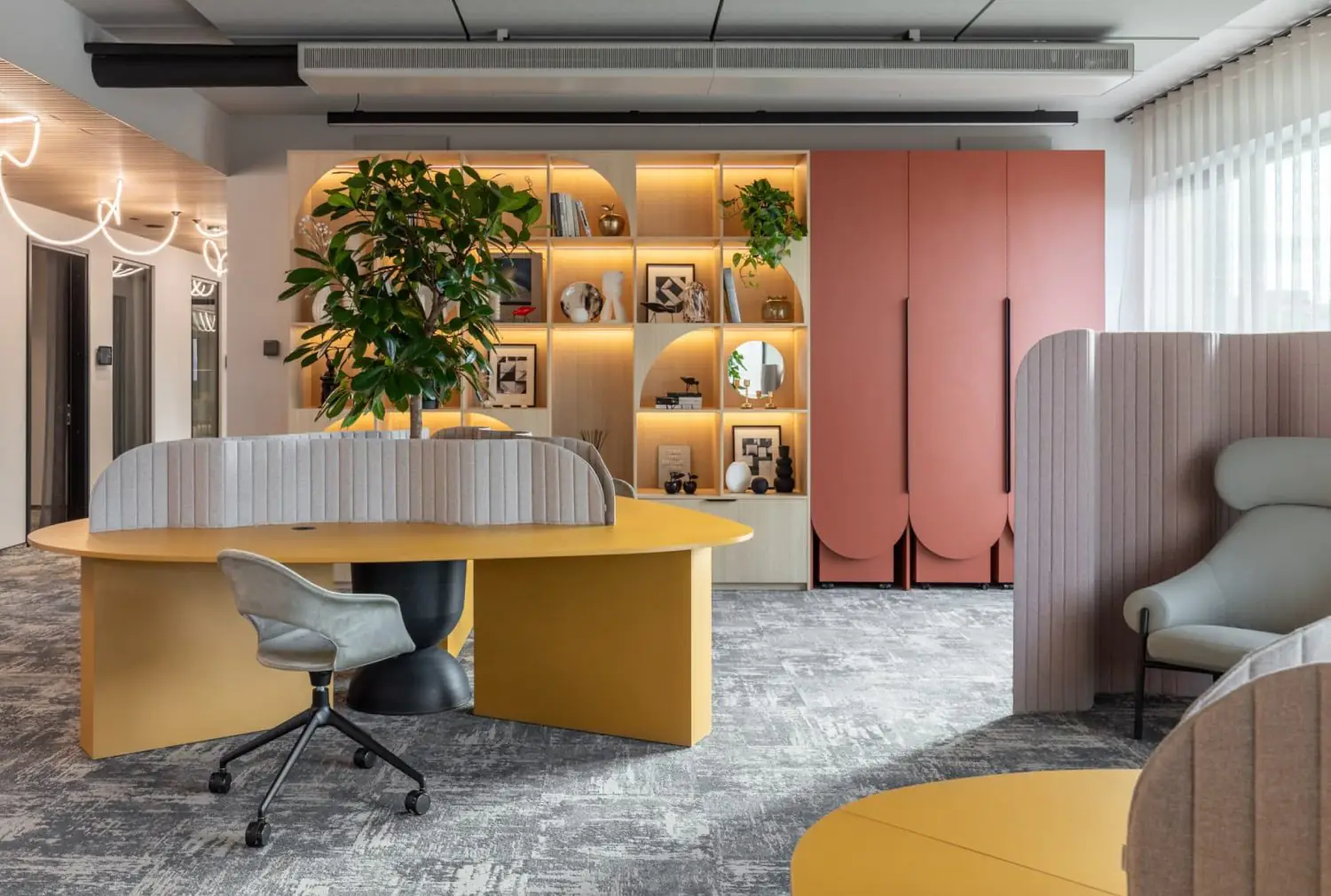
The main shift in the office market is that companies are becoming more demanding about their workplaces, choosing modern, high-quality, move-in-ready spaces.
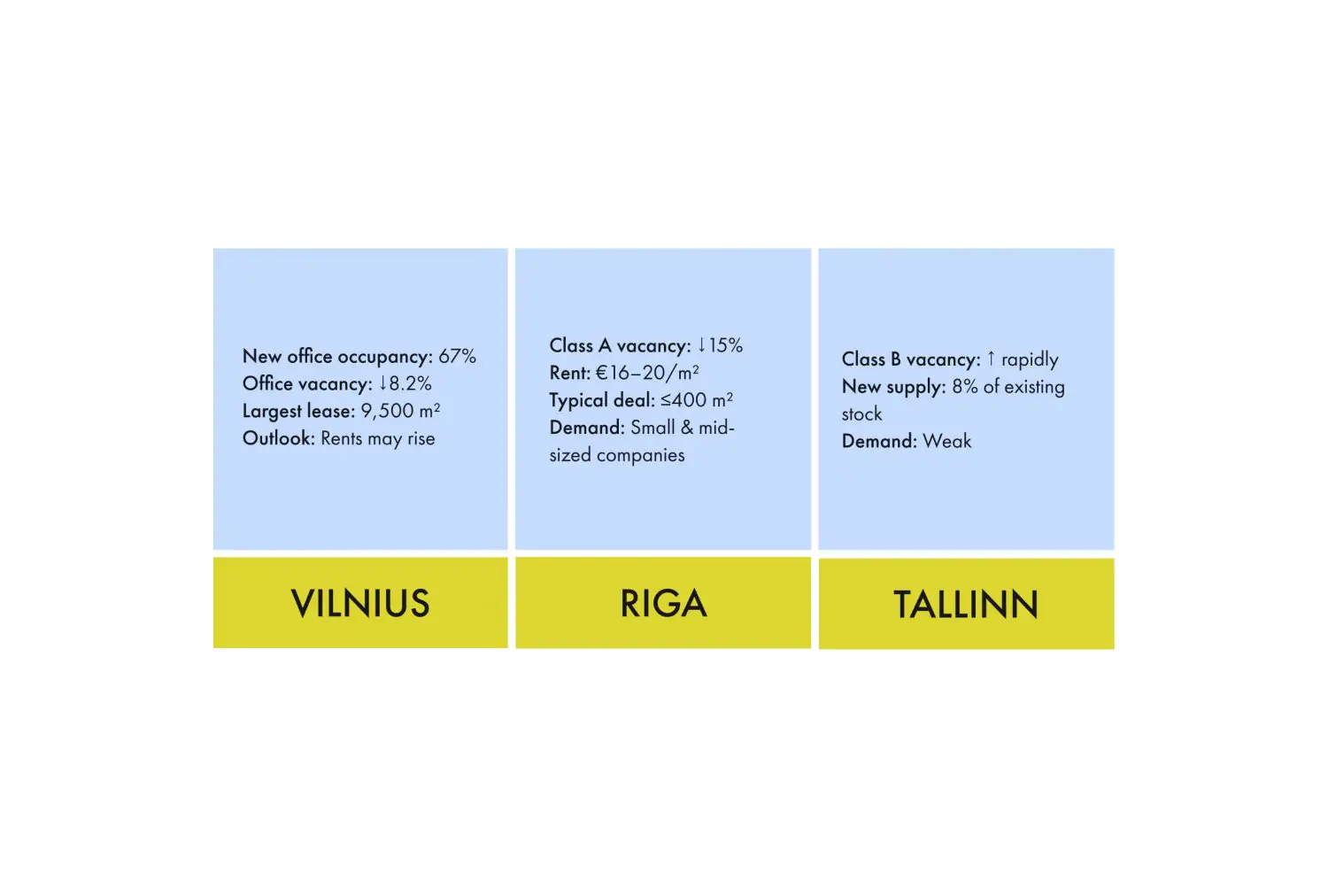
In Riga, according to Colliers, most new deals are for offices of up to 400 m², with medium-sized companies driving demand. Instead of shell & core space, landlords are increasingly offering fully fitted offices. Class A vacancy fell from 16.1% to 15% over the quarter. The next phase of New Hanza is being prepared, while construction continues at Preses Nama Kvartāls and Verde C. Developers are not launching new projects without pre-committed tenants, giving the market time to absorb existing space. Rents for new Class A offices remain stable at €16–20/m² per month.
Tallinn faces a more challenging situation: around 105,000 m² of office space is under construction, equivalent to 8% of existing supply, while demand remains weak. Companies are reducing their footprints, previously occupied space is returning to the market, and Class B vacancy is rising particularly fast. Landlords are offering rent-free periods, lowering rents or leasing spaces without additional refurbishment, while larger offices are being divided into smaller, move-in-ready units.

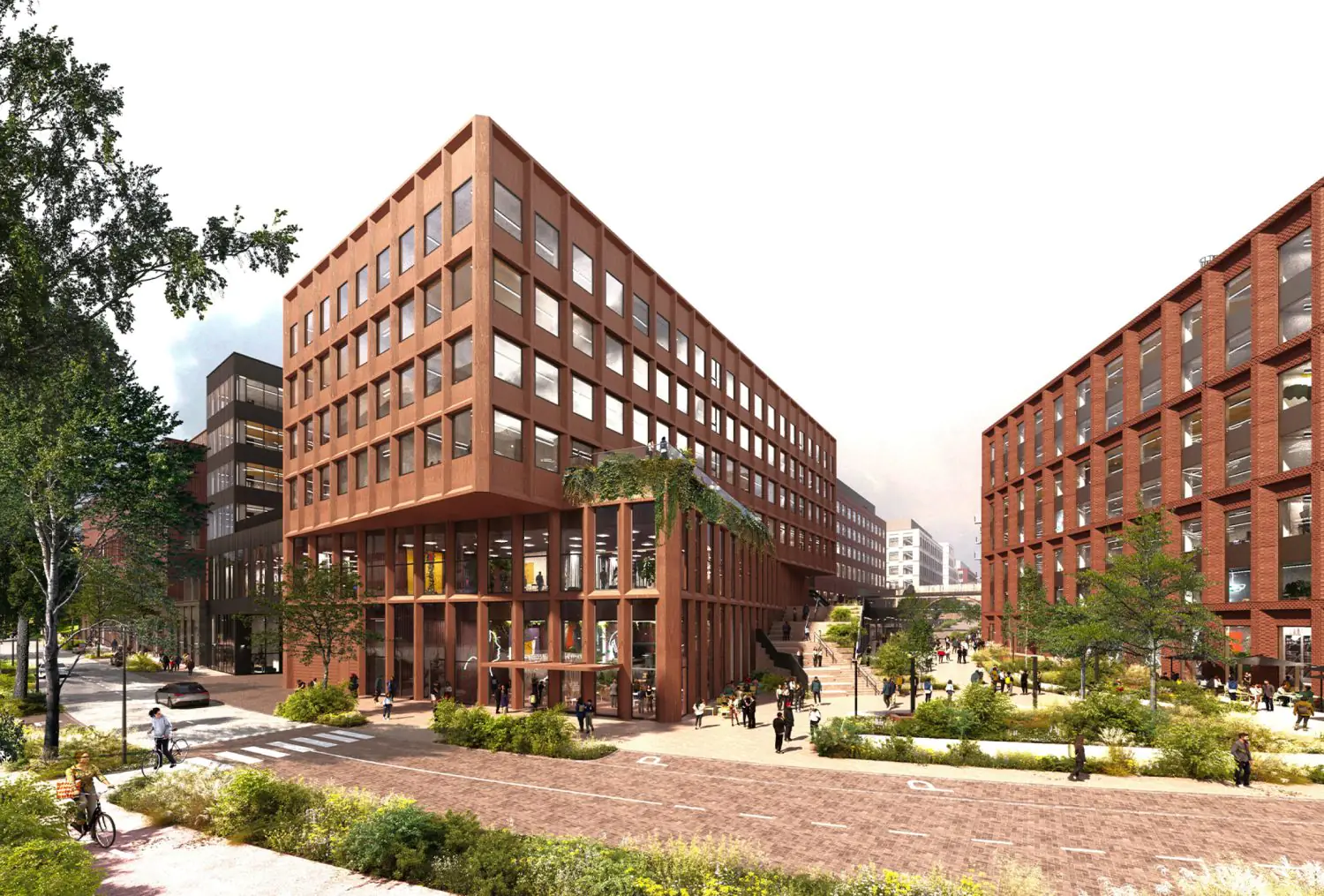
Vilnius remains the most resilient market. In the second quarter, the Sąvaržėlė business centre, designed by British architecture firm RSHP, was completed. Artea Bank took 9,500 m², or 46% of the building, while Omnisend leased 2,971 m², bringing occupancy to 67%. Overall office vacancy in Vilnius fell to 8.2%, although it remains at 14% in the central business district. The supply of high-quality vacant offices is shrinking, which could push rents higher.
Artificial intelligence is emerging as a new challenge for the office market. Developers and investors are assessing how AI could affect headcount and companies’ future need for office space. There has been no widespread reduction in office space for this reason yet, but some tenants are already reviewing their business processes.
Riga: the market is on the tenant’s side
According to Latio, tenants are now setting the rules in Riga’s office market. The city has plenty of new, energy-efficient Class A offices, while there are relatively few large companies looking for substantial space. Hybrid work is also reshaping demand: companies are reducing their office footprints, moving from older buildings to new ones or choosing more compact spaces.
Landlords are offering discounts, flexible layouts, rent-free periods and covering fit-out costs. According to Latio, offices of 50–130 m² are leased fastest, while larger units of 400–800 m² are much harder to fill. As in Tallinn, larger spaces are therefore being divided into smaller offices, while some buildings are being converted for medical, educational or residential use.
The difference in rents is substantial: a Class A office in central Riga can cost up to €22/m² per month, while Class C space in less sought-after areas starts at around €5. But cheap rent does not necessarily mean a cost-effective office. Companies are also looking at utilities, operating costs and the total cost of occupying the space.
Shopping centres are running out of vacant space again
Retail real estate remains a resilient market segment. Shopping centre vacancy is minimal—2.2% in Tallinn, 1.8% in Riga and 1.5% in Vilnius. Rents are highest in Vilnius, reaching €25–55/m² per month in prime shopping centres. The range is €23–45 in Tallinn and €23–40 in Riga.





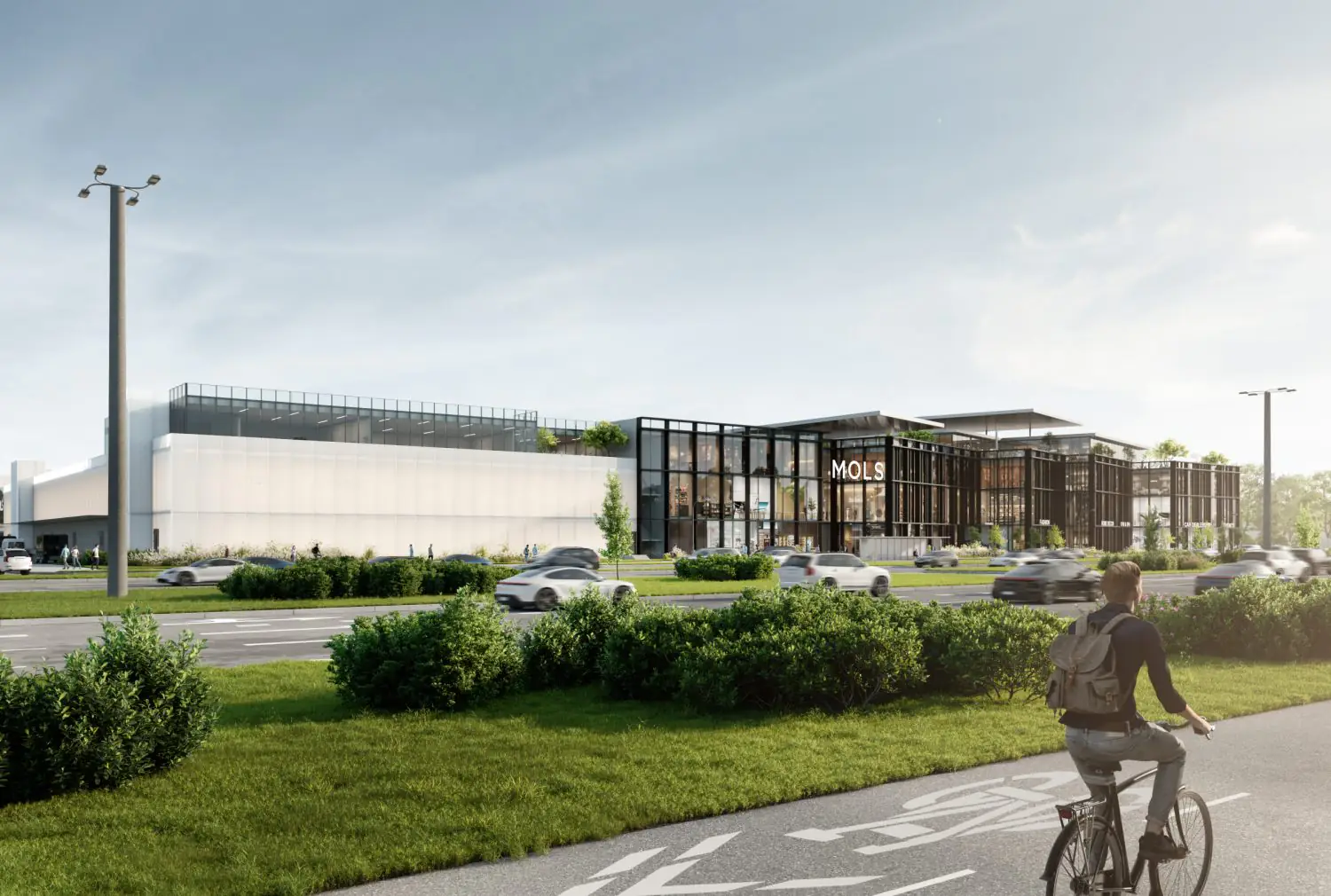
New projects are moving forward again in Latvia. Mols and The Powerhouse at Riga Waterfront have received construction permits, with work on The Powerhouse already underway. The former Cita Santehnika site is planned to become the neighbourhood shopping centre TC Astra, while TC Imanta is set to expand with Apollo as its anchor tenant. In the second quarter, Mājai & Dārzam opened in the former Cenu Klubs premises, alongside a new Maxima on Stirnu iela, K-Senukai in Ogre and McDonald’s in Liepāja.
New players may also enter the Latvian market. Several Chinese car brands are considering opening showrooms, while Polish retailers are exploring entry or further expansion across the Baltics.
In Estonia, value-oriented retail formats are gaining popularity. The country’s first HalfPrice store, opened at the T1 shopping centre, attracted strong customer interest. Discount retailers Grossi and A1000 Market also recorded sales growth.
No new retail properties opened in Lithuania in the second quarter, but the Akropolis Vingis project received final approval for infrastructure works. Polish brand Tatuum opened its first store at the Mega shopping centre in Kaunas, while Chinese electric vehicle manufacturer BYD opened a 500 m² showroom at Urban HUB.
Logistics is growing, and choice is expanding
Tenants in this segment now have more options to choose from.
At the end of June, around 120,000 m² of warehouse and industrial space was under construction across 30 projects in the Tallinn region. Many are stock-office developments combining warehouse, retail and office space. After an active first quarter, demand slowed and tenants are taking longer to make decisions. Despite competition and high vacancy, developers continue to launch new projects.
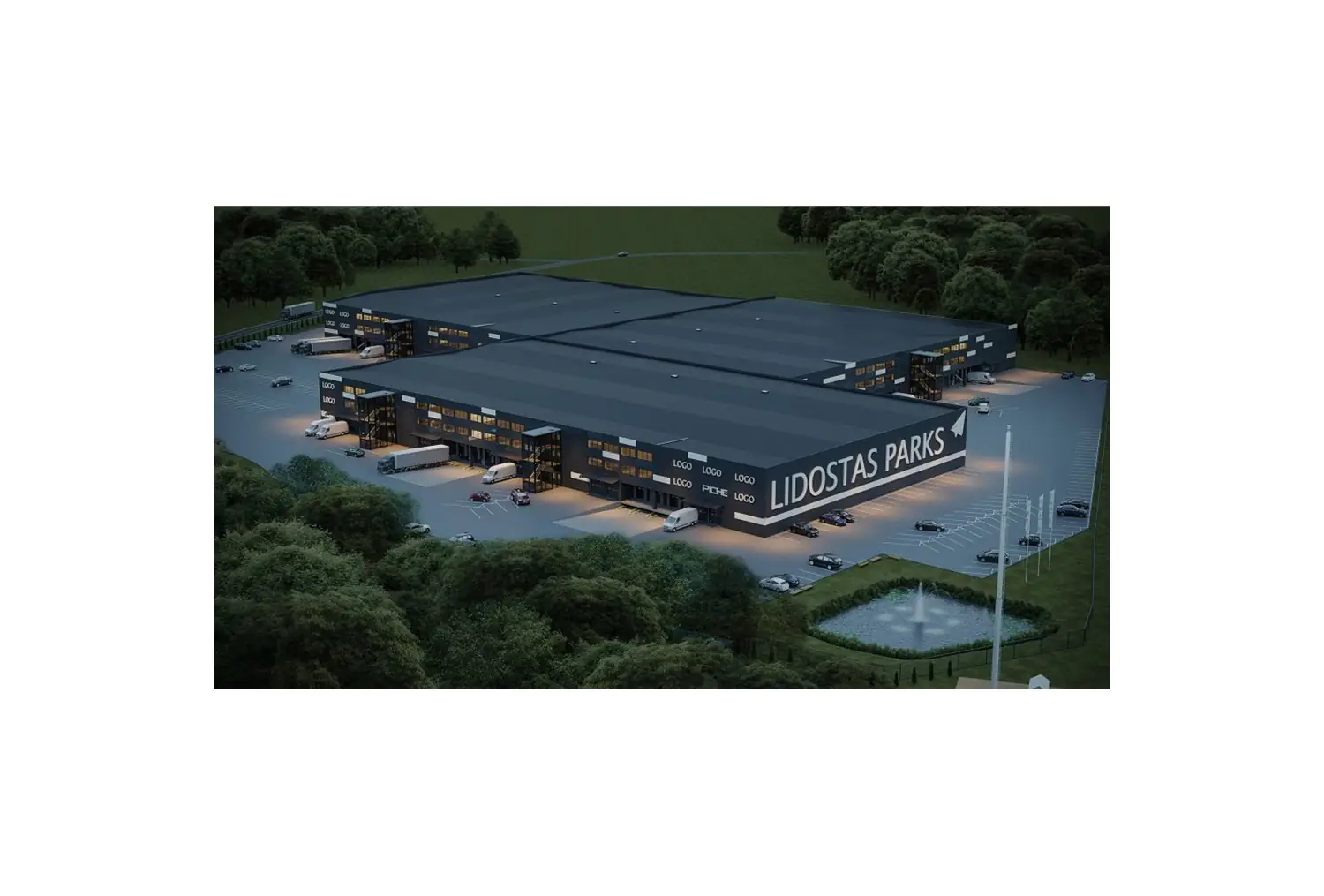
In Riga, the first phase of the DC7 TET data centre, the Nordo N7 reconstruction and Lidostas Parks V were completed. New supply pushed vacancy from 4.5% to 5.3%. Demand remains, but tenants now have more choice and less pressure to make quick decisions. Rent-free periods of two to four months have become common practice. Asking rents reach €5.5/m² per month, although effective rents are often lower after incentives.
In Lithuania, logistics companies account for around 70% of demand for new speculative industrial projects, including Venipak, Hegelmann, VIA3L and NTG. Venipak has resumed its 13,500 m² terminal project at Liepkalnis Logistics Park in Vilnius. It will become the company’s largest terminal and consolidate operations currently spread across three sites.
Why is international capital slow to return?

Chairman of the Board, Provendi Real Estate Fund
“Large international investors are returning to the Baltic market more slowly than expected. One of the main reasons is geopolitical uncertainty. Since Russia’s full-scale invasion of Ukraine, investors from Germany, Sweden, France and other European countries have become more cautious about projects in the Baltics, preferring to wait until the situation becomes clearer.
Another factor is the cost of financing. Interest rates are falling, but sellers’ and buyers’ expectations still differ: property owners are looking at prices from the period of near-zero EURIBOR, while investors are already pricing assets according to the new market conditions. This gap in expectations is often one of the reasons why transactions are not completed.”