A Return to Antique Harmony and the Order of Reason
After the emotional and lavish era of the Baroque, European architecture turned toward new ideals. Classicism (late 18th to early 19th century) became the expression of Enlightenment ideas: rationality, clarity, and a pursuit of the ideals of Ancient Greece and Rome. This style brought with it strict forms, geometric purity, and a noble restraint.
It was followed in the early 19th century by Empire—a more solemn, monumental, and imperial incarnation of Classicism. This style was closely tied to the Napoleonic Wars and a drive for grandeur. In the Baltic states, influenced by the Russian Empire and Western European cultural trends, these styles left behind numerous elegant mansions, government buildings, and public spaces that still define the character of historic centers today.
Let’s explore how to recognize the majestic simplicity of Classicism and the imperial “pathos” of the Empire style.
Quick Tips: What to Look For
Geometric Rigidity:
Direct lines, sharp angles, and perfect geometric shapes (squares, rectangles, triangles) dominate. The wavy, winding lines of the Baroque era are completely absent.
Pediments and Porticos:
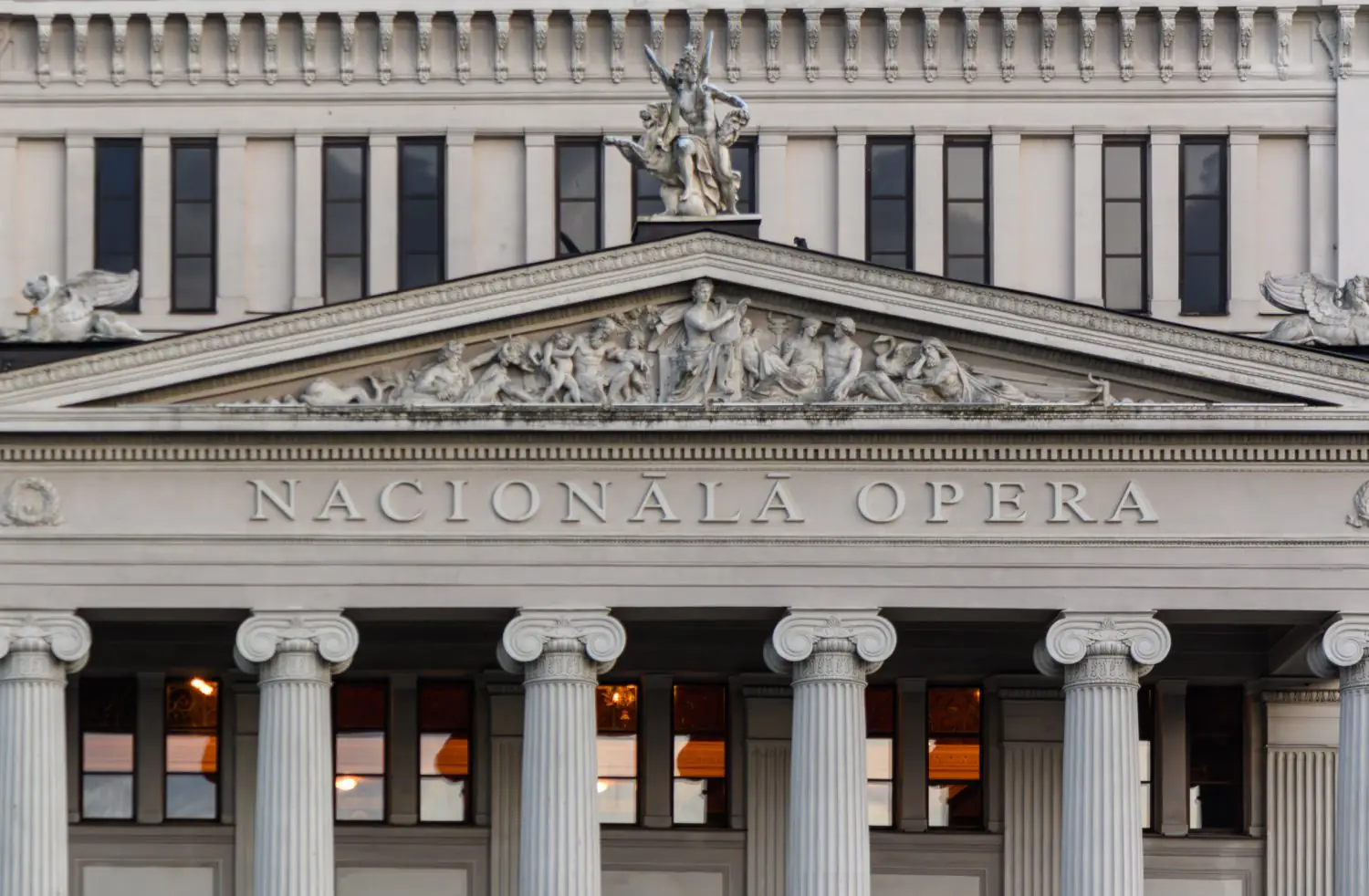
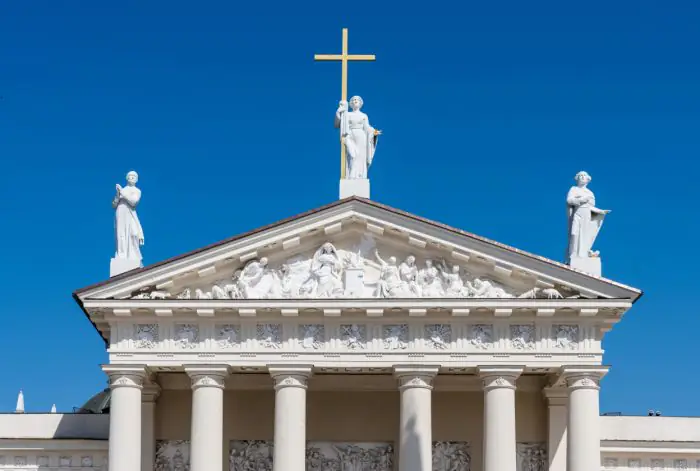
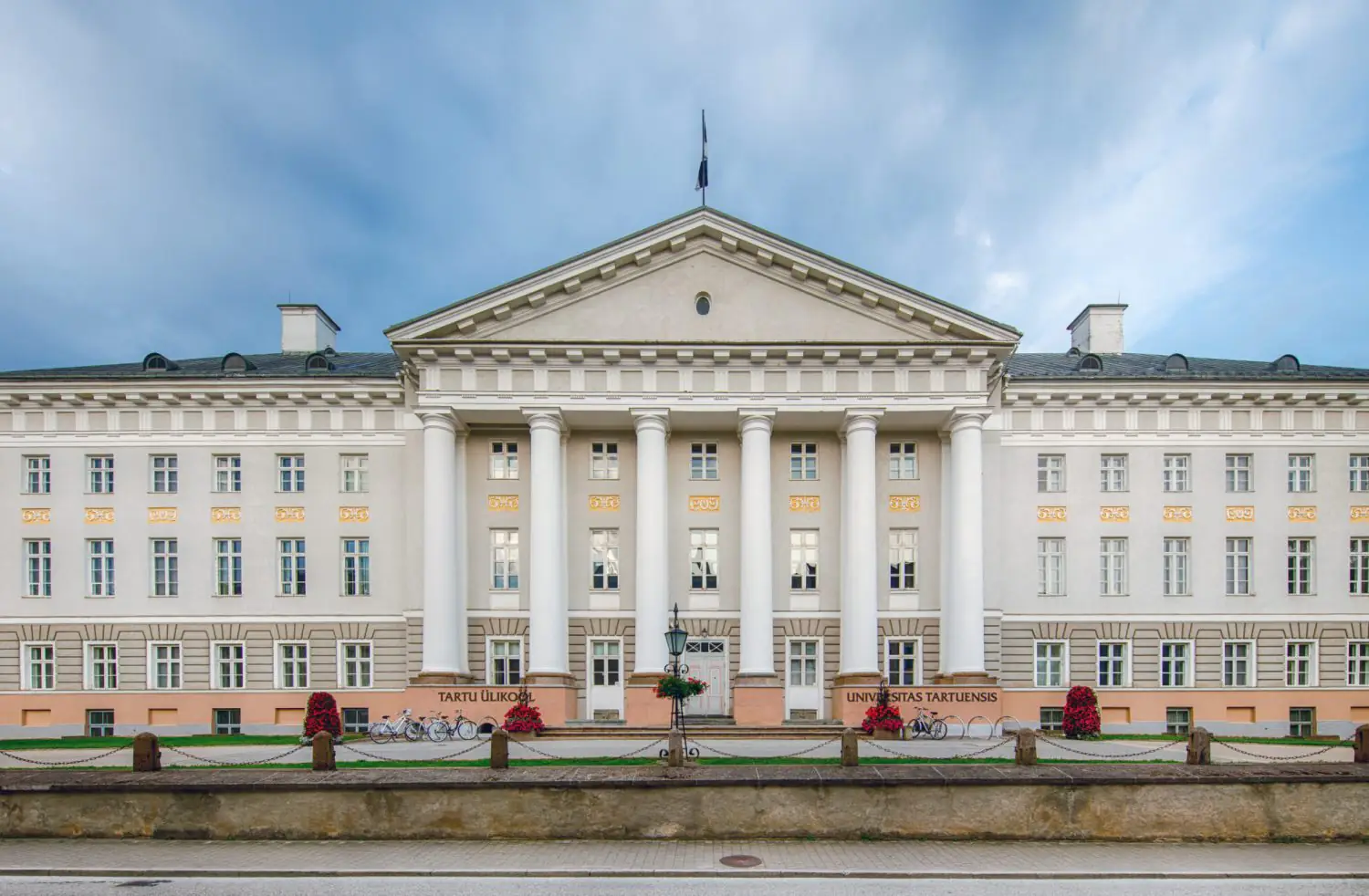
You will very often see triangular pediments (the top part of a facade resembling the roof of an ancient temple) supported by a portico of columns. This is a direct nod to Antiquity.
Restrained Decor:
There is far less ornamentation than in Baroque. When decor does appear, it is strict and laconic: classical bas-reliefs, wreaths, and ancient motifs like griffins, laurel leaves, and eagles. In the Empire style, imperial symbols are added, such as crowns and military regalia (shields, spears, and armor).
Colonnades:
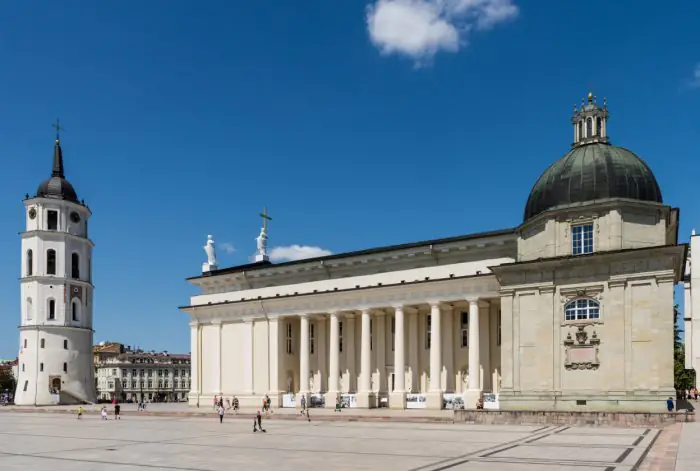
You will frequently encounter colonnades—rows of columns supporting an entablature or a portico, creating a sense of rhythm and order.
Color Palette:
Facades are typically painted in calm, pastel tones—pale yellow, light gray, soft blue, or white.
stock.adobe.com
stock.adobe.com
Classicism and Empire: Architecture with Character
- Forget the wavy lines of the Baroque! The main protagonists here are straight lines, sharp angles, and simple geometric forms (squares, rectangles, triangles). The building appears to be assembled from perfect, logically conceived blocks.
- One of the most recognizable elements is the triangular pediment located above the facade (usually over the main entrance), resting on a portico with columns. This is a direct reference to Ancient Greek temples. Colonnades are widely used, creating a sense of solemnity and grandeur.
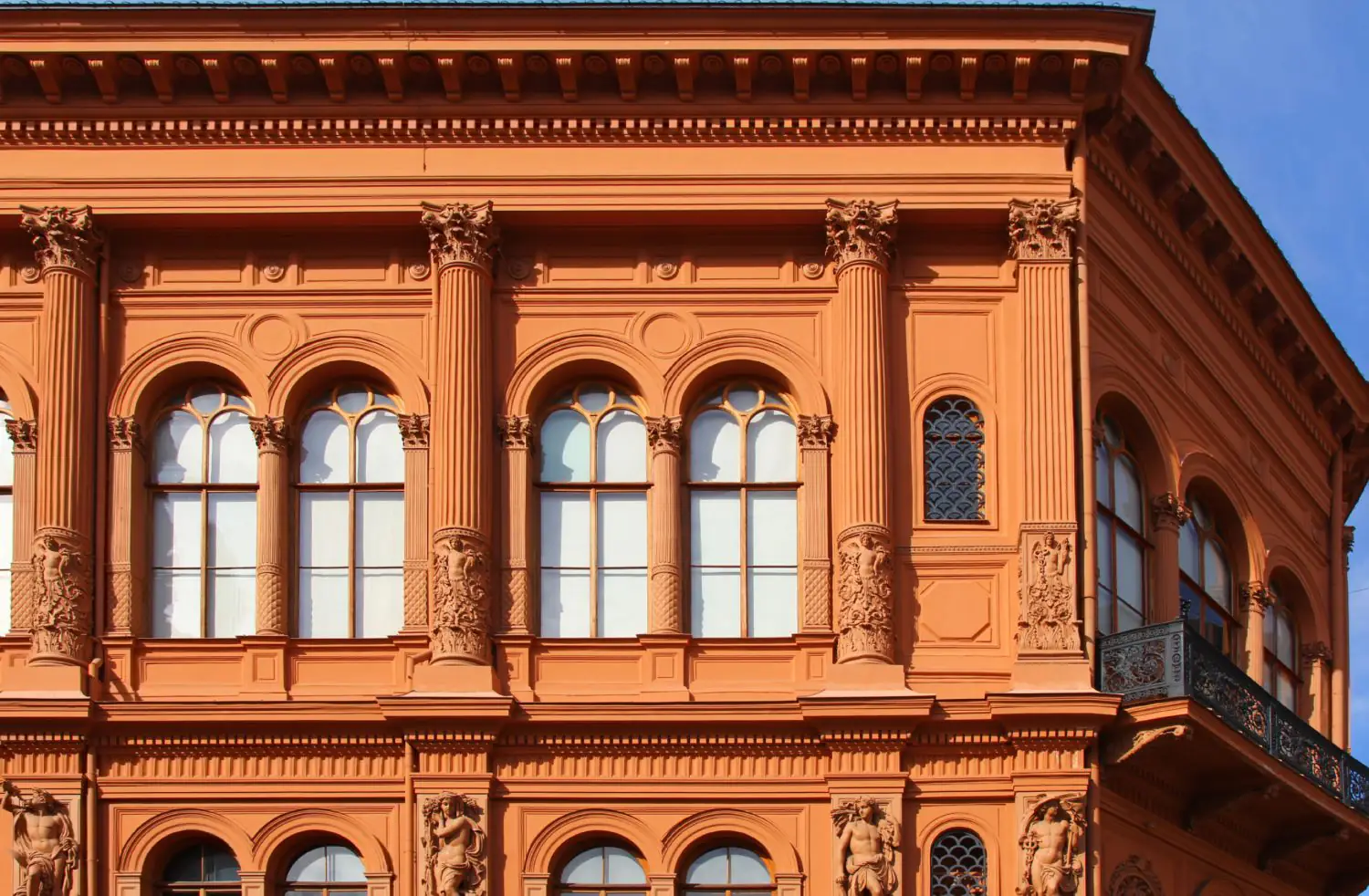
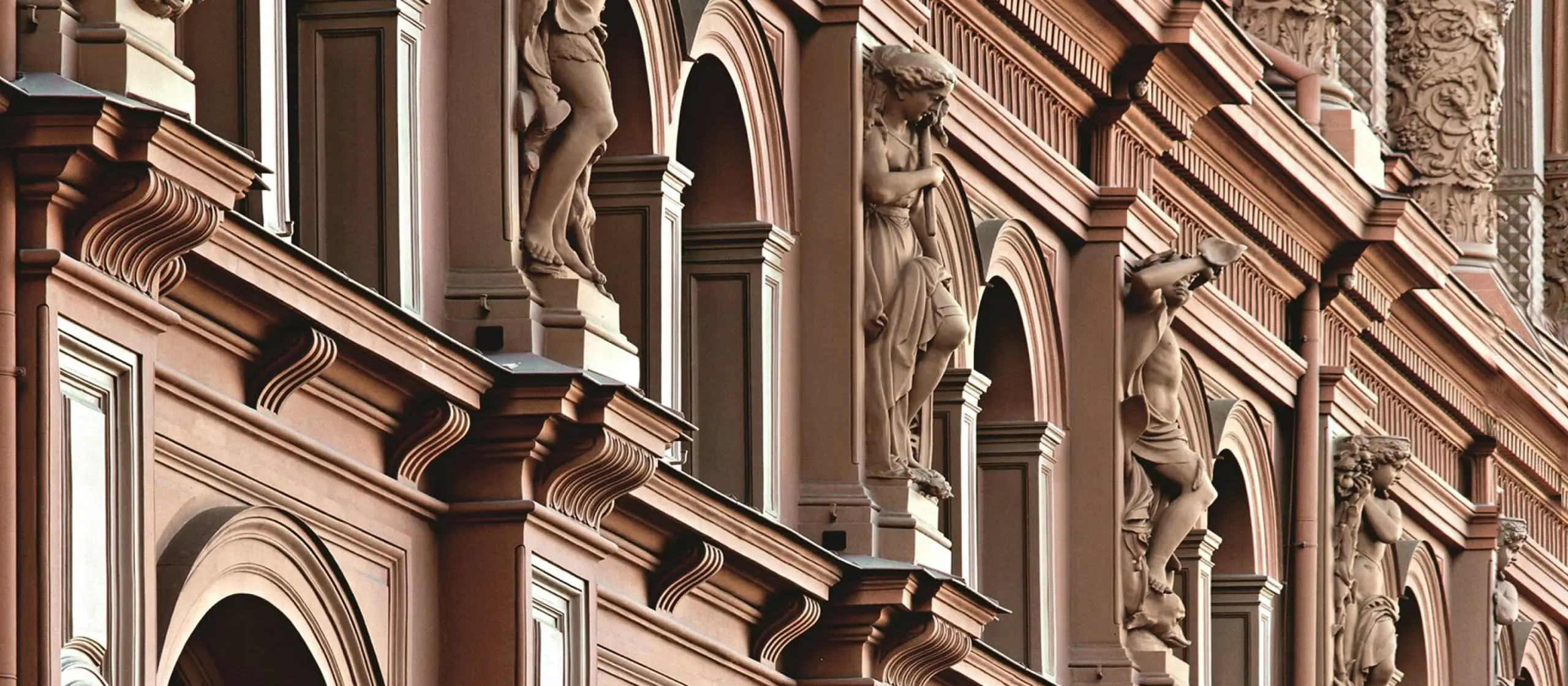
- Decorative elements are far fewer than in the Baroque era, but they are always strict, laconic, and highly artistic. Common motifs include antique bas-reliefs, garlands, wreaths, rosettes, and mythological figures (sphinxes, griffins), as well as military regalia (helmets, shields, laurel wreaths) specific to the Empire style.
- Classical Orders: As in the Renaissance, the Doric, Ionic, and Corinthian orders are used, but their application becomes even more strict and academic.
- Symmetry and Horizontal Division: Facades are always perfectly symmetrical. The horizontal division into tiers, emphasized by cornices, creates a sense of stability and monumentality.
- Characterized by calm, pastel tones—pale yellow, light gray, sand, soft blue, olive, and white. These colors emphasize the noble restraint of the style.
From Antiquity to Modernity—The Influence of the Classics
Classicism and Empire have left a significant mark on Baltic architecture, introducing principles of order, logic, and elevated simplicity. From majestic cathedrals to elegant mansions, these styles transformed the urban landscape, filling cities with the spirit of antique harmony and imperial dignity.
With these “life hacks,” you can now confidently recognize strict pediments, colonnades, and symmetrical facades, distinguishing them from the opulence of the Baroque or the austerity of the Gothic.
Our architectural journey continues. We leave behind the world of antique rigor and move into an era that abandoned all rules, giving free rein to fantasy, decorativeness, and national motifs. In the next article, we will explore perhaps the most recognizable and unique style in the region—Riga Art Nouveau (Jugendstil)—and its manifestations across other Baltic countries.