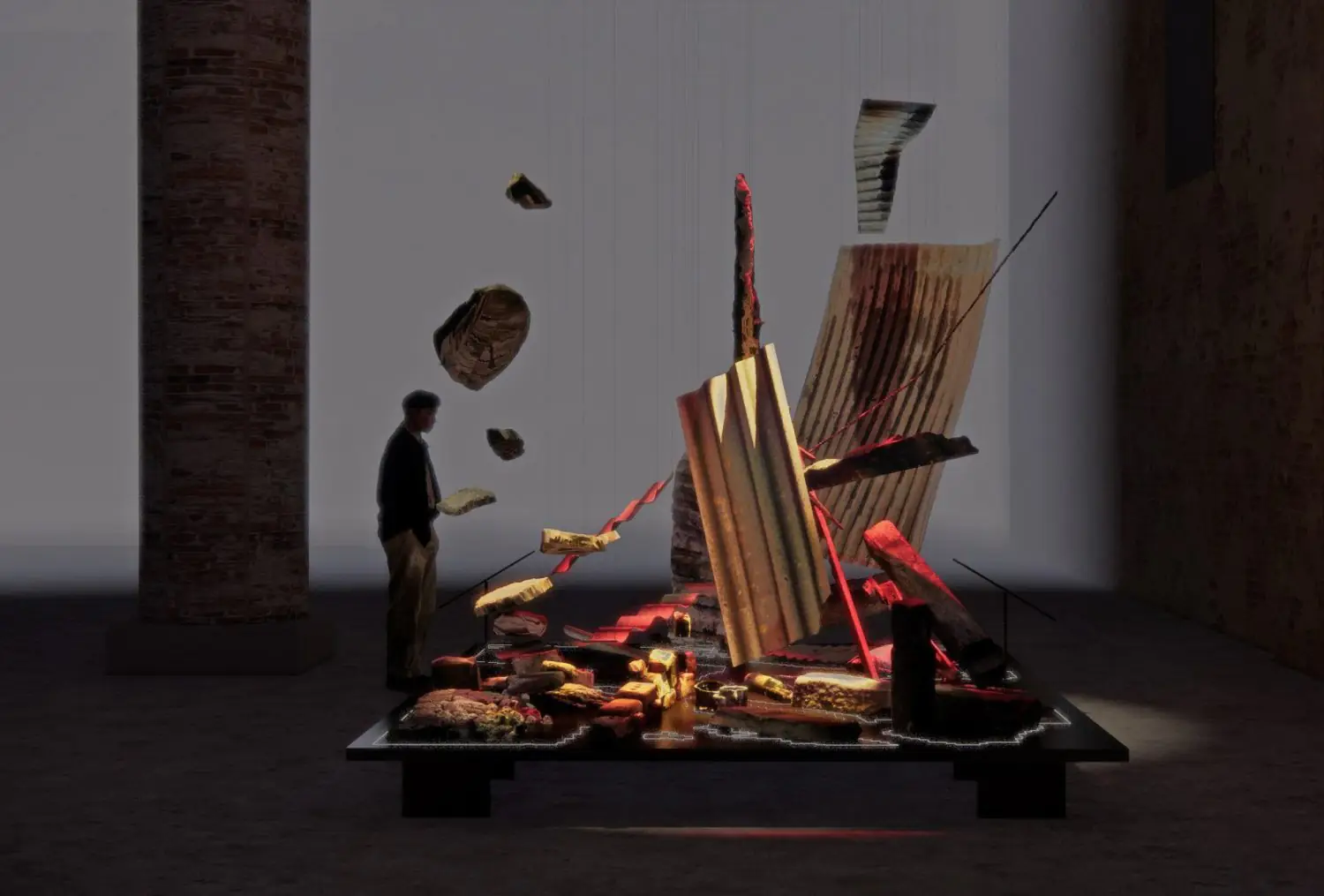
The role of AI in architecture was first widely discussed at the 2025 Venice Architecture Biennale. The exhibition, ‘Intelligens. Natural. Artificial. Collective’, curated by Carlo Ratti, interpreted artificial intelligence in the broadest sense. Kateryna Lopatyuk, a member of the Ukrainian group ReThink, and programmer Herman Mitish presented an AI model at the Arsenale to help rebuild homes destroyed during the war.
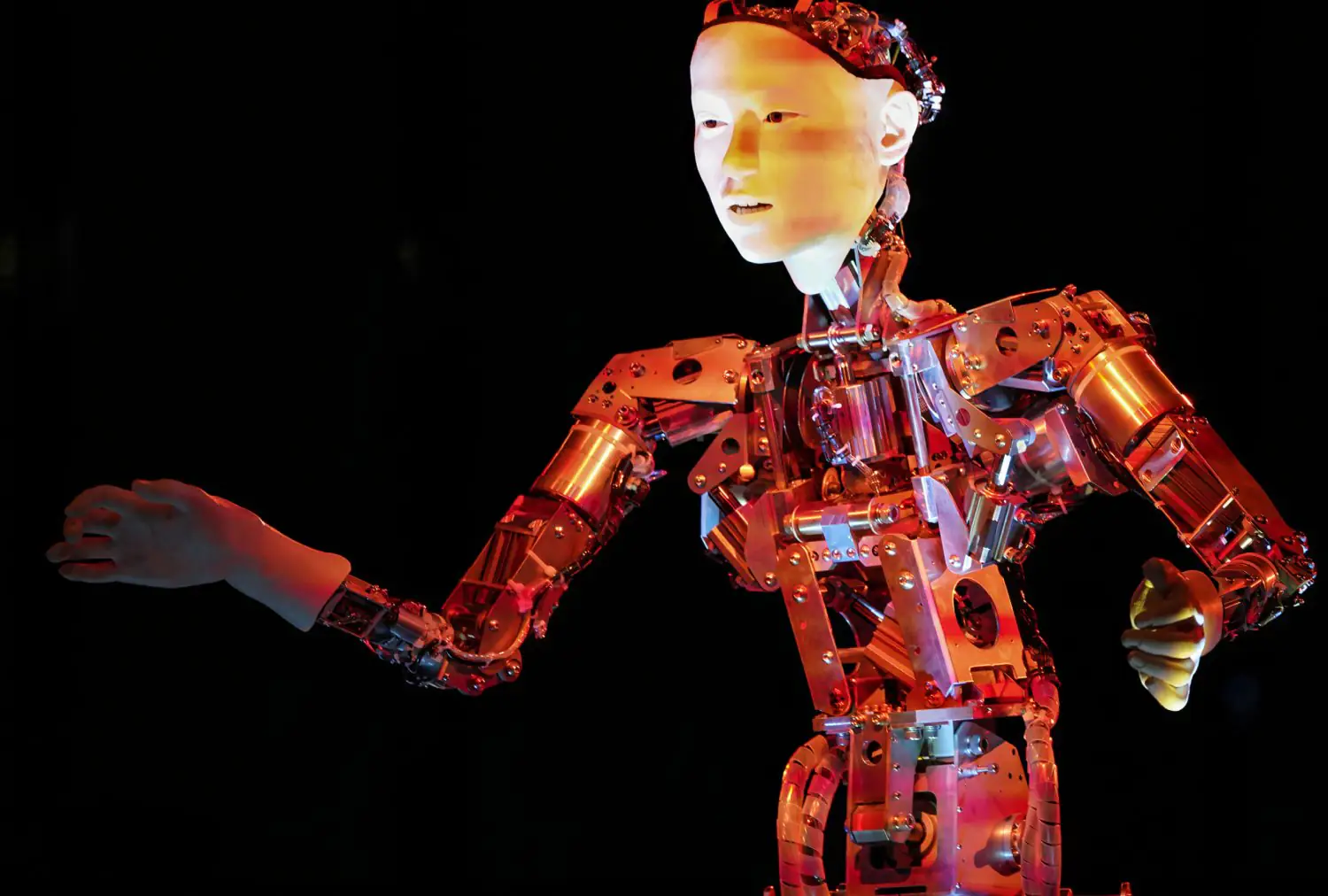
Trained using large language models for dialogue, the robot in the “Am I a Strange Loop” project by University of Tokyo professor Takashi Ikegami and Belgian scientist Luke Stils responded to visitors’ comments in multiple languages and displayed emotions. Alongside the usual long-winded, dense museum explanations, Ratti introduced an ‘AI Summary’ label, providing two or three concise phrases generated by AI for visitors who wish to quickly navigate the exhibition.
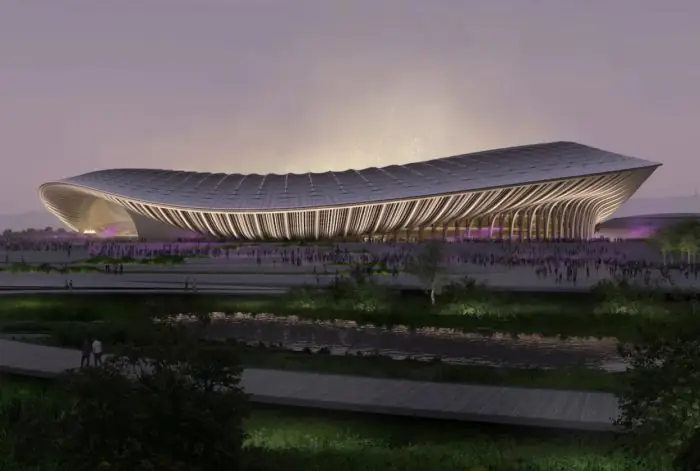
However, these projects represent only a small fraction of what artificial intelligence is capable of in architecture. In just a few years, AI has become an integral part of the design process at many well-known firms. Zaha Hadid Architects develops its own models and collaborates with NVIDIA, and social media is flooded with AI-generated visualisations.
The debate about whether AI has a place in architecture is over; the main question now is where architects can rely on artificial intelligence and where it falls short compared to other tools.
What AI Can Already Do: An Example of Tim Fu
A project by the London-based firm Studio Tim Fu is the most telling example of architects using AI in their day-to-day work. In March 2025, the firm announced the launch of the world’s first architectural project entirely managed by AI: the Lake Bled Estates residential complex in Slovenia.
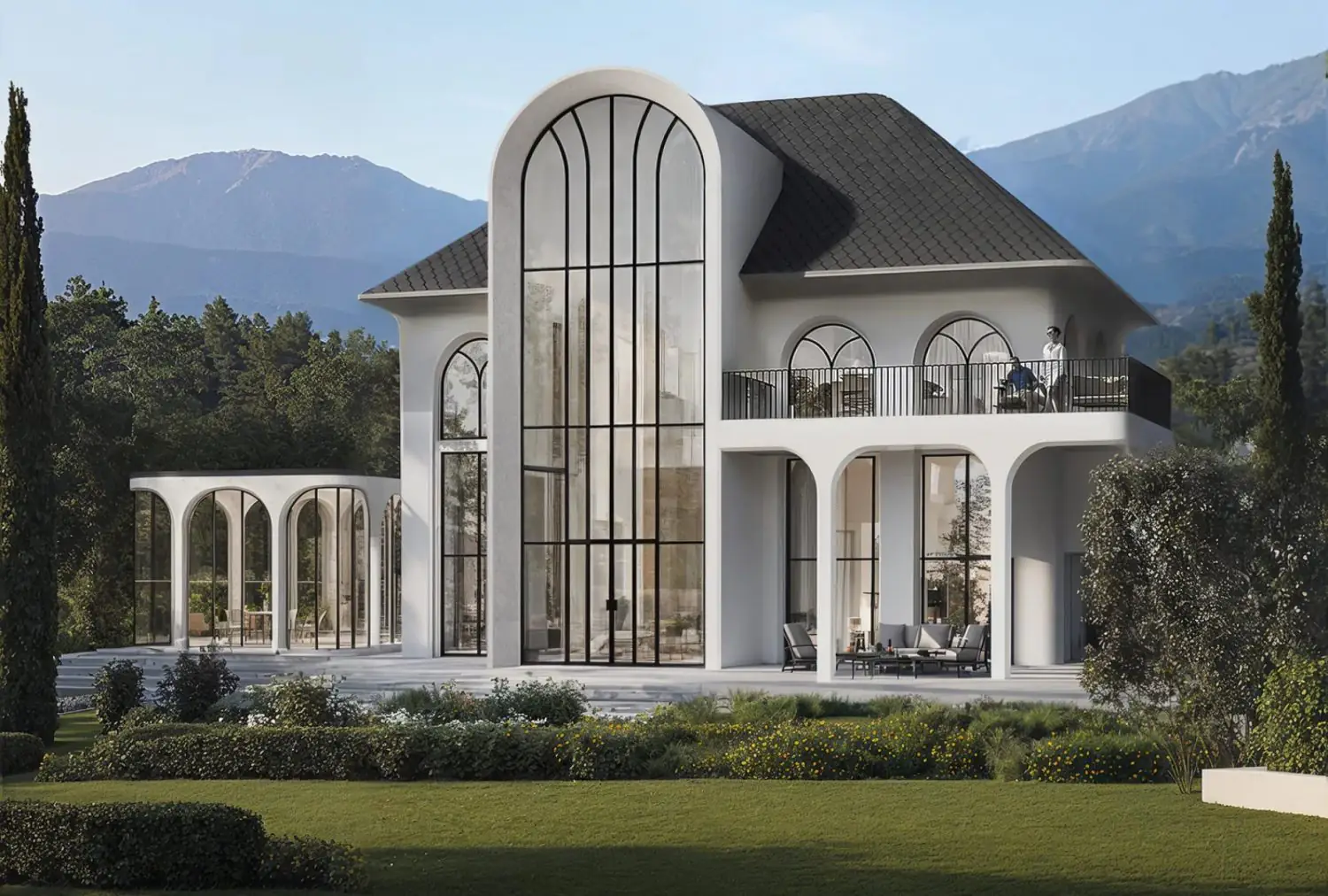
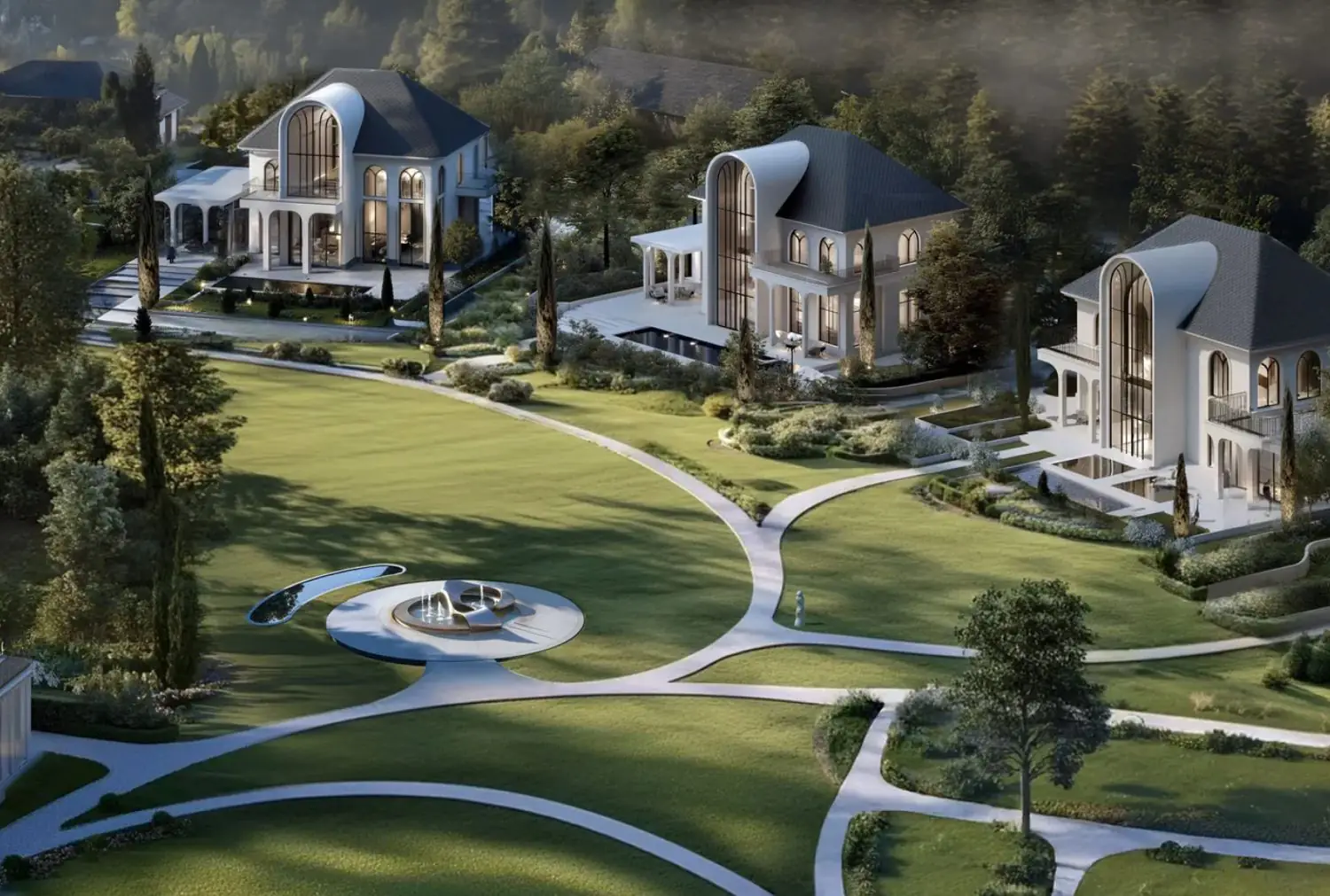
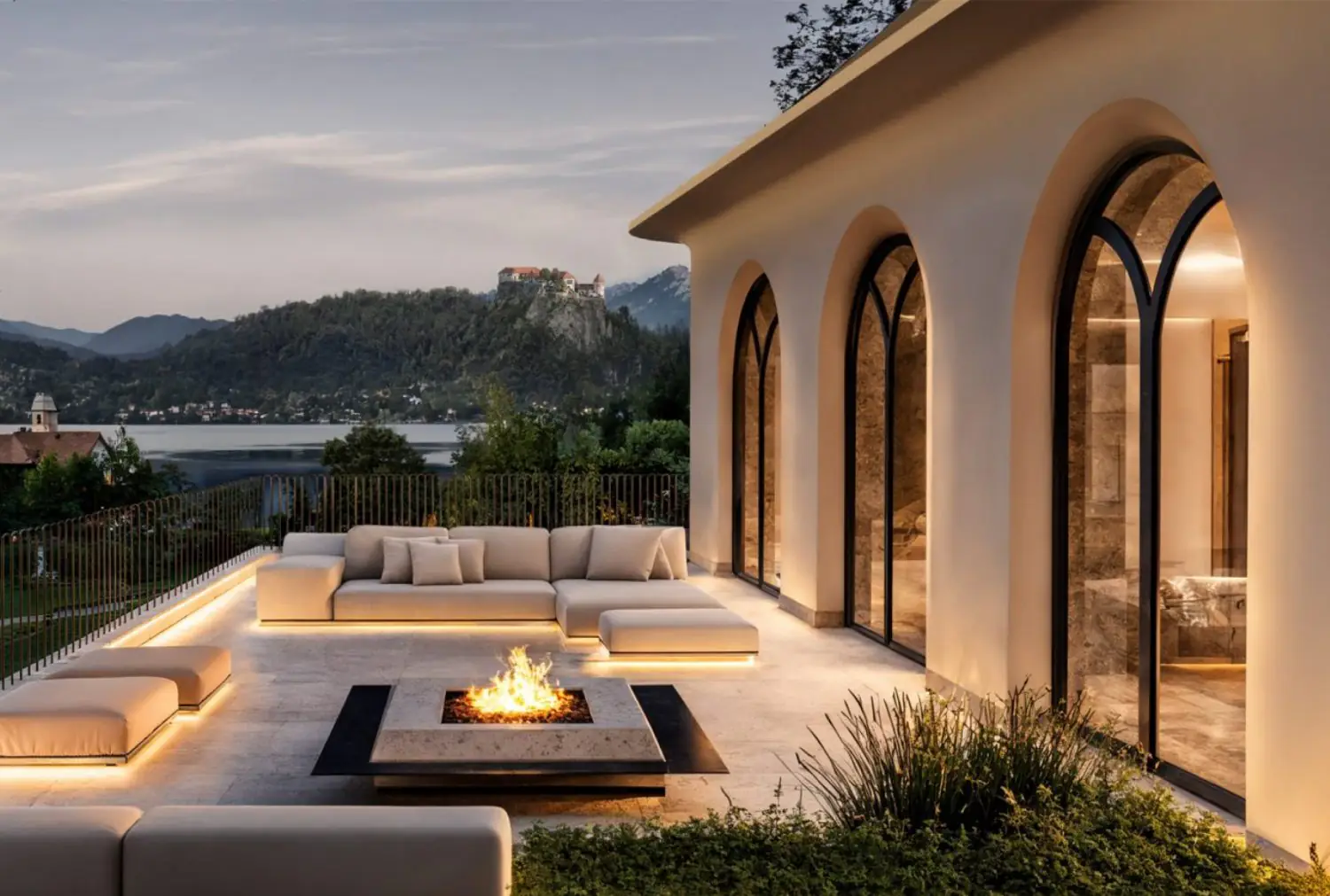
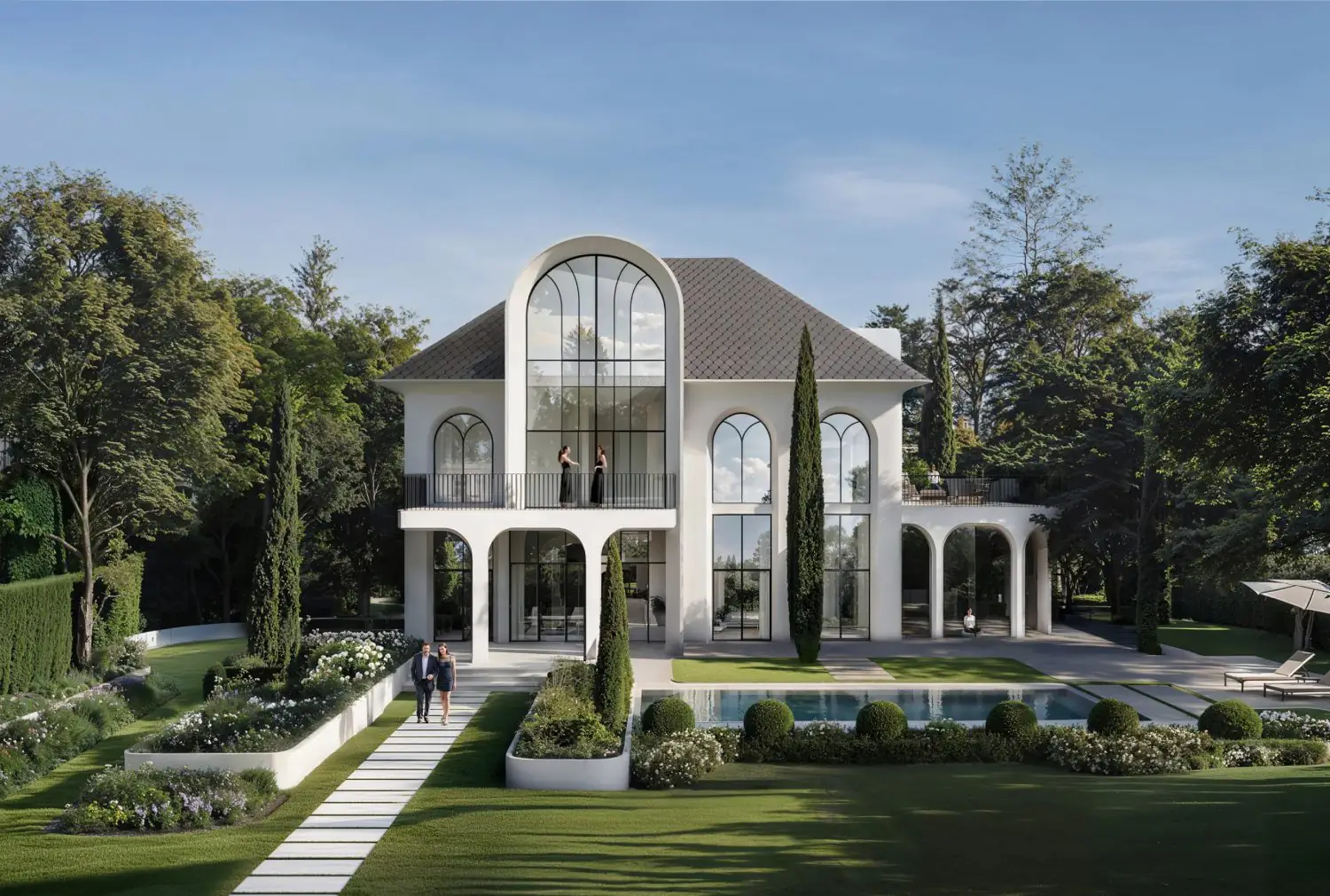
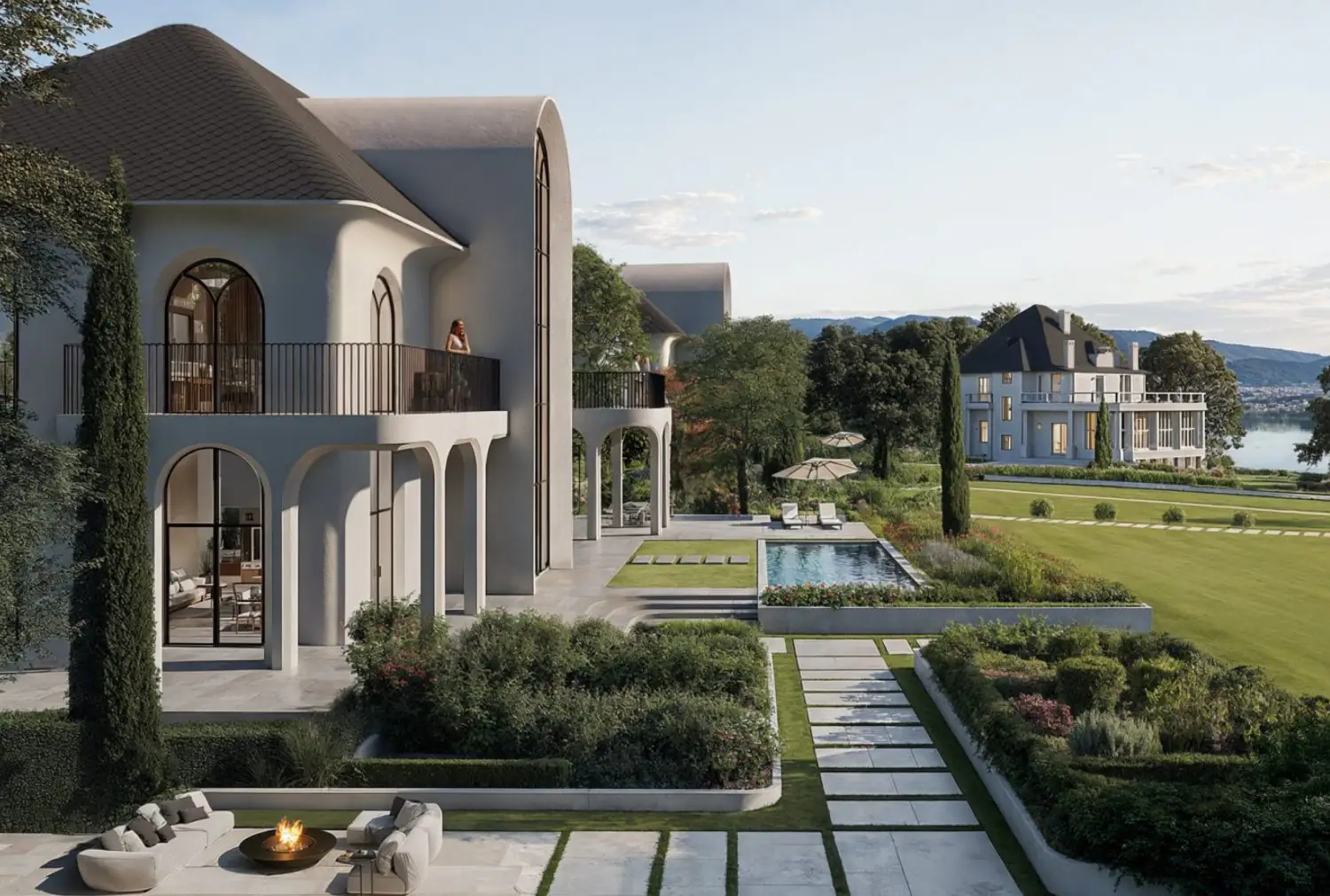
According to founder Tim Fu, AI capabilities have long since moved beyond concept development, although the studio also uses them for this purpose. Data about the surroundings, such as terrain features, sightlines and the sun’s path, is fed into a generative model which produces a multitude of context-aware schematic volumes.
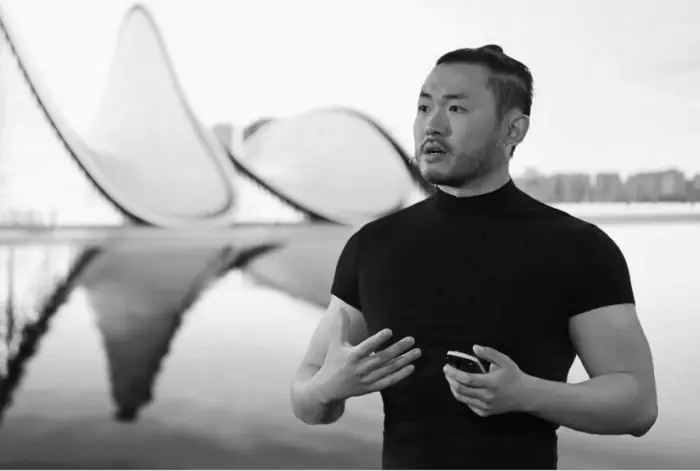
Fu achieves this by using Midjourney, Stable Diffusion and his own fine-tuned models for visual idea generation, such as his proprietary UrbanGPT engine for real-time urban planning scenarios, as well as Rhino Grasshopper for parametric modelling.
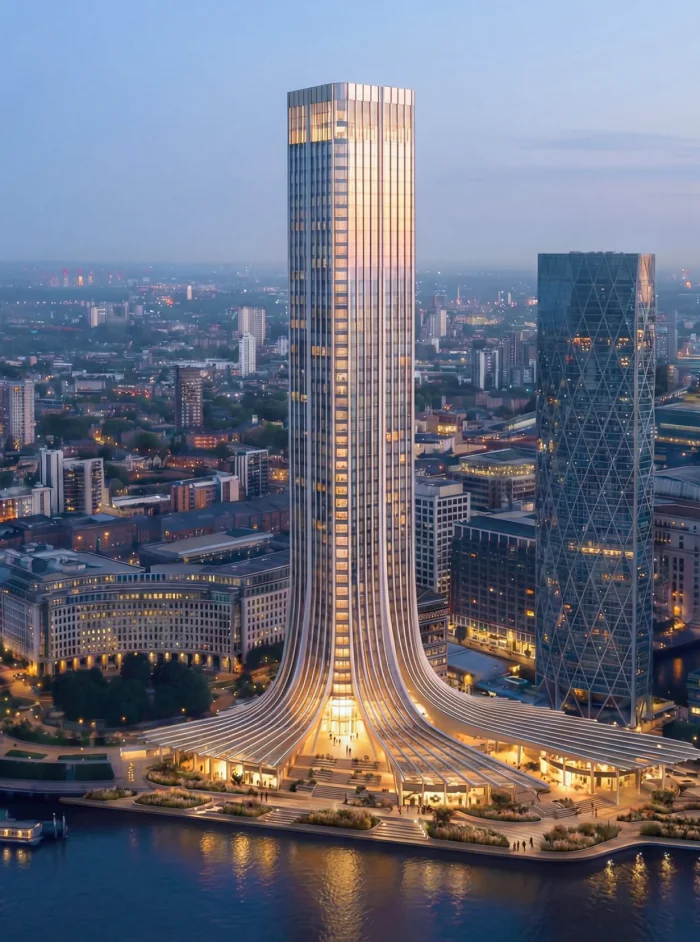
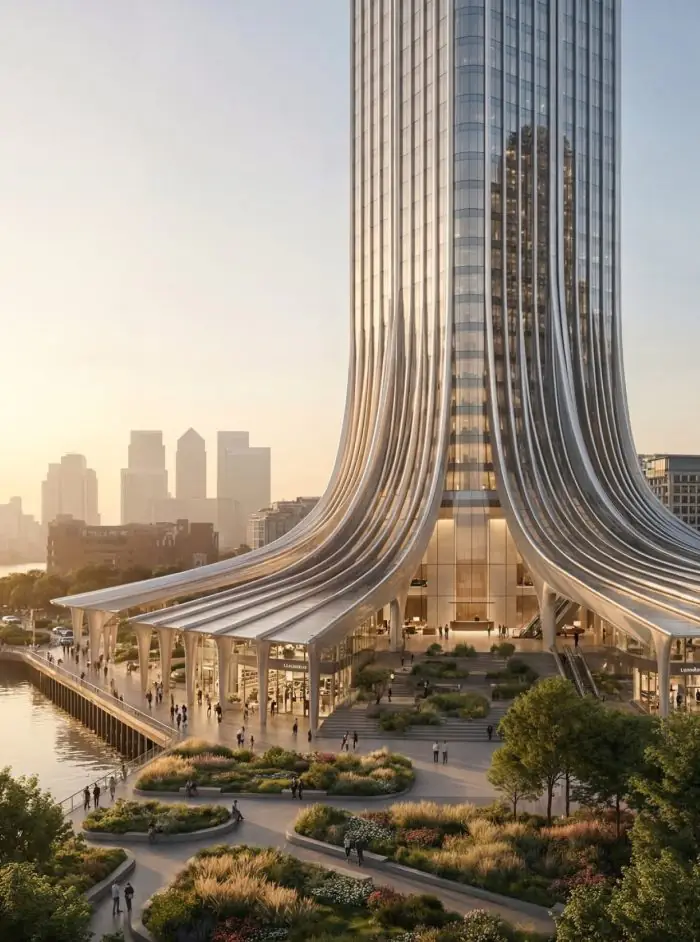
The architects then refine the architectural model and adapt it to the project’s requirements by providing the AI with the relevant codes and the client’s technical specifications. AI also helps to automate specifications, optimise floor plans, select components and navigate large volumes of documentation.
Thus, AI excels at pattern recognition, generation and optimisation—anywhere a task can be framed as ‘sifting through a set of options X within constraints Y’. Even Fu, an AI design enthusiast, acknowledges that a model’s output is merely a suggestion, not a precise prescription. Ultimately, the final decision on specific project elements must be made by a human.
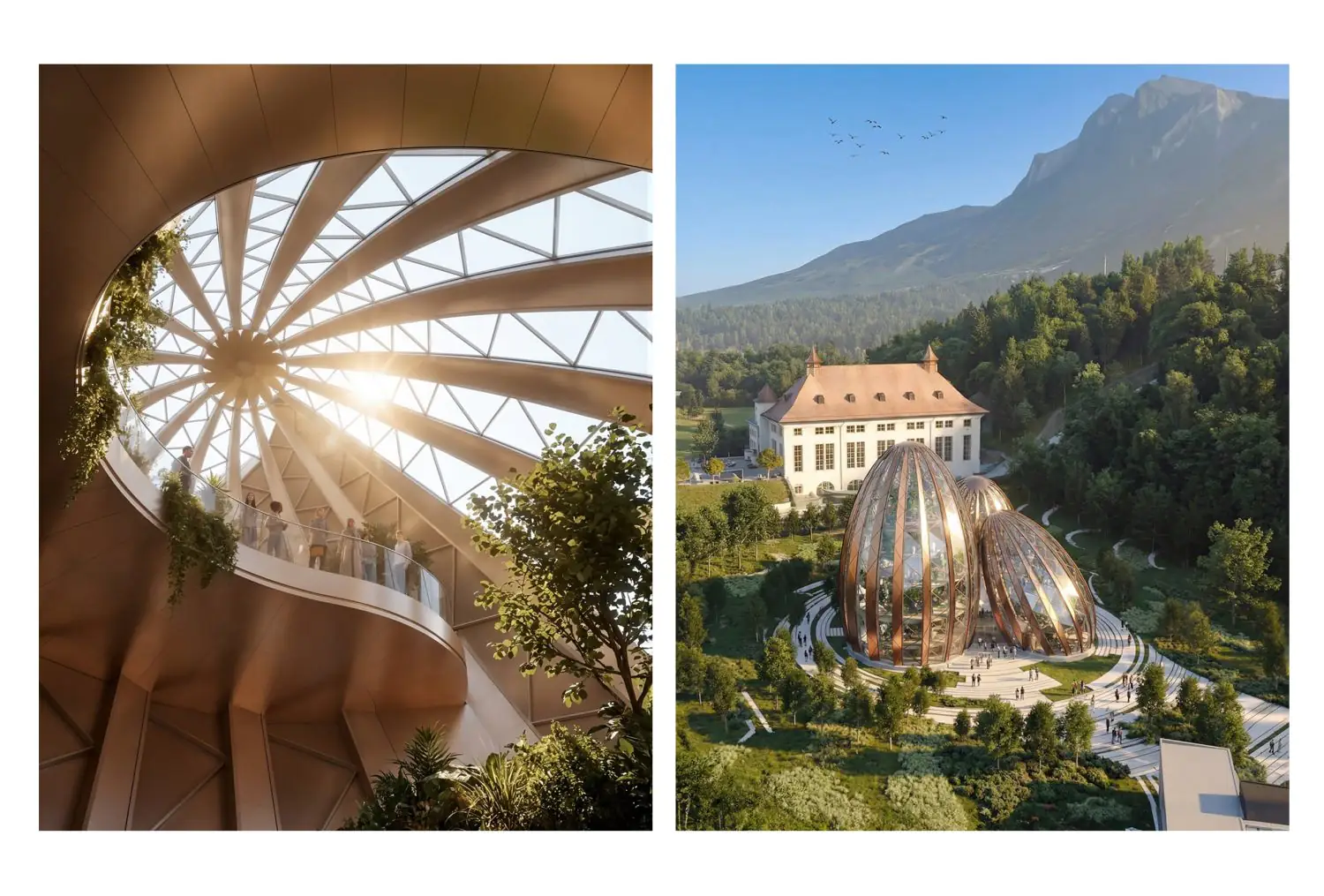
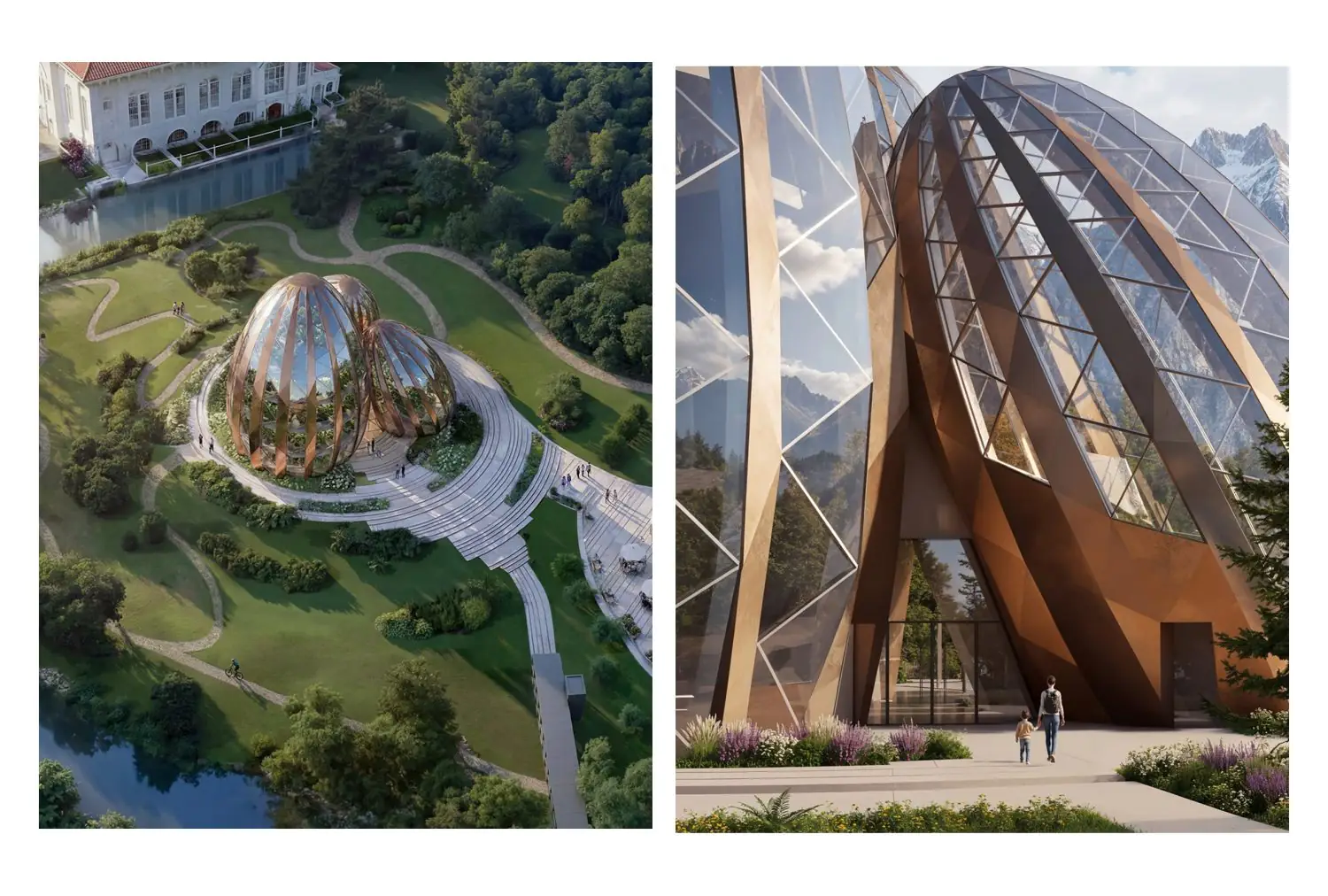
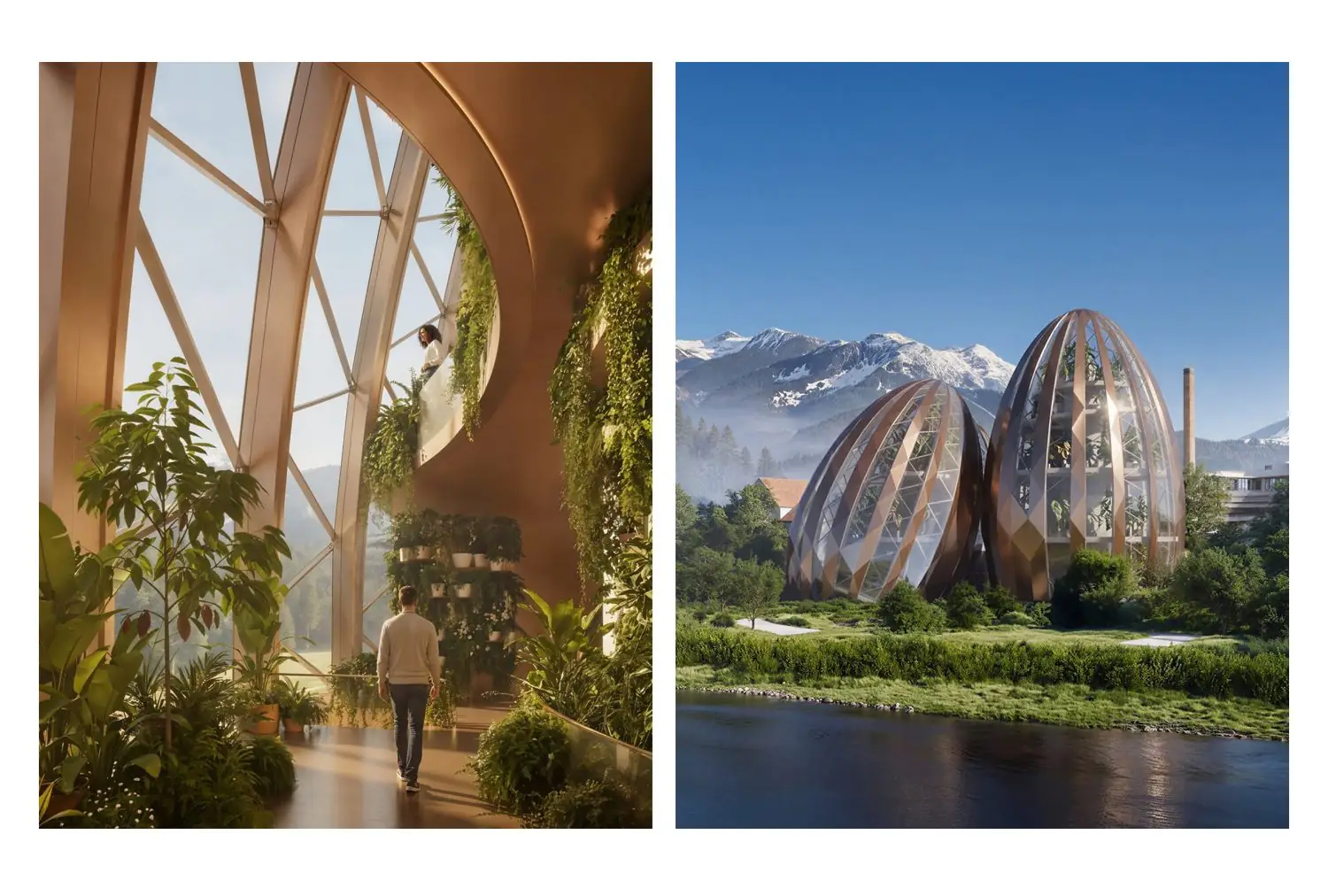
In addition to Fu, XKool—a Shenzhen-based company—actively uses AI. The majority of its clients are engineers, architects and designers. It specialises in project implementation, using artificial intelligence to create master plans that take solar exposure and building codes into account, convert 2D images into 3D models and much more besides. Meanwhile, Indian architect Manas Bhatia has progressed from creating purely conceptual sketches of porous towers in Midjourney to the Co-Design-Canvas project, which combines collaborative design with AI.
Despite their different approaches, all these projects have one thing in common: they all claim to use AI at every stage. In practice, however, these tools are most useful when a vague concept needs to be tailored to the client’s requirements and many technical details must be refined using third-party software. It is here that the weaknesses of such projects lie: the comprehensive use of AI is more of a marketing gimmick than a genuine necessity.
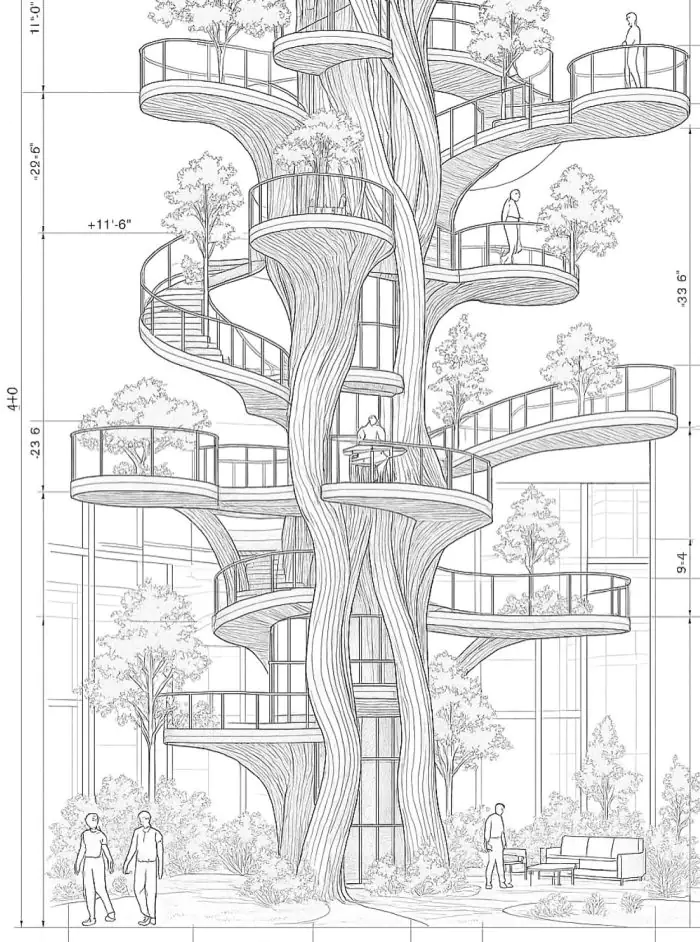
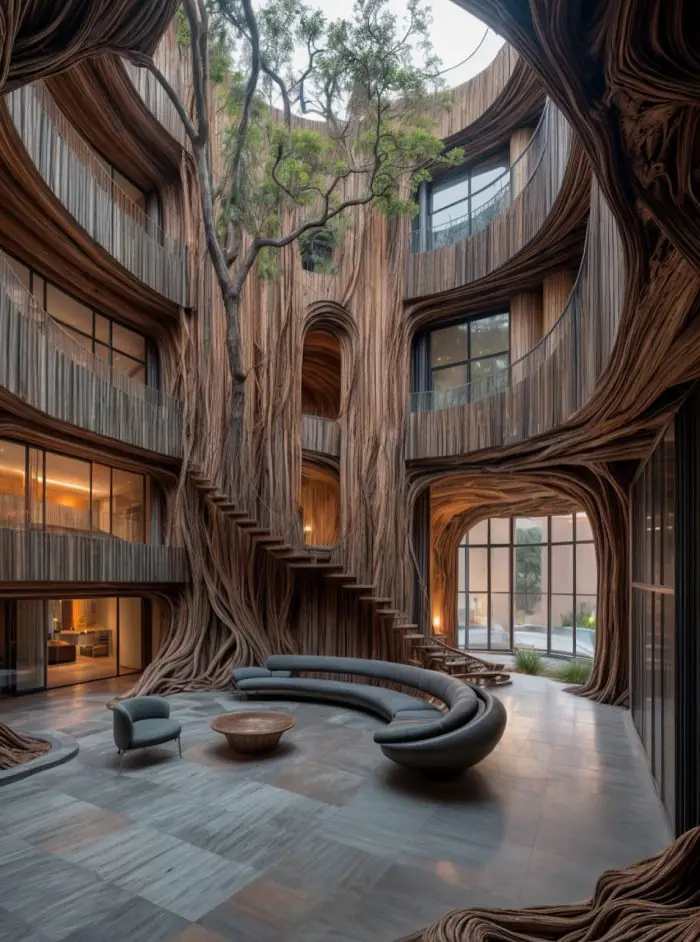
What AI Can’t Do
When asked where AI falls short, Fu lists everything related to human interaction and spatial awareness, such as the emotions evoked by a specific landscape or space, the ‘spirit of place’, strategies for engaging with stakeholders, and resolving ethical and political conflicts. According to the architect, therefore, AI falls short where architecture ceases to be a set of data and images and becomes a real project.
Furthermore, AI cannot sketch a building freehand or think about it in the same way as a human would. American philosopher and urban planning professor Donald Schön referred to drawing as a ‘reflective practice’: it can be difficult for an architect to transfer the image formed in their mind to paper at the first attempt, but it is precisely this ambiguity that leads them to the ‘right’ image.
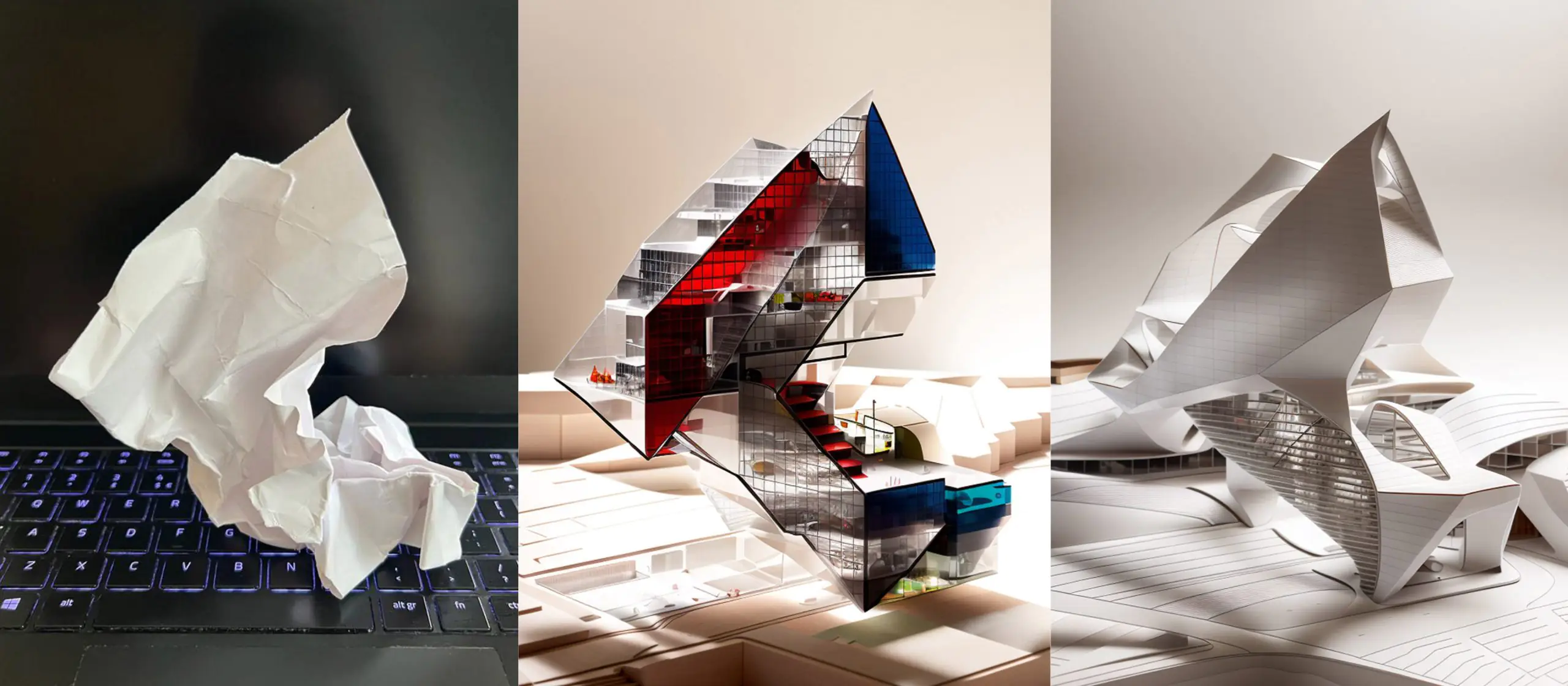
Generative models do exactly the opposite: they immediately produce a highly detailed, ‘finished’ image, which is subsequently refined even further. Moreover, in order to formulate a prompt, one must translate spatial intuition into words, thereby bypassing the very part of the process for which sketches are created in the first place. While AI can generate sketch-like images, it cannot reflect on a sketch the way a human does.
Finally, AI poses no risks, whereas architects sign off on projects in their own names and bear the legal and ethical responsibility for them. Models will work just as well for authoritarian and democratic regimes, producing prison designs for the former and public and civic buildings for the latter. However, architecture is never neutral by its very nature; every building emerges from a combination of political, social and cultural factors, as well as the preferences of a specific client. This is architecture’s most human aspect.