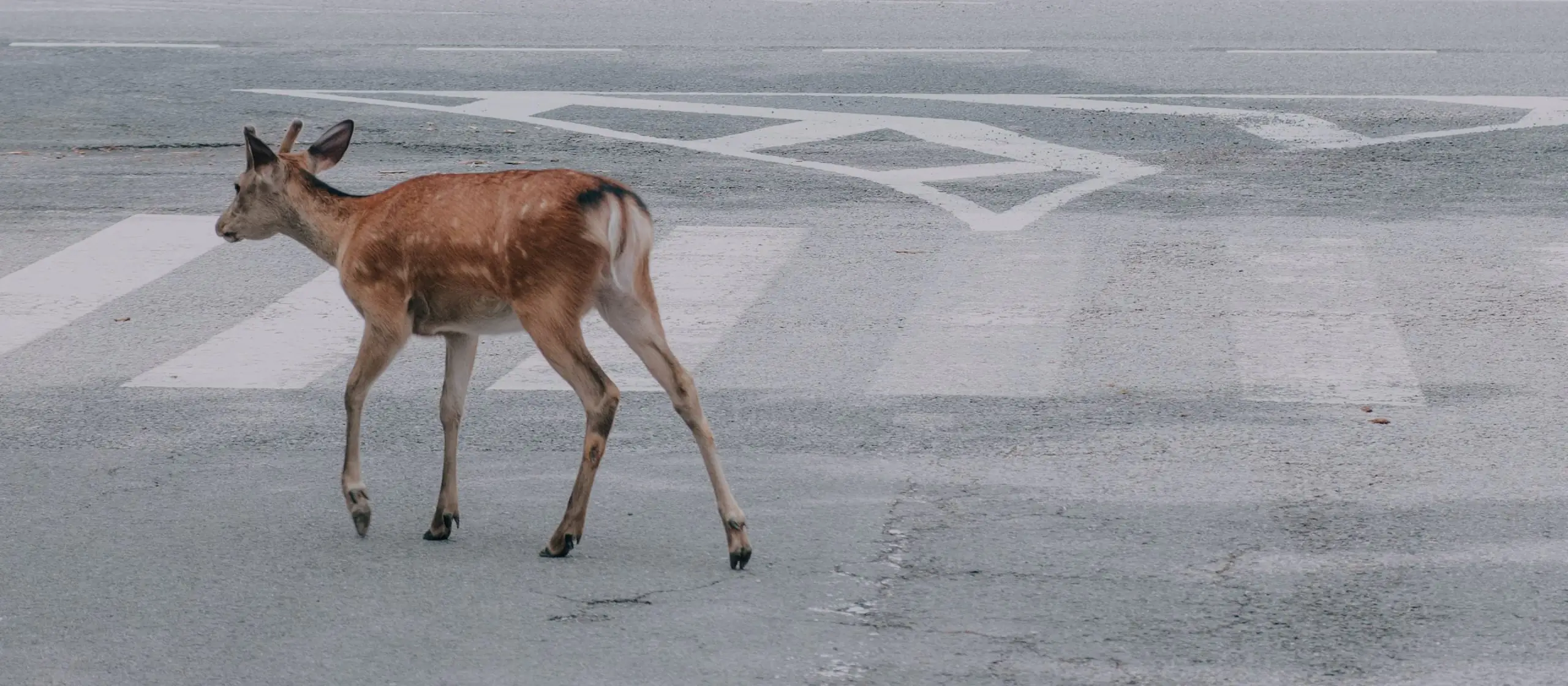
A moose does not know that the forest on either side of it is divided by a multi-lane road. A frog does not understand that railway tracks have appeared on its way to a pond. The boundaries people draw on maps do not exist for animals — but asphalt, rails, fences and traffic noise are very real.
That is why building a new road or railway changes a landscape far more than may seem at first glance. Infrastructure does not simply take up space: it also cuts across the routes animals have traditionally used. For some populations, this can mean losing connections between different parts of their habitat.
Across Europe, this problem is being addressed with more than warning signs and roadside fencing. Special bridges are being built over roads, tunnels beneath them, and, in some cases, entire networks of crossings that allow animals to continue using their territory without coming into contact with human infrastructure.
Roads as barriers
The first dedicated wildlife crossings in Europe appeared in France as early as the 1950s. Their development was driven by a practical problem: as road traffic increased, so did the number of collisions between vehicles and wild animals. It gradually became clear that fencing along roads, without providing animals with a safe way to cross, could actually make the problem worse. Animals needed not just to be kept away from the road, but to be given safe crossings of their own.
Over the following decades, similar solutions began appearing in other European countries. These included small tunnels, underpasses and bridges over roads. The Netherlands became particularly active in developing this kind of infrastructure. By the 1970s, different types of crossings were already being built there, ranging from small animal tunnels to large wildlife bridges.
It gradually became clear that the issue was not limited to animals being killed on roads. A motorway or railway can divide a forest into two parts, cut animals off from a water source or breeding site, or disrupt their established seasonal migration routes. Even when animals are not hit by vehicles, the infrastructure itself can continue to function as a barrier.
This is how the term habitat fragmentation entered the environmental debate. Natural areas become a collection of separate patches, divided by infrastructure and increasingly difficult for animals to move between. For some species, this means a reduction in the territory available to them; for small, isolated populations, it can also lead to reduced genetic diversity.
In 1995, an international conference on habitat fragmentation and ecological infrastructure was held in Maastricht, the Netherlands. Experts from 25 countries took part, and the meeting became the starting point for the creation of the Infrastructure and Ecology Network Europe, an international network focused on studying and addressing the impact of infrastructure on natural areas.
Bridges for wildlife
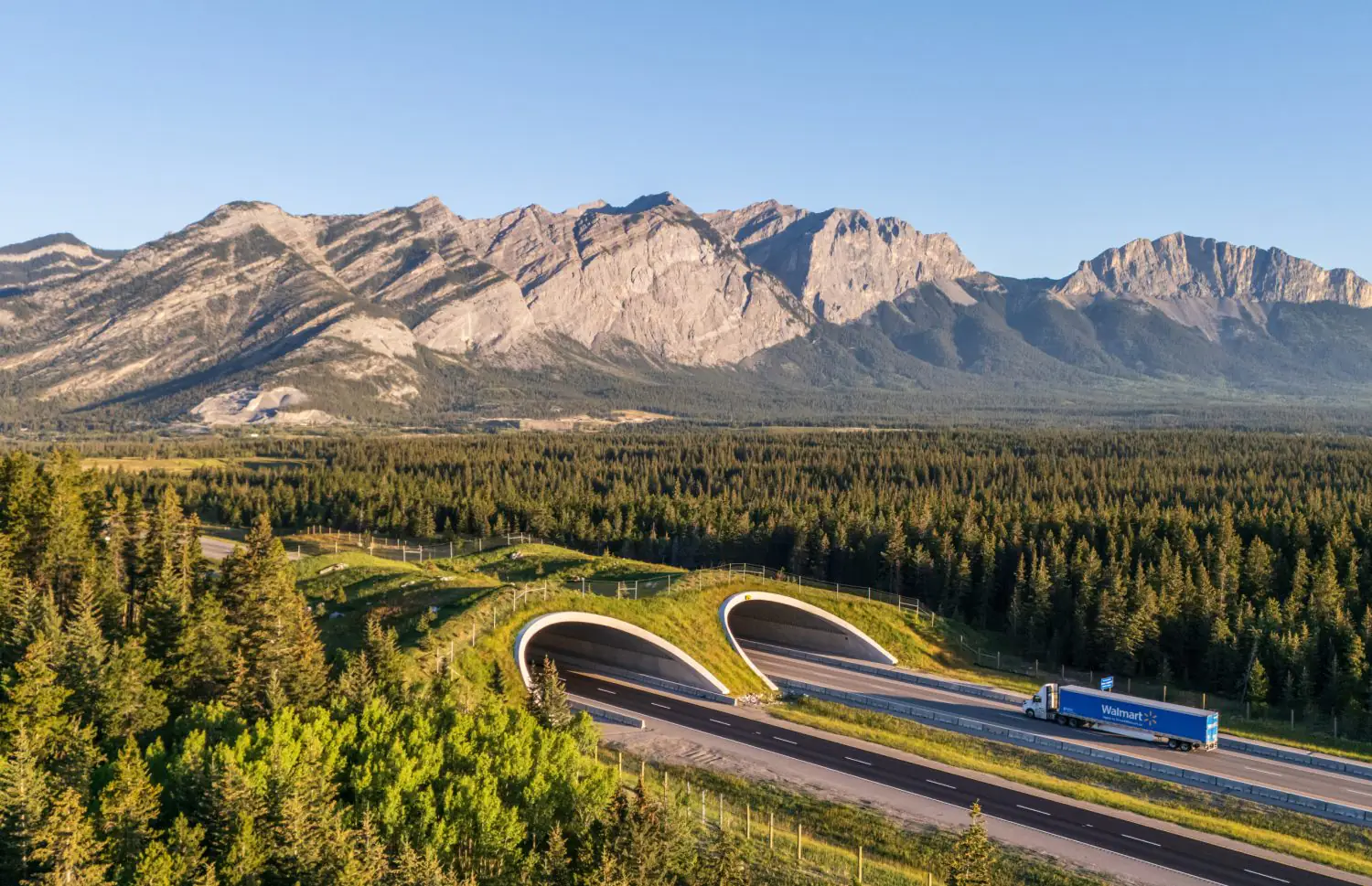
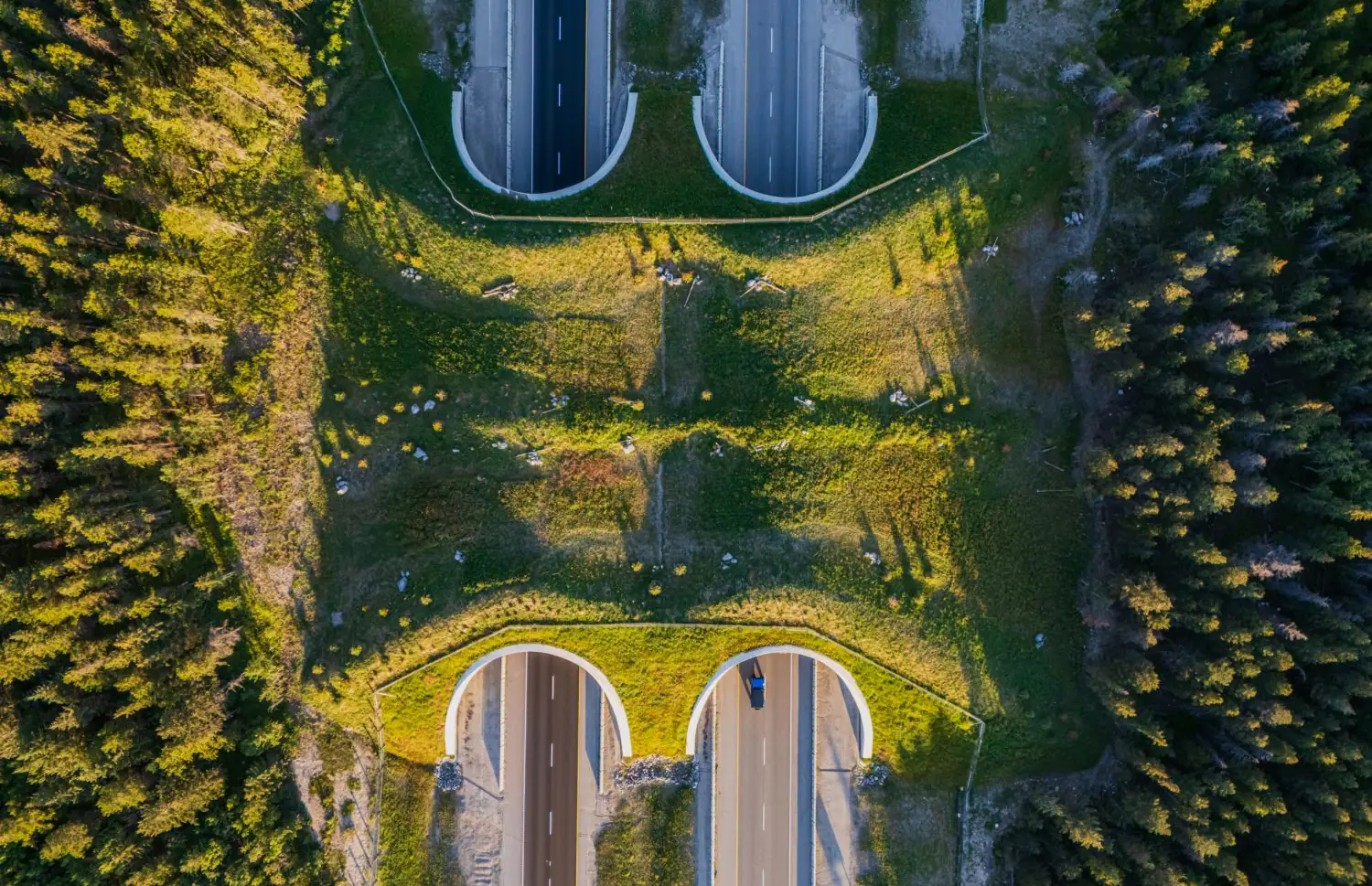
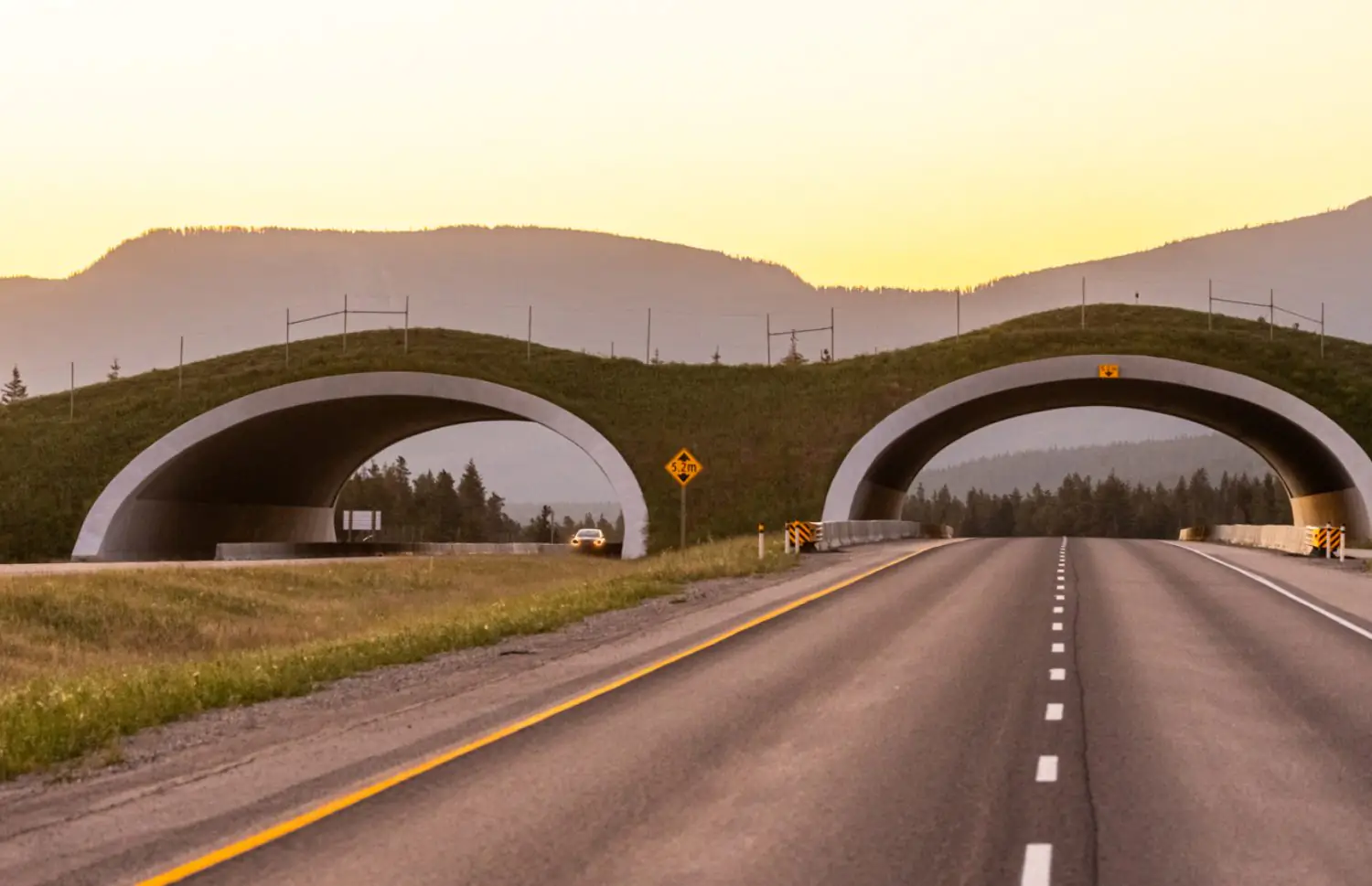
The most obvious example of infrastructure designed for wildlife is the green bridge, or ecoduct. From above, it looks almost like a continuation of the surrounding forest: a layer of soil, shrubs and trees, and sometimes even small ponds. A road or railway passes underneath it. The size of the bridge depends on the species it is intended for, the terrain and the particular ecological connection that needs to be restored.
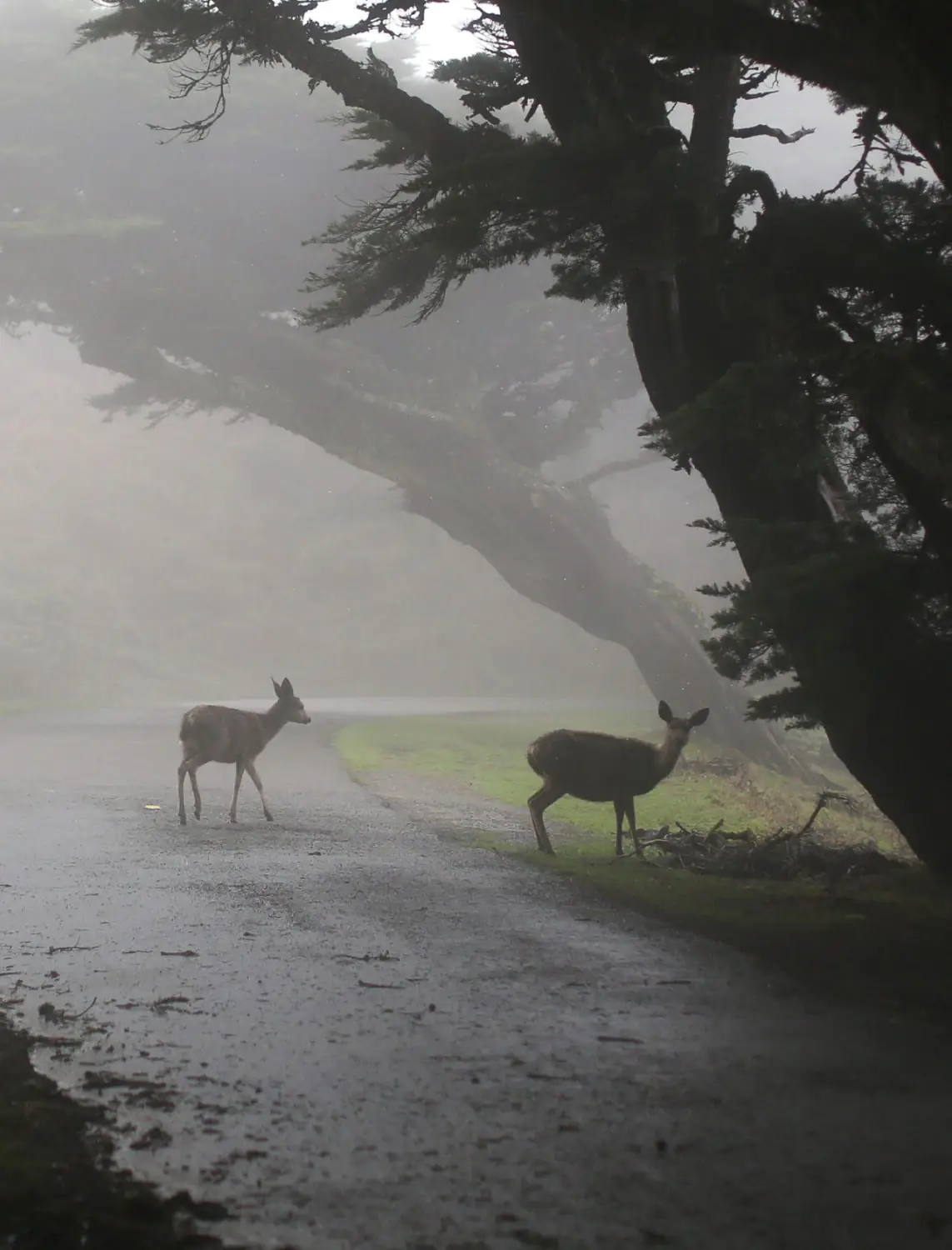
Large mammals such as deer, moose and wild boar need wide crossings where they do not feel trapped between noisy streams of traffic.
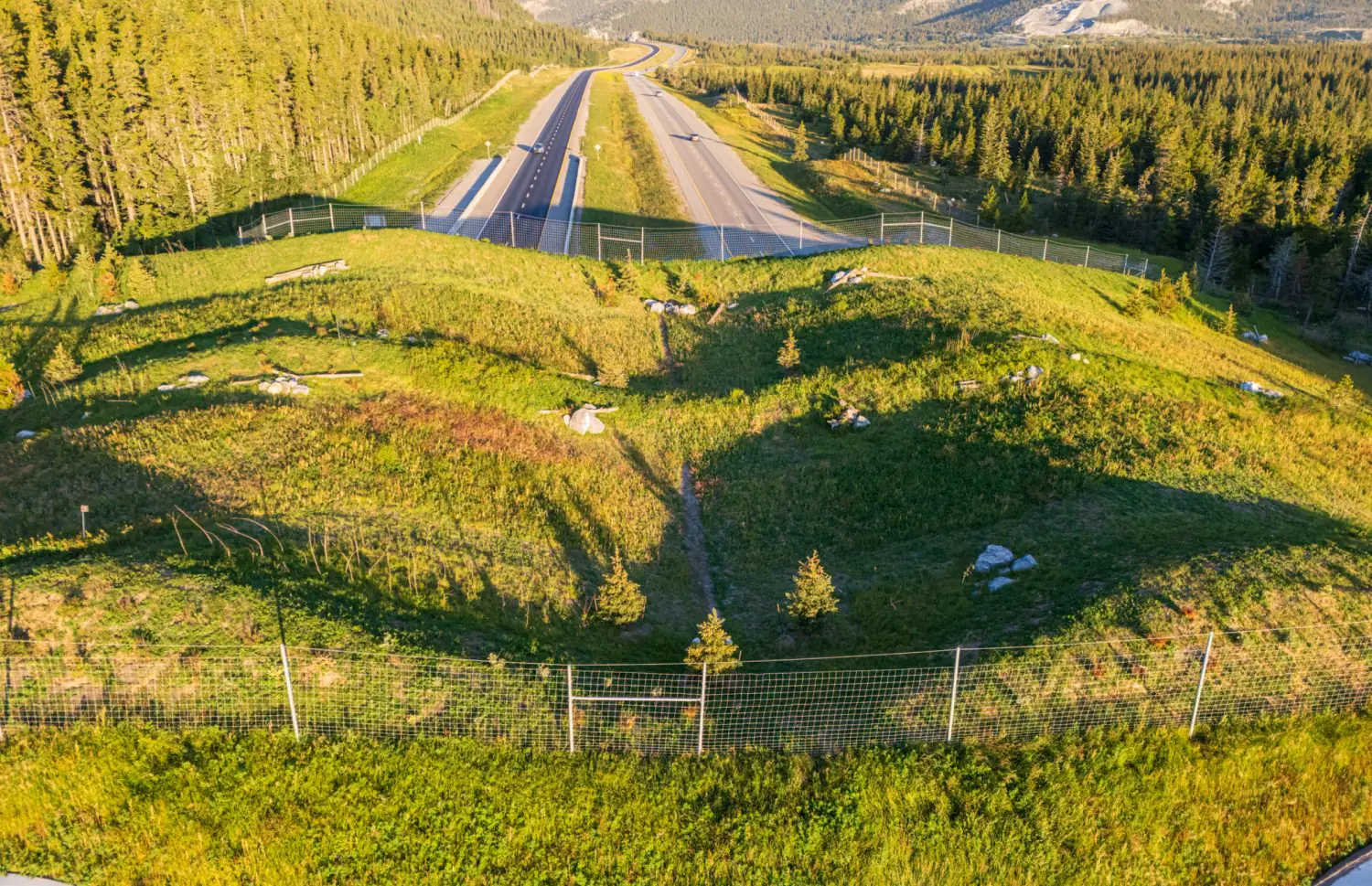
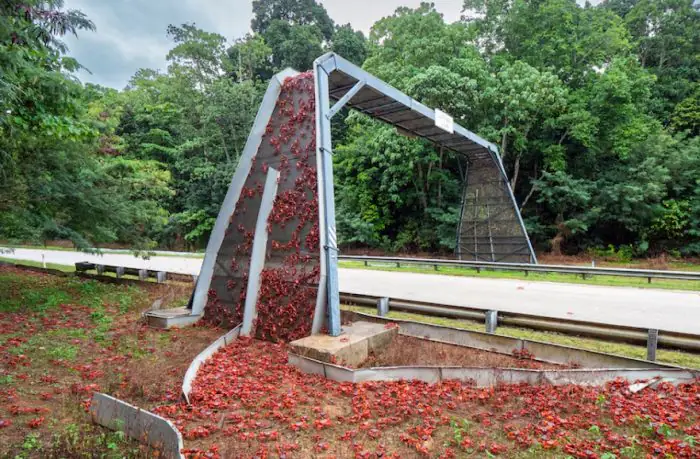
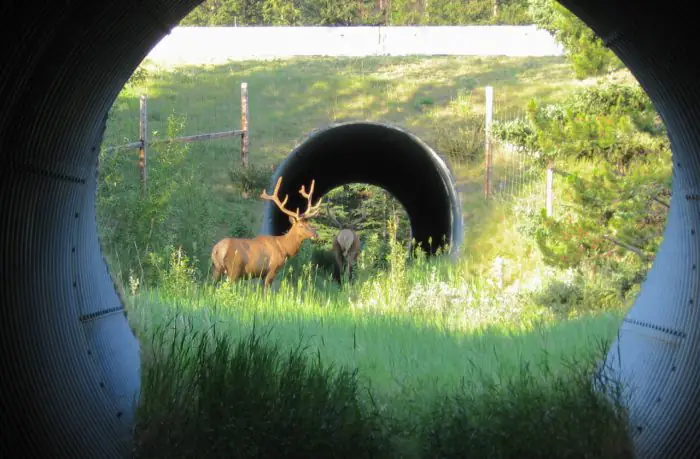
For smaller animals, the solution can be much more modest, like an ordinary tunnel or pipe beneath the road. Along the roadside, guide fencing is installed to prevent animals from reaching the carriageway and direct them towards the entrance to the crossing.
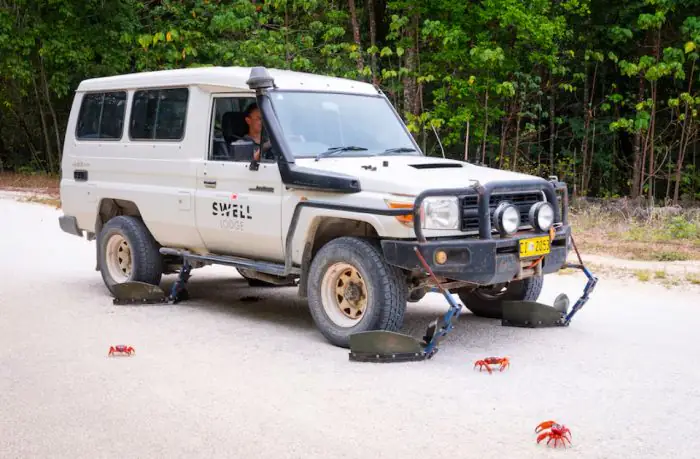
Amphibians require particular attention. In spring, toads, frogs and newts migrate to breeding sites, often crossing roads along the way. In some European countries, entire systems of low fences and small passages are built for them. And it is not just the tunnel itself that matters: if an animal cannot find the entrance, an expensive crossing can end up being almost useless.
Before construction begins, ecologists study the ecosystems surrounding existing or planned infrastructure, as well as animal routes and trails. Where do animals cross the landscape? Where are the bodies of water they need access to? Which parts of the forest do they use? At what time of year does migration begin?
From individual crossings to new requirements
Gradually, ecological connectivity has become part of European spatial planning. Green infrastructure is now viewed as a network of natural and semi-natural areas that should remain connected. Ecological corridors and wildlife crossings over and under roads are one of the tools used to maintain that network.
A new stage began with the adoption of the European Nature Restoration Regulation. The law entered into force in 2024 and sets binding targets for nature restoration across EU countries. By 2030, restoration measures must cover at least 20% of the European Union’s land and sea areas. The objectives include restoring ecosystems and removing barriers that interfere with natural processes and the movement of living organisms.
That is why modern wildlife crossings are increasingly designed not as separate structures, but as extensions of the surrounding landscape.
What is happening in the Baltics
For the Baltic states, the issue of green corridors is particularly relevant because of the scale of Rail Baltica. The new railway line, around 870 kilometres long, will run through Latvia, Lithuania and Estonia, countries that still contain extensive forest areas and relatively large stretches of less fragmented natural habitat.
Wildlife crossings were therefore incorporated into the project from the outset. In the Latvian section of Rail Baltica, for example, mammals were monitored for two years before construction, and six ecoducts and one underpass for large and medium-sized animals are planned along the section from the Estonian border to Vangaži. Across the entire line, more than 40 large crossings, both over and under the railway, are planned.
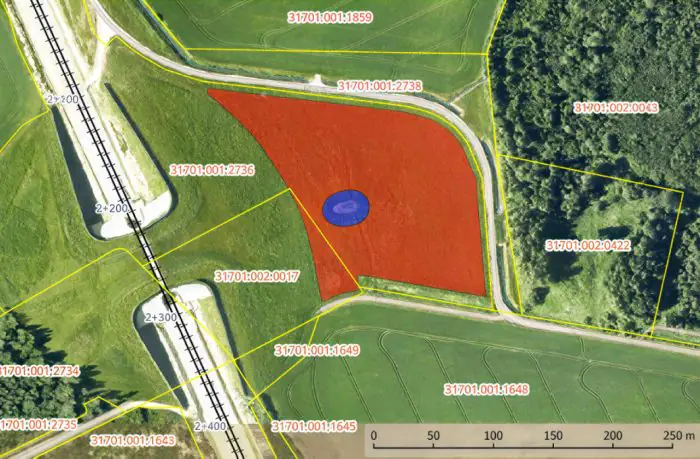
The way these structures are located is also interesting. On one section, planners initially planned a crossing near agricultural fields. However, research showed that animals hardly moved through the area and instead preferred to travel along rivers. The design was therefore changed and the crossing was adapted to the area around the Lankesa River.
It is a representative example of how ecological monitoring can actually change an infrastructure project, rather than simply appearing as a chapter in a report.
Latvia: watch out for frogs
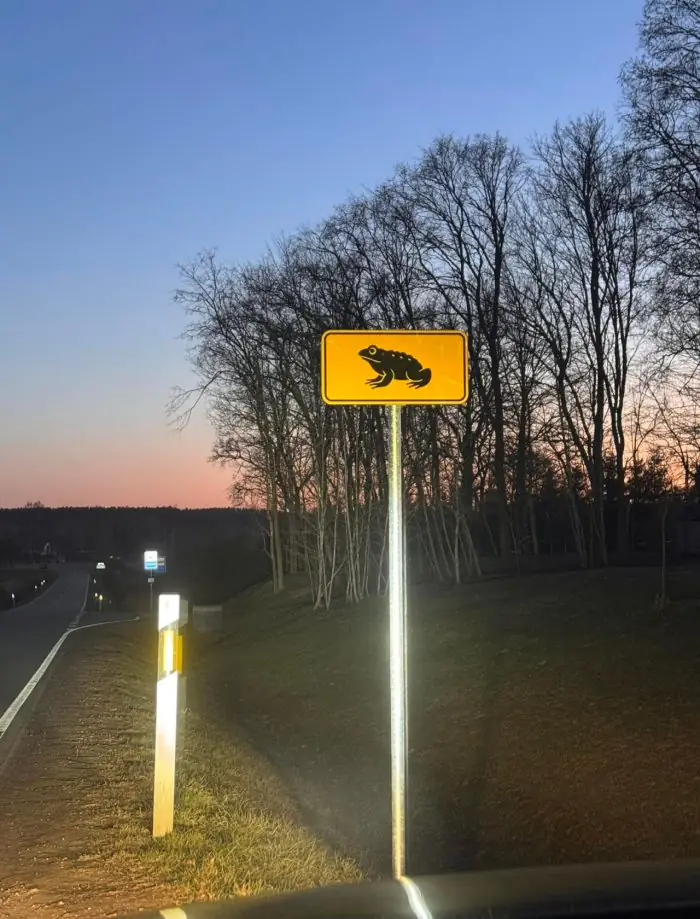
Outside Rail Baltica, this sort of measures in Latvia are still mostly limited to local projects. In spring 2026, the Nature Conservation Agency installed temporary warning signs at 30 sections of state roads around Vaida, Saldus and Pāle, where toads migrate in spring. The signs are removed once the migration season is over.
At first glance, it may seem that drivers are simply being warned that, at a particular time of year, toads begin crossing the road and that they should slow down. But the underlying logic is the same as that behind a large ecoduct. Animals continue to use their established routes even after a road has been built across them, so infrastructure has to adapt to their movements.
In some cases, a temporary warning sign is enough; in others, fencing, tunnels or a full-scale wildlife crossing may be needed. The choice depends on which animals use the route, how heavy the traffic is, and whether the same movement pattern occurs year after year.
Transport infrastructure will always change the landscape. It is impossible to avoid its impact entirely. What matters is observing local ecosystems and incorporating this variable into infrastructure planning at every scale: where can space be left for animals to move, and how can areas that would otherwise become separated be connected?
For people, a road is a line between point A and point B. For the wildlifet, however, that same line can become a wall. The task of modern infrastructure is to learn how to build in a way that does not make that wall impenetrable.